Sea Kelp Extract: Comedogenic Rating & Ingredient Analysis
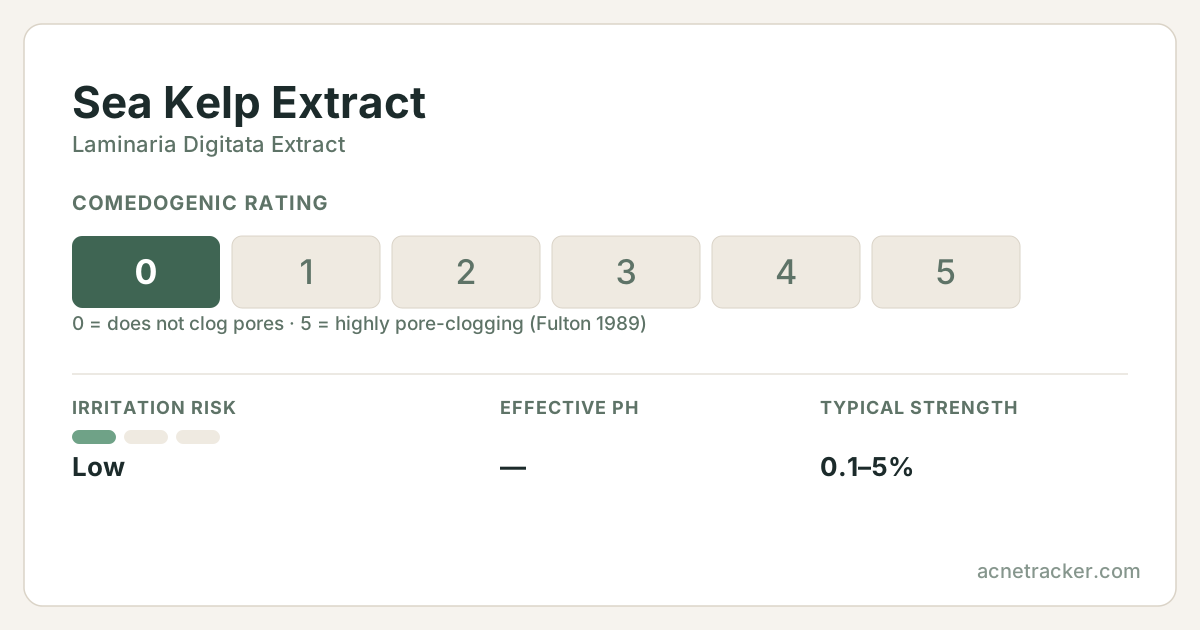
Sea kelp extract brings the mineral richness of the ocean into skincare, drawn from large brown seaweeds such as Laminaria that grow in cold coastal waters. It appears in hydrating serums, masks, moisturisers and products marketed as detoxifying or replenishing, often with a marine or spa theme. On the skin, kelp behaves as a hydrating, conditioning ingredient that also supplies antioxidants and trace minerals. It is not an exfoliant or an acne fighter, and much of its reputation comes from marine folklore and thalassotherapy traditions rather than large clinical trials. Still, as a gentle, water-loving botanical, sea kelp is a comfortable addition for skin that wants softness and hydration.
Quick facts
- Comedogenic rating
- our estimate — not measured
- Irritation risk
- Low
- Effective pH
- —
- Typical strength
- 0.1–5%
- Pregnancy
- Considered safe
- Suits skin types
- drynormalcombinationsensitivemature
Where this number comes from
No one has published a comedogenic rating for this ingredient. Fulton's 1989 table tested about 250 raw materials and this was not among them, and we found no later study measuring it. The figure shown is our own reasoning from the ingredient's chemistry and how it is used — treat it as an estimate, not a measurement.
Fulton read his own scale as 0-1 not significant, 2-3 borderline, 4-5 positive. The assay is the rabbit ear at 10% dilution, which the paper itself calls extremely sensitive and not fully predictive of human skin. Ratings describe the raw ingredient; concentration and formulation change real-world behaviour.
Caution profile
The four published fields on this page, on one 0–5 scale. Further from the centre means more care is needed — never that the ingredient is worse.
Derived, not measured: pore-clogging is the published comedogenic rating; irritation maps low/moderate/high to 1/3/5; pregnancy maps safe/caution/avoid to 0/3/5; skin-type limits is how many of the seven skin types this entry does NOT list. Every input is printed in words in the quick-facts card above.
Show the numbers
| Metric | 0–5 | Published field |
|---|---|---|
| Pore-clogging | 0 | 0/5 |
| Irritation | 1 | Low |
| Skin-type limits | 1.4 | 5/7 |
| Pregnancy | 0 | Considered safe |
Working pH and typical strength
Where this ingredient is formulated to sit, and at what concentration.
Both bars come from the fields above: the pH window and the typical strength range published for this ingredient. The tinted column is healthy skin's surface pH (about 4.7–5.75).
Show the numbers
| Metric | 0–5 |
|---|---|
| Typical strength | 0.1–5% |
What is it?
Brown seaweeds like Laminaria are rich in polysaccharides — notably alginates and fucoidan — along with minerals such as iodine, magnesium and zinc, plus vitamins and antioxidant compounds. In cosmetics these polysaccharides act as humectants and film-formers that hold water at the skin surface and leave a soft, conditioned feel, while the antioxidants offer light environmental defence. Traditional thalassotherapy has long used seaweed for skin, and laboratory research supports antioxidant and moisturising properties, though claims of detoxification are marketing rather than science. As a water-based algae extract, sea kelp has a comedogenic rating of 0 and a low irritation profile. One practical note: kelp is naturally high in iodine, which matters for a small group with thyroid concerns.
Benefits
Hydrates and softens
Kelp's alginate and fucoidan polysaccharides bind water at the skin surface, leaving a smooth, conditioned feel that complements humectants like hyaluronic-acid.
Supplies trace minerals
Seaweed naturally carries minerals such as magnesium and zinc that help condition the skin surface and support a comfortable, replenished feel.
Antioxidant defence
Marine antioxidant compounds help protect against everyday environmental stress, adding light backup to dedicated antioxidants such as vitamin-e.
Gentle and soothing
With a rating of 0 and low irritation risk, kelp suits sensitive and dry skin and pairs comfortably with soothers like panthenol and niacinamide.
How to use
Sea kelp extract is easy to use in a serum, mask or moisturiser after cleansing, morning or night. It works well as part of a hydration layer, sitting under richer creams and under sunscreen. Alginates and fucoidan are humectant polysaccharides, so there is no tolerance to build and nothing in kelp that reacts with light. Patch testing matters most if you have previously reacted to marine or algae ingredients; kelp's own contact-allergy signal is low, and the iodine question below is the more relevant caution for most people. If you have a diagnosed thyroid condition, be aware that kelp is iodine-rich; while topical absorption is limited, it is sensible to check with your doctor if you use kelp products frequently or over large areas.
Side effects
Sea kelp extract is generally well tolerated with a low rate of irritation. Occasional allergy to marine ingredients is possible, so very reactive skin should patch test. The most-discussed caution is iodine content: for the general population, topical kelp is not a meaningful iodine source, but people with thyroid disease sometimes prefer to limit iodine-rich products as a precaution. Any stinging from a kelp product is more often due to other formula components than the seaweed itself.
Who should avoid it
Almost everyone can use sea kelp extract. People with thyroid conditions who have been advised to watch iodine may wish to check with their doctor before heavy use, since kelp is naturally iodine-rich, even though topical absorption is low. Those with a specific seaweed allergy should avoid it. It is otherwise considered safe, including during pregnancy for normal cosmetic use.
Pairs well with
Frequently asked questions
Does sea kelp extract clog pores?
No. Water-based sea kelp extract has a comedogenic rating of 0 and does not clog pores, making it suitable for combination and even oily skin seeking hydration.
What does sea kelp do for skin?
It mainly hydrates and conditions, using seaweed polysaccharides to hold water at the surface, while supplying trace minerals and antioxidants for a soft, replenished feel.
Is sea kelp safe if I have a thyroid condition?
Topical absorption of iodine from cosmetics is low, but because kelp is naturally iodine-rich, people managing thyroid disease may prefer to check with their doctor before frequent use over large areas.
Can sea kelp detox the skin?
No. Detox claims are marketing language. Kelp genuinely hydrates, conditions and adds antioxidants, but skin is not detoxified by a topical seaweed extract.
Sources & further reading
Medical disclaimer
Find your personal acne triggers
Our free Acne Tracker lets you log breakouts, sleep, stress and diet, and shows you which factors correlate with your flare-ups.