Trehalose: Comedogenic Rating & Ingredient Analysis
Trehalose is a fascinating sugar with a nickname that hints at its powers: it is sometimes called the resurrection sugar because certain organisms use it to survive extreme drying and then revive when water returns. That is more than folklore. Trehalose stabilises proteins and cell membranes under dehydration stress, and cosmetic chemists borrow this property to make a humectant that not only draws in water but also helps skin cells cope when moisture is scarce. It is gentle, suitable for essentially every skin type including sensitive and acne-prone, and it works beautifully alongside classic humectants like glycerin and hyaluronic acid.
Quick facts
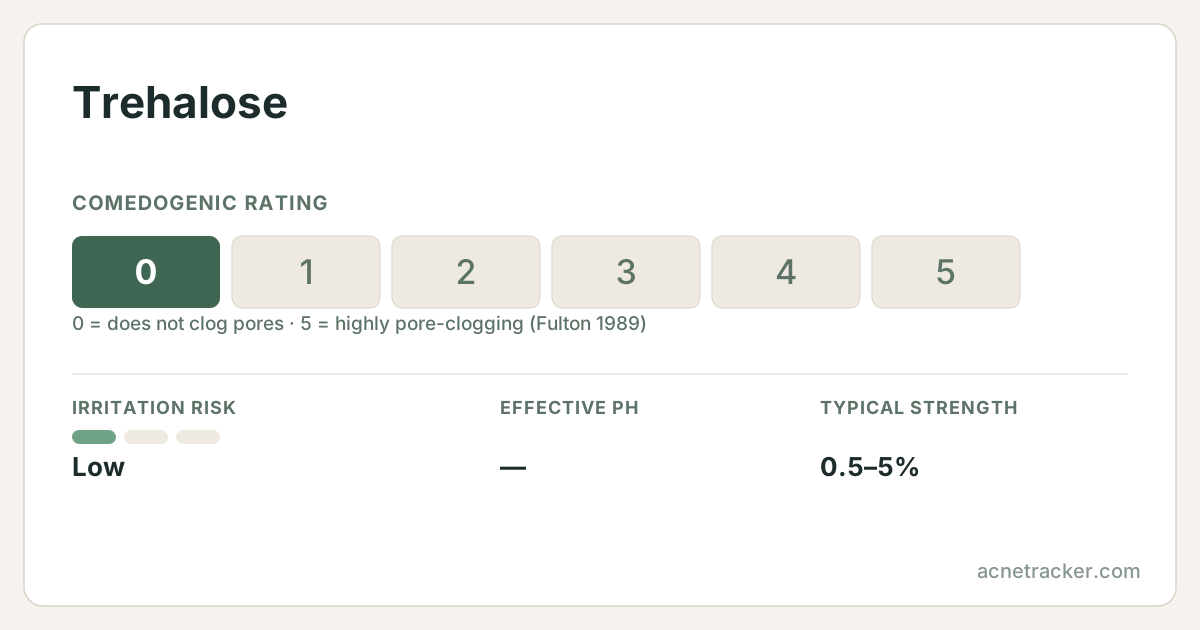
- Comedogenic rating
- our estimate — not measured
- Irritation risk
- Low
- Effective pH
- —
- Typical strength
- 0.5–5%
- Pregnancy
- Considered safe
- Suits skin types
- drynormalcombinationsensitiveoilyacne-prone
Where this number comes from
No one has published a comedogenic rating for this ingredient. Fulton's 1989 table tested about 250 raw materials and this was not among them, and we found no later study measuring it. The figure shown is our own reasoning from the ingredient's chemistry and how it is used — treat it as an estimate, not a measurement.
Fulton read his own scale as 0-1 not significant, 2-3 borderline, 4-5 positive. The assay is the rabbit ear at 10% dilution, which the paper itself calls extremely sensitive and not fully predictive of human skin. Ratings describe the raw ingredient; concentration and formulation change real-world behaviour.
Caution profile
The four published fields on this page, on one 0–5 scale. Further from the centre means more care is needed — never that the ingredient is worse.
Derived, not measured: pore-clogging is the published comedogenic rating; irritation maps low/moderate/high to 1/3/5; pregnancy maps safe/caution/avoid to 0/3/5; skin-type limits is how many of the seven skin types this entry does NOT list. Every input is printed in words in the quick-facts card above.
Show the numbers
| Metric | 0–5 | Published field |
|---|---|---|
| Pore-clogging | 0 | 0/5 |
| Irritation | 1 | Low |
| Skin-type limits | 0.7 | 6/7 |
| Pregnancy | 0 | Considered safe |
Working pH and typical strength
Where this ingredient is formulated to sit, and at what concentration.
Both bars come from the fields above: the pH window and the typical strength range published for this ingredient. The tinted column is healthy skin's surface pH (about 4.7–5.75).
Show the numbers
| Metric | 0–5 |
|---|---|
| Typical strength | 0.5–5% |
What is it?
Trehalose is a disaccharide made of two glucose units joined by an unusually stable bond, which gives it remarkable resistance to heat, acidity and dehydration. In nature, tardigrades, some plants and yeasts accumulate trehalose to protect their tissues from drying out and freezing. In skincare it acts primarily as a humectant, binding water at the skin surface, but its more distinctive contribution is cell-protective: it helps preserve the integrity of proteins and membranes during moisture stress, which supports the skin barrier in dry conditions. It also offers mild antioxidant-supportive and soothing benefits. It is stable, non-irritating and easy to formulate, which is why it turns up in an increasing number of hydrating and barrier products.
Benefits
Hydrates and holds water
As a humectant, trehalose binds moisture at the skin surface, giving a smoother, plumper and better-hydrated feel much like other sugar-based moisturisers.
Protects cells under dryness stress
Trehalose helps stabilise proteins and membranes when water is scarce, supporting the skin barrier and comfort in dry, cold or dehydrating conditions.
Soothes and supports the barrier
Its gentle, protective nature makes it a comfortable choice for sensitive and reactive skin, helping calm the tightness that comes with dehydration.
Stable and widely compatible
Trehalose is exceptionally stable and non-irritating, so it layers easily with almost any active and works across oily, dry, sensitive and acne-prone skin.
How to use
Use trehalose in a hydrating serum, essence, mist or moisturiser, once or twice daily after cleansing. Like other humectants it performs best applied to slightly damp skin and then sealed with a moisturiser to lock in the water it attracts, especially in dry or cold climates. It pairs naturally with glycerin, hyaluronic acid, sodium PCA and panthenol, and it combines happily with actives such as niacinamide, vitamin C and retinoids. There is nothing special to time; simply include it as part of your hydration layer and use it consistently for lasting comfort.
Side effects
Trehalose is remarkably well tolerated, non-comedogenic and very low in irritation, and it is even used in medical and food contexts, which speaks to its safety. As with any humectant, an unsealed layer in very dry air can feel less effective, so follow with a moisturiser. Genuine reactions are rare, though as always an individual could respond to a specific finished formula rather than to the trehalose itself.
Who should avoid it
There is essentially no group that needs to avoid topical trehalose. It suits sensitive, oily, dry and acne-prone skin alike. Anyone with a highly specific documented sensitivity to a particular product should identify the actual trigger, which is very unlikely to be the trehalose, given how gentle and inert it is.
Pairs well with
Frequently asked questions
What does trehalose do for skin?
It acts as a humectant that hydrates the skin and, unusually, helps protect skin cells from dehydration stress by stabilising proteins and membranes. It also soothes and supports the barrier.
Is trehalose better than glycerin?
It is not better so much as complementary. Both are excellent sugar-based humectants; trehalose adds a notable cell-protective quality under dryness stress, and the two are often used together.
Is trehalose good for sensitive skin?
Yes. Trehalose is non-comedogenic, very low in irritation and soothing, which makes it a comfortable hydrating ingredient for sensitive, reactive and dehydrated skin.
Can oily and acne-prone skin use trehalose?
Absolutely. Trehalose is a lightweight, non-comedogenic humectant with no oil, so it hydrates oily and acne-prone skin without heaviness or clogging.
Why is trehalose called the resurrection sugar?
Because organisms like tardigrades and some plants use trehalose to survive extreme drying, reviving when water returns. It protects their cells during dehydration, a property borrowed in skincare.
Where this ingredient shows up here
Counted across this database, not the web — these are the pages on this site that reason about this ingredient.
Buying guides 1
Sources & further reading
Trehalose is an effective humectant and a well-documented cell-protectant during freezing and drying, which is why it appears in formulations. The clinical use cited here is in ophthalmology; we found no trial establishing the soothing or antioxidant effects on skin that cosmetic descriptions often attribute to it.
Medical disclaimer
Find your personal acne triggers
Our free Acne Tracker lets you log breakouts, sleep, stress and diet, and shows you which factors correlate with your flare-ups.