Inositol: Comedogenic Rating & Ingredient Analysis
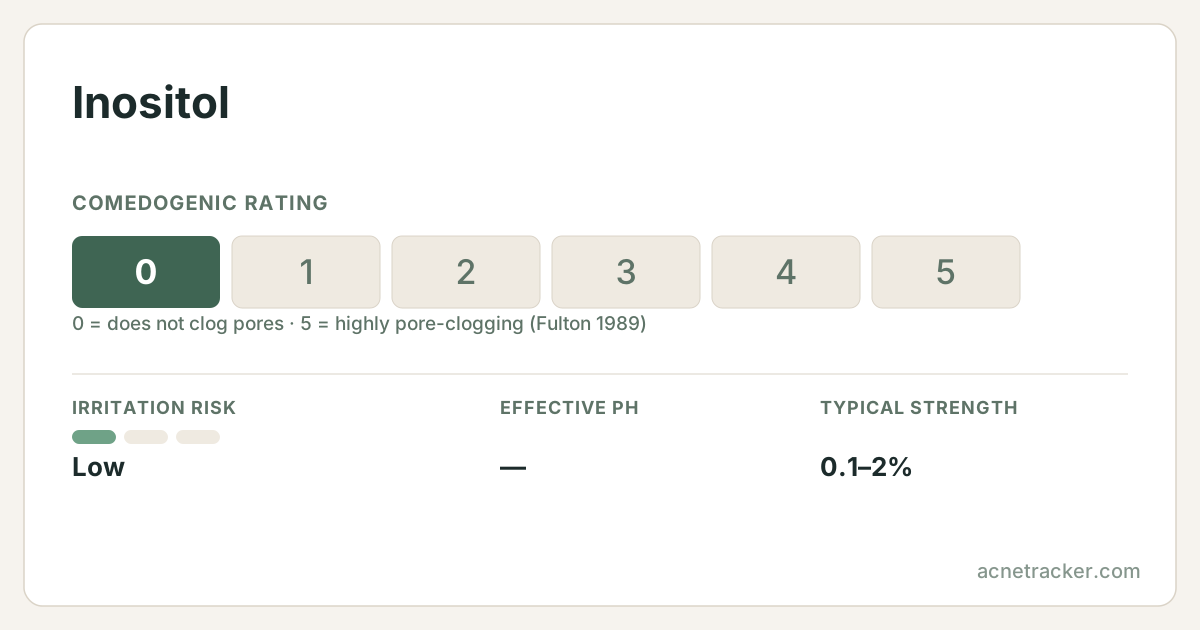
Inositol is a sugar-like molecule that plays many roles inside the body and shows up in skincare and hair care as a gentle conditioning and hydrating ingredient. Once loosely called vitamin B8, it is not truly a vitamin, but it is involved in cell signalling and is a component of the membranes that surround your cells. In cosmetics it behaves as a humectant and conditioning agent, helping skin and hair feel soft, smooth and hydrated. It is mild, water-soluble and suitable for sensitive skin, and while it is rarely the star of a formula, it is a reliable supporting ingredient in moisturising and soothing products.
Quick facts
- Comedogenic rating
- our estimate — not measured
- Irritation risk
- Low
- Effective pH
- —
- Typical strength
- 0.1–2%
- Pregnancy
- Considered safe
- Suits skin types
- drynormalsensitivecombinationoily
Where this number comes from
No one has published a comedogenic rating for this ingredient. Fulton's 1989 table tested about 250 raw materials and this was not among them, and we found no later study measuring it. The figure shown is our own reasoning from the ingredient's chemistry and how it is used — treat it as an estimate, not a measurement.
Fulton read his own scale as 0-1 not significant, 2-3 borderline, 4-5 positive. The assay is the rabbit ear at 10% dilution, which the paper itself calls extremely sensitive and not fully predictive of human skin. Ratings describe the raw ingredient; concentration and formulation change real-world behaviour.
Caution profile
The four published fields on this page, on one 0–5 scale. Further from the centre means more care is needed — never that the ingredient is worse.
Derived, not measured: pore-clogging is the published comedogenic rating; irritation maps low/moderate/high to 1/3/5; pregnancy maps safe/caution/avoid to 0/3/5; skin-type limits is how many of the seven skin types this entry does NOT list. Every input is printed in words in the quick-facts card above.
Show the numbers
| Metric | 0–5 | Published field |
|---|---|---|
| Pore-clogging | 0 | 0/5 |
| Irritation | 1 | Low |
| Skin-type limits | 1.4 | 5/7 |
| Pregnancy | 0 | Considered safe |
Working pH and typical strength
Where this ingredient is formulated to sit, and at what concentration.
Both bars come from the fields above: the pH window and the typical strength range published for this ingredient. The tinted column is healthy skin's surface pH (about 4.7–5.75).
Show the numbers
| Metric | 0–5 |
|---|---|
| Typical strength | 0.1–2% |
What is it?
Inositol, most commonly the form called myo-inositol, is a small carbohydrate-like molecule, a sugar alcohol structurally related to glucose. In the body it participates in cell signalling and forms part of phospholipids in cell membranes. Topically it acts as a humectant, drawing water toward the skin, and as a skin- and hair-conditioning agent that improves softness and manageability. It also offers mild antioxidant-supportive and soothing qualities. Because it is gentle, stable and water-loving, it is easy to include in a wide range of products, from hydrating serums and moisturisers to conditioners and scalp treatments, where it contributes comfort and smoothness rather than a dramatic single effect.
Benefits
Hydrates and conditions
As a humectant, inositol helps draw and hold water in the skin, contributing to a softer, smoother and more comfortably hydrated surface.
Soothes sensitive skin
Its gentle, conditioning nature makes it a comfortable choice for sensitive and reactive skin, supporting a calm, supple feel without irritation.
Improves hair softness
In hair care, inositol conditions strands and can improve softness and manageability, which is why it appears in some conditioners and scalp products.
Mild antioxidant support
Inositol offers modest antioxidant-supportive qualities, adding to the overall conditioning and comfort benefit of the formulas it appears in.
How to use
Use inositol simply by choosing the hydrating serums, moisturisers or conditioners that contain it, and applying them as directed. In skincare it belongs to your hydration and comfort layer, applied after cleansing once or twice daily, and it pairs naturally with humectants like glycerin, hyaluronic acid and trehalose. In hair care it is used in conditioners and leave-ins on lengths and ends. There are no special timing, pH or layering restrictions, and it is compatible with essentially any active you might use, so it slots easily into most routines.
Side effects
Inositol is well tolerated, non-comedogenic and very low in irritation, which is why it fits gentle formulas for sensitive skin. Genuine reactions are uncommon. As with any ingredient, someone could react to a specific finished product, so patch test if your skin is highly reactive, but inositol itself is not a typical trigger.
Who should avoid it
There is essentially no group that must avoid topical inositol. It suits sensitive, dry, oily and combination skin alike, and it is used in both skin and hair care. Anyone with a highly specific documented sensitivity to a given product should identify the real cause, which is very unlikely to be the inositol.
Pairs well with
Frequently asked questions
What does inositol do for the skin?
It works as a humectant and conditioning agent, helping the skin hold water and feel softer, smoother and more comfortable. It also offers mild soothing and antioxidant-supportive qualities.
Is inositol a vitamin?
Not really. It was once loosely called vitamin B8, but it is a sugar-like molecule the body can make itself, so it does not meet the strict definition of a vitamin.
Is inositol good for hair?
Yes. In hair care inositol conditions strands and can improve softness and manageability, which is why it appears in some conditioners, leave-ins and scalp treatments.
Is inositol safe for sensitive skin?
Yes. It is non-comedogenic, low-irritation and gentle, which makes it a comfortable conditioning and hydrating ingredient for sensitive and reactive skin.
Can I use inositol with other actives?
Yes. Inositol is gentle and compatible with essentially all common actives and humectants, so it layers easily with ingredients like niacinamide, hyaluronic acid and glycerin.
Sources & further reading
Inositol's water-binding behaviour is straightforward sugar-alcohol chemistry. The work cited here evaluates a finished cream containing it alongside other actives rather than inositol on its own, so the soothing and antioxidant descriptions cannot be attributed to this ingredient specifically.
- PubChem — myo-Inositol compound summary (CID 892)
- European Commission CosIng database — Inositol
- Assessment of the efficacy, skin acceptability and cosmetic quality of an adjuvant cream based on 40% urea and amino-inositol in the treatment of mild psoriasis (PubMed)finished formula, not the ingredient alone
Medical disclaimer
Find your personal acne triggers
Our free Acne Tracker lets you log breakouts, sleep, stress and diet, and shows you which factors correlate with your flare-ups.