Thermal Spring Water: Comedogenic Rating & Ingredient Analysis
Thermal spring water is the mineral-rich water that gives many French pharmacy brands their identity, sold as soothing facial mists and used as the water base in gentle creams. Drawn from protected underground springs, each brand's water has a characteristic mineral and trace-element profile, and some carry small communities of harmless microbes that brands highlight for skin benefits. Marketing around thermal water can be lavish, so it is worth being measured: the honest picture is genuine soothing and comfort for sensitive and reactive skin, particularly as an adjunct for reactive, eczema-prone skin, rather than dramatic transformation. As a gentle, calming element in a routine, though, it has a real place.
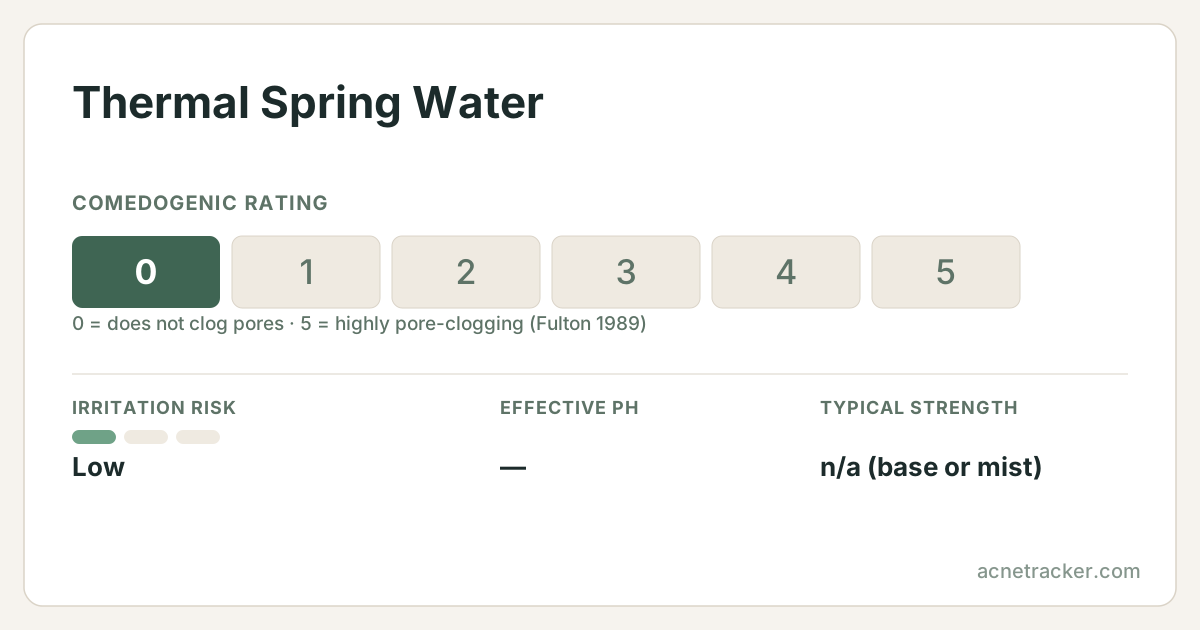
Quick facts
- Comedogenic rating
- our estimate — not measured
- Irritation risk
- Low
- Effective pH
- —
- Typical strength
- n/a (base or mist)
- Pregnancy
- Considered safe
- Suits skin types
- sensitivedrynormalcombinationoilyacne-prone
Where this number comes from
No one has published a comedogenic rating for this ingredient. Fulton's 1989 table tested about 250 raw materials and this was not among them, and we found no later study measuring it. The figure shown is our own reasoning from the ingredient's chemistry and how it is used — treat it as an estimate, not a measurement.
Fulton read his own scale as 0-1 not significant, 2-3 borderline, 4-5 positive. The assay is the rabbit ear at 10% dilution, which the paper itself calls extremely sensitive and not fully predictive of human skin. Ratings describe the raw ingredient; concentration and formulation change real-world behaviour.
Caution profile
The four published fields on this page, on one 0–5 scale. Further from the centre means more care is needed — never that the ingredient is worse.
Derived, not measured: pore-clogging is the published comedogenic rating; irritation maps low/moderate/high to 1/3/5; pregnancy maps safe/caution/avoid to 0/3/5; skin-type limits is how many of the seven skin types this entry does NOT list. Every input is printed in words in the quick-facts card above.
Show the numbers
| Metric | 0–5 | Published field |
|---|---|---|
| Pore-clogging | 0 | 0/5 |
| Irritation | 1 | Low |
| Skin-type limits | 0.7 | 6/7 |
| Pregnancy | 0 | Considered safe |
What is it?
Thermal spring water is natural water that has travelled through mineral-rich rock, picking up dissolved minerals and trace elements such as silica, calcium, magnesium and selenium, in proportions specific to each source. Some sources also host particular non-pathogenic microbes whose components are of interest for possible soothing effects. In cosmetics it is used two ways: sprayed directly from a can as a facial mist, and as the aqueous base of creams and sprays instead of ordinary purified water. Its main reported role is soothing — reducing the sensation of irritation and supporting sensitive skin — and thermal spa care has a long tradition as supportive comfort for very reactive, eczema-prone skin. It is not an active treatment in the way an acid or retinoid is.
Benefits
Soothes sensitive skin
Thermal spring water is valued for its calming feel, helping reduce the sensation of irritation and giving reactive, easily flushed skin a comfortable, settled feel.
Provides a gentle refresh
As a mist it offers an immediate cooling, refreshing sensation that can relieve heat, tightness and discomfort, useful after sun, exercise or a long day.
Supports compromised skin
Its mineral profile and soothing action make it a common adjunct in the care of sensitive and eczema-prone skin, complementing barrier-repair moisturisers.
A mild, mineral-rich base
Used as the water phase of a formula, it lends gentle mineral content and a soothing character to creams and sprays for reactive complexions.
How to use
Use a thermal spring water mist whenever you want an instant soothing refresh: after cleansing, after sun or exercise, or to relieve tight, warm skin during the day. A useful trick is to spritz, wait a few seconds, then gently pat off the excess and immediately apply a moisturiser, because water left to evaporate on the skin can be mildly drying rather than hydrating. Do not rely on it as your only source of hydration; treat it as a calming step and always seal with a proper humectant and moisturiser. Products that use thermal water as their base are simply used as directed.
Side effects
Thermal spring water is extremely gentle, non-comedogenic and very low in irritation, which is the whole point of its use on sensitive skin. The main practical caveat is technique: letting a mist evaporate fully on the skin can leave it feeling drier, so pat off and moisturise. Genuine reactions are very rare, and any response to a finished product is far more likely to come from other ingredients than from the water itself.
Who should avoid it
There is essentially no group that needs to avoid thermal spring water; it is one of the gentlest cosmetic ingredients and suits even very sensitive and compromised skin. The only real caution is not to over-rely on evaporating mists for hydration. Otherwise it is broadly suitable across all skin types.
Pairs well with
Frequently asked questions
What does thermal spring water do for the skin?
It soothes and calms sensitive, reactive skin, reduces the sensation of irritation and offers a refreshing feel. Treat that as the realistic ceiling: the most it realistically offers is supportive comfort for reactive skin, not the transformation the spa branding hints at.
Does thermal water actually hydrate skin?
Only briefly, and it can even be mildly drying if left to evaporate. It soothes and refreshes, but you should pat off the excess and seal with a moisturiser to genuinely hydrate.
Is thermal spring water good for eczema?
It is used as a supportive, soothing adjunct for sensitive and eczema-prone skin, and thermal spa care has a long tradition in caring for very reactive, eczema-prone skin. It complements, rather than replaces, barrier moisturisers and prescribed treatment.
How is thermal water different from regular water?
It is natural spring water rich in specific minerals and trace elements, sometimes with particular harmless microbes, giving it soothing properties beyond those of ordinary purified water.
Can I use thermal spring water every day?
Yes. It is gentle and non-comedogenic, so daily use is fine. Just remember to pat off the excess and follow with a moisturiser rather than letting it dry on the skin.
Sources & further reading
Medical disclaimer
Find your personal acne triggers
Our free Acne Tracker lets you log breakouts, sleep, stress and diet, and shows you which factors correlate with your flare-ups.