Decyl Glucoside: Comedogenic Rating & Ingredient Analysis
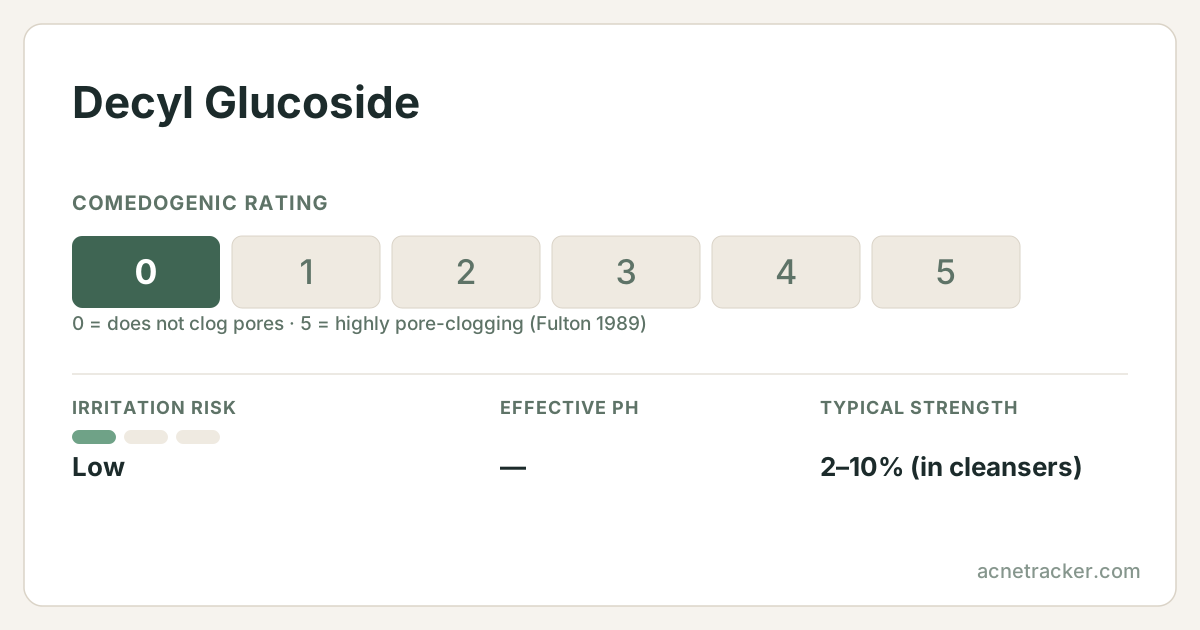
Decyl glucoside is a mild, plant-based cleansing surfactant closely related to coco-glucoside and made from corn or coconut-derived sugars and fatty alcohols. It is one of the gentlest surfactants in wide use and is especially popular in baby washes, sensitive-skin cleansers and sulfate-free shampoos. Non-ionic and biodegradable, it delivers gentle cleansing and a soft foam, and it is often chosen when a formula needs to be as mild as possible without sacrificing the ability to remove dirt and excess oil.
Quick facts
- Comedogenic rating
- our estimate — not measured
- Irritation risk
- Low
- Effective pH
- —
- Typical strength
- 2–10% (in cleansers)
- Pregnancy
- Considered safe
- Suits skin types
- oilydrycombinationsensitivenormalacne-prone
Where this number comes from
No one has published a comedogenic rating for this ingredient. Fulton's 1989 table tested about 250 raw materials and this was not among them, and we found no later study measuring it. The figure shown is our own reasoning from the ingredient's chemistry and how it is used — treat it as an estimate, not a measurement.
Fulton read his own scale as 0-1 not significant, 2-3 borderline, 4-5 positive. The assay is the rabbit ear at 10% dilution, which the paper itself calls extremely sensitive and not fully predictive of human skin. Ratings describe the raw ingredient; concentration and formulation change real-world behaviour.
Caution profile
The four published fields on this page, on one 0–5 scale. Further from the centre means more care is needed — never that the ingredient is worse.
Derived, not measured: pore-clogging is the published comedogenic rating; irritation maps low/moderate/high to 1/3/5; pregnancy maps safe/caution/avoid to 0/3/5; skin-type limits is how many of the seven skin types this entry does NOT list. Every input is printed in words in the quick-facts card above.
Show the numbers
| Metric | 0–5 | Published field |
|---|---|---|
| Pore-clogging | 0 | 0/5 |
| Irritation | 1 | Low |
| Skin-type limits | 0.7 | 6/7 |
| Pregnancy | 0 | Considered safe |
Working pH and typical strength
Where this ingredient is formulated to sit, and at what concentration.
Both bars come from the fields above: the pH window and the typical strength range published for this ingredient. The tinted column is healthy skin's surface pH (about 4.7–5.75).
Show the numbers
| Metric | 0–5 |
|---|---|
| Typical strength | 2–10% (in cleansers) |
What is it?
Decyl glucoside is an alkyl polyglucoside, produced by joining decyl alcohol with glucose. Like other sugar surfactants it carries no strong ionic charge, which underlies its mildness, and it cleanses by surrounding oils so they rinse away. It tends to produce a slightly more stable foam than some glucosides, which is one reason formulators favour it, and it is frequently combined with coco-glucoside and cocamidopropyl-betaine to fine-tune lather and gentleness. It has a comedogenic rating of zero, a low irritation profile and good environmental credentials, making it a reliable choice for delicate and reactive skin.
Benefits
Exceptionally gentle
As a non-ionic sugar surfactant, decyl glucoside cleans with minimal stripping, making it a favourite for baby and sensitive-skin washes.
Plant-based and biodegradable
Derived from sugar and fatty alcohols, it is renewable and readily biodegradable, appealing to eco-conscious and natural formulations.
Stable, soft foam
It generates a pleasant, reasonably stable lather that cleans effectively while remaining kind to the skin barrier.
Versatile co-surfactant
It blends well with other mild surfactants, letting formulators build sulfate-free cleansers with balanced foam, feel and cleansing power.
How to use
Decyl glucoside is a rinse-off cleansing ingredient — use products as directed and rinse. It signals a gentle, sulfate-free formula and is commonly paired with coco-glucoside, cocamidopropyl-betaine and humectants such as glycerin. It suits all skin types, including sensitive, dry and acne-prone skin, and requires no special handling. It is a sound choice if sulfate cleansers have left your skin feeling tight or dry.
Side effects
Decyl glucoside is very well tolerated and irritation is uncommon. As with the alkyl glucoside family generally, rare cases of contact allergy have been documented, and these surfactants now appear on some expanded patch-test panels, but overall reaction rates stay low. For nearly all users it ranks among the mildest cleansing agents available.
Who should avoid it
Only people with a confirmed alkyl glucoside allergy, which is uncommon, need to avoid decyl glucoside. It is otherwise well suited to sensitive, delicate and acne-prone skin. If you have reacted to glucoside surfactants before, patch test carefully and consider amino-acid-based cleansers as an alternative.
Pairs well with
Frequently asked questions
Is decyl glucoside safe for babies and sensitive skin?
Yes. It is one of the gentlest surfactants available and is widely used in baby washes and sensitive-skin cleansers thanks to its low irritation profile and non-ionic mildness.
What is the difference between decyl glucoside and coco-glucoside?
Both are mild sugar surfactants from the same family. They differ slightly in fatty-alcohol source and foam behaviour, and formulators often blend them to balance cleansing, foam and gentleness.
Is decyl glucoside natural?
It is made from renewable sugar and fatty-alcohol sources and is biodegradable, so it is plant-based, though chemically processed. It is common in natural and eco-focused cleansers.
Does decyl glucoside cause acne?
No. It has a comedogenic rating of zero, is used in rinse-off products, and does not clog pores, so it does not cause breakouts and is suitable for acne-prone skin.
Sources & further reading
Medical disclaimer
Find your personal acne triggers
Our free Acne Tracker lets you log breakouts, sleep, stress and diet, and shows you which factors correlate with your flare-ups.