Sodium Laureth Sulfate: Comedogenic Rating & Ingredient Analysis
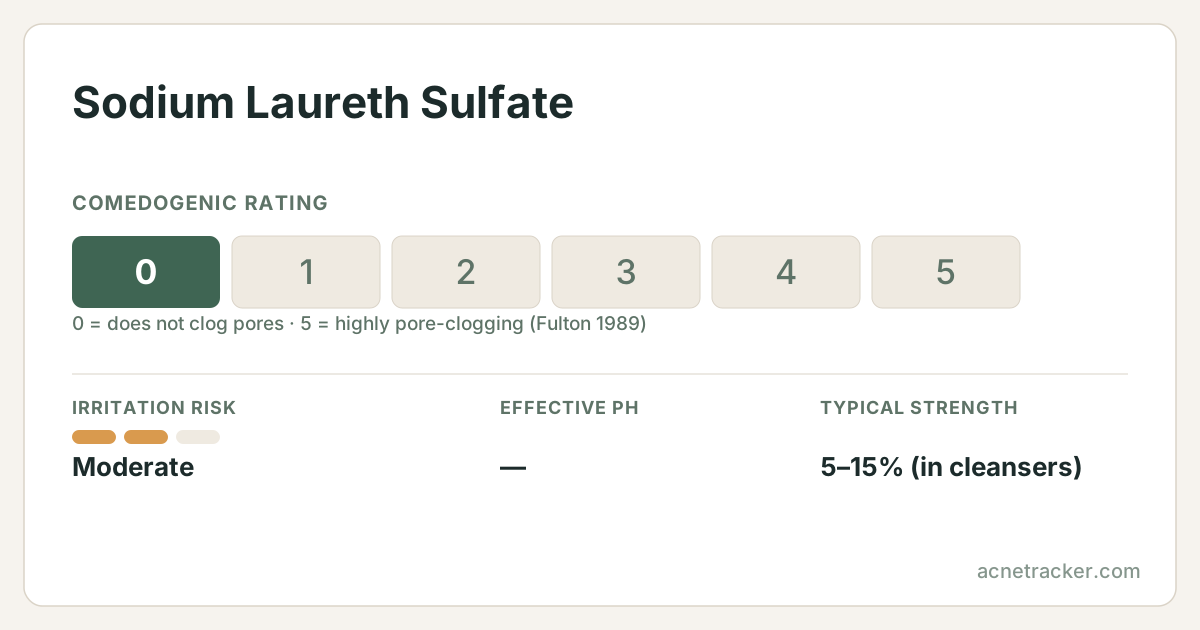
Sodium laureth sulfate, almost always shortened to SLES, is one of the most common cleansing and foaming ingredients in shampoos, body washes and face cleansers. It is a surfactant — a molecule that lets water lift away oil and dirt — and it is responsible for the rich lather people associate with a product "working". SLES is frequently confused with the harsher sodium lauryl sulfate (SLS), but the added "eth" (ethoxylation) makes SLES notably milder on the skin, which is why it largely replaced SLS in modern rinse-off products.
Quick facts
- Comedogenic rating
- our estimate — not measured
- Irritation risk
- Moderate
- Effective pH
- —
- Typical strength
- 5–15% (in cleansers)
- Pregnancy
- Considered safe
- Suits skin types
- oilycombinationnormal
Where this number comes from
No one has published a comedogenic rating for this ingredient. Fulton's 1989 table tested about 250 raw materials and this was not among them, and we found no later study measuring it. The figure shown is our own reasoning from the ingredient's chemistry and how it is used — treat it as an estimate, not a measurement.
No one has published a comedogenic rating for sodium laureth sulfate. The '3' that appears in copied pore-clogging tables has no study behind it that we could find. We publish 0 by reasoning rather than measurement: SLES is the ethoxylated, milder relative of sodium lauryl sulfate, which itself was not comedogenic in the 2007 rabbit re-assay, and like SLS it is a rinse-off surfactant with seconds of contact time. Treat this as our inference, not as data.
Fulton read his own scale as 0-1 not significant, 2-3 borderline, 4-5 positive. The assay is the rabbit ear at 10% dilution, which the paper itself calls extremely sensitive and not fully predictive of human skin. Ratings describe the raw ingredient; concentration and formulation change real-world behaviour.
Caution profile
The four published fields on this page, on one 0–5 scale. Further from the centre means more care is needed — never that the ingredient is worse.
Derived, not measured: pore-clogging is the published comedogenic rating; irritation maps low/moderate/high to 1/3/5; pregnancy maps safe/caution/avoid to 0/3/5; skin-type limits is how many of the seven skin types this entry does NOT list. Every input is printed in words in the quick-facts card above.
Show the numbers
| Metric | 0–5 | Published field |
|---|---|---|
| Pore-clogging | 0 | 0/5 |
| Irritation | 3 | Moderate |
| Skin-type limits | 2.9 | 3/7 |
| Pregnancy | 0 | Considered safe |
Working pH and typical strength
Where this ingredient is formulated to sit, and at what concentration.
Both bars come from the fields above: the pH window and the typical strength range published for this ingredient. The tinted column is healthy skin's surface pH (about 4.7–5.75).
Show the numbers
| Metric | 0–5 |
|---|---|
| Typical strength | 5–15% (in cleansers) |
What is it?
SLES is an anionic surfactant made by ethoxylating lauryl alcohol and then sulfating it, a process that produces a gentler molecule than plain SLS. In a cleanser it surrounds oils and traps them so they rinse away with water, while generating the foam that makes products feel effective. It is a strong, cost-effective cleanser, though on the skin its strength is a double-edged sword: it cleans thoroughly but can be more stripping than the mildest sugar-based surfactants. It is used almost exclusively in rinse-off products, where its short contact time limits any drying effect, and it is usually blended with gentler co-surfactants such as cocamidopropyl-betaine to soften its action.
Benefits
Powerful, reliable cleansing
SLES efficiently removes oil, sweat, product buildup and dirt, giving the deep-clean feel expected from shampoos and body washes.
Generous, stable foam
It produces the rich lather many people equate with cleanliness, spreading product easily and rinsing away quickly.
Milder than SLS
The ethoxylation step makes SLES notably gentler than sodium lauryl sulfate, which is why it replaced SLS in most modern rinse-off formulas.
Cost-effective and versatile
It is inexpensive and works across a wide range of cleansing products, which is why it is so widespread in mass-market formulations.
How to use
SLES is a rinse-off cleansing ingredient, so use it as directed in a cleanser or wash and rinse thoroughly. For most skin types a well-formulated SLES cleanser is fine, especially when blended with milder co-surfactants like coco-glucoside or cocamidopropyl-betaine and humectants such as glycerin. If your skin feels tight or dry after washing, choose a gentler sulfate-free cleanser instead. Follow cleansing with moisturiser, and avoid over-washing, since frequency matters as much as the surfactant itself.
Side effects
At the concentrations used in rinse-off products SLES is generally well tolerated, but it can be mildly irritating or drying for sensitive, dry or eczema-prone skin, particularly with frequent use. The tight, squeaky feeling after washing is a sign it may be too stripping for you. Past internet concerns about SLES being carcinogenic are unfounded; the real, well-characterised issue is simply potential dryness and irritation, not toxicity.
Who should avoid it
People with dry, sensitive, eczema-prone or barrier-compromised skin may find SLES cleansers too stripping and do better with sugar-based or amino-acid surfactants. For a compromised barrier or conditions like eczema and rosacea, gentler sulfate-free cleansers are usually the better choice. Those with oily, resilient skin generally tolerate SLES well.
Pairs well with
Frequently asked questions
Is sodium laureth sulfate bad for your skin?
Not inherently. SLES is a common, effective rinse-off cleanser that most people tolerate. It can be drying for sensitive or dry skin, but it is not toxic, and past cancer claims about it are unfounded.
What is the difference between SLES and SLS?
SLES is ethoxylated, which makes it notably milder than sodium lauryl sulfate (SLS). Both clean and foam well, but SLES is gentler on skin, which is why it replaced SLS in most modern products.
Does SLES cause acne?
No. SLES has a comedogenic rating of zero and is rinsed away rather than left on the skin, so there is no occlusion to speak of. The caveat is dose: wash too often or too long, even with the milder ethoxylated surfactant, and you can strip enough oil to disrupt the barrier, which may indirectly aggravate breakouts in some people.
Should I use sulfate-free cleansers?
If your skin is dry, sensitive or eczema-prone, a sulfate-free cleanser is often gentler. If your skin is oily and resilient, a well-formulated SLES cleanser is perfectly fine. Choose based on how your skin feels.
Sources & further reading
Medical disclaimer
Find your personal acne triggers
Our free Acne Tracker lets you log breakouts, sleep, stress and diet, and shows you which factors correlate with your flare-ups.