Sea Water: Comedogenic Rating & Ingredient Analysis
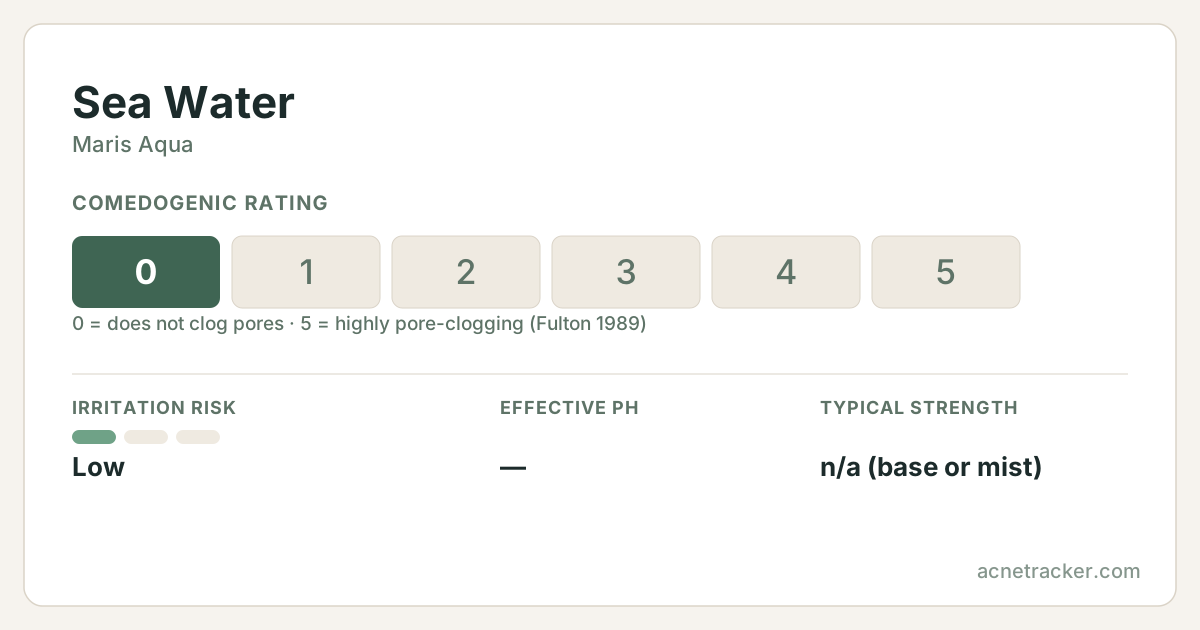
Sea water, listed on INCI as Maris Aqua, is purified ocean water used in skincare for its natural content of minerals and trace elements. It carries magnesium, calcium, potassium, sodium and many trace minerals, and it is often marketed with reference to the mineral-rich waters of specific seas. The appeal is a mineral-infused, conditioning water base or mist that can soothe and refresh the skin. As with thermal spring water, it is worth keeping expectations realistic: the mineral content is genuine and seawater has a long history in skin care, but it is a gentle conditioning ingredient rather than a powerful active, best judged on comfort rather than dramatic results.
Quick facts
- Comedogenic rating
- our estimate — not measured
- Irritation risk
- Low
- Effective pH
- —
- Typical strength
- n/a (base or mist)
- Pregnancy
- Considered safe
- Suits skin types
- normalcombinationoilydrysensitive
Where this number comes from
No one has published a comedogenic rating for this ingredient. Fulton's 1989 table tested about 250 raw materials and this was not among them, and we found no later study measuring it. The figure shown is our own reasoning from the ingredient's chemistry and how it is used — treat it as an estimate, not a measurement.
Fulton read his own scale as 0-1 not significant, 2-3 borderline, 4-5 positive. The assay is the rabbit ear at 10% dilution, which the paper itself calls extremely sensitive and not fully predictive of human skin. Ratings describe the raw ingredient; concentration and formulation change real-world behaviour.
Caution profile
The four published fields on this page, on one 0–5 scale. Further from the centre means more care is needed — never that the ingredient is worse.
Derived, not measured: pore-clogging is the published comedogenic rating; irritation maps low/moderate/high to 1/3/5; pregnancy maps safe/caution/avoid to 0/3/5; skin-type limits is how many of the seven skin types this entry does NOT list. Every input is printed in words in the quick-facts card above.
Show the numbers
| Metric | 0–5 | Published field |
|---|---|---|
| Pore-clogging | 0 | 0/5 |
| Irritation | 1 | Low |
| Skin-type limits | 1.4 | 5/7 |
| Pregnancy | 0 | Considered safe |
What is it?
Sea water for cosmetics is ocean water that has been filtered, purified and standardised for safe use, retaining its dissolved minerals and trace elements. Magnesium is often highlighted, and mineral-rich waters such as those of the Dead Sea are traditionally associated with soothing and barrier comfort. In formulas, sea water is used as a mineral-rich water base in place of purified water, or sprayed as a refreshing mist. Its main role is conditioning, soothing and supporting the skin, and it can add a light, mineral character to a product. Because concentrated salt water can be drying, cosmetic sea water is balanced within a formula rather than used at full salinity.
Benefits
Delivers skin-friendly minerals
Sea water supplies magnesium, calcium, potassium and trace elements, and mineral-rich waters are traditionally associated with barrier comfort and reduced irritation.
Conditions and refreshes
As a mist or water base, sea water gives skin a light, conditioned, refreshed feel, making it a pleasant sensory addition to sprays and lightweight formulas.
Supports soothing formulas
Its mineral content and gentle nature suit it to soothing products, where it complements calming ingredients aimed at sensitive or stressed skin.
A mineral-rich water phase
Used instead of ordinary purified water, sea water lends a natural mineral character to the base of creams, mists and gels for a distinctive, conditioning feel.
How to use
Use products built on sea water as directed; as a mist, spritz for a refreshing, conditioning boost after cleansing or during the day, then pat off any excess and apply your moisturiser, since undiluted salt water left to dry can be mildly drying. Sea water pairs well with humectants like glycerin and hyaluronic acid and with soothing ingredients, which offset any drying tendency of the minerals. There are no special timing or pH restrictions, and it is compatible with common actives, so simply fit it into your routine as a gentle hydration-and-comfort step rather than a treatment.
Side effects
Cosmetic sea water is generally well tolerated, non-comedogenic and low in irritation when properly balanced in a formula. The main practical point is that salt can be drying if a product is poorly balanced or if a mist is left to evaporate, so follow with a moisturiser. Genuine reactions are uncommon, and any response to a finished product is more likely to stem from other ingredients than from the mineral water itself.
Who should avoid it
There is no strict safety reason most people need to avoid cosmetic sea water. Those with very dry or barrier-compromised skin should make sure any sea-water mist is followed by a moisturiser and avoid products that feel drying. Otherwise it is broadly suitable across skin types, and it is used in many gentle mineral-based formulas.
Pairs well with
Frequently asked questions
What does sea water do for the skin?
It delivers minerals like magnesium, calcium and potassium and works as a conditioning, soothing and refreshing ingredient. That is a conditioning job rather than a corrective one — the dissolved minerals are not doing the work a dedicated active would.
Is sea water good for the skin?
In cosmetic, purified form it can condition and soothe, and mineral-rich waters are traditionally linked with barrier comfort. It is a gentle supporting ingredient, not a powerful active.
Does sea water dry out the skin?
Undiluted salt water can be drying, but cosmetic sea water is balanced within a formula. With a mist, pat off excess and moisturise afterwards so the salt does not leave skin feeling tight.
What minerals are in cosmetic sea water?
It contains magnesium, calcium, potassium, sodium and various trace elements. Magnesium is often highlighted and is traditionally associated with skin barrier comfort.
Can oily skin use sea water?
Yes. Sea water is a lightweight, non-comedogenic, oil-free ingredient, so it suits oily and combination skin as a conditioning, refreshing step, ideally followed by a light moisturiser.
Sources & further reading
Medical disclaimer
Find your personal acne triggers
Our free Acne Tracker lets you log breakouts, sleep, stress and diet, and shows you which factors correlate with your flare-ups.