Rosemary Extract: Comedogenic Rating & Ingredient Analysis
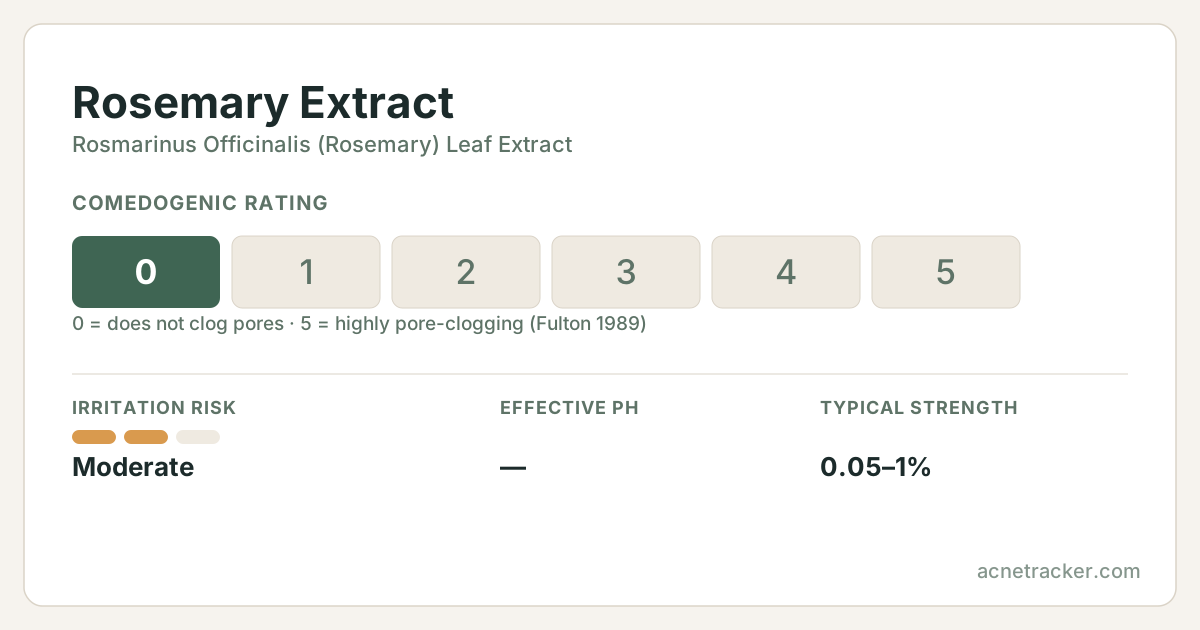
Rosemary extract carries the crisp, herbal scent of the kitchen garden into skincare, where it is valued mostly as a plant antioxidant. Derived from the leaves of the familiar Mediterranean herb, it appears in toners, serums, cleansers and oily-skin products, and is also used behind the scenes to help protect the oils in a formula from going rancid. It is important to separate two things: a purified leaf extract used at low levels for its antioxidants is milder than rosemary essential oil, which is fragrant and more likely to irritate. Because rosemary is naturally aromatic, it deserves a slightly more careful approach than a plain soothing botanical, especially on sensitive skin.
Quick facts
- Comedogenic rating
- our estimate — not measured
- Irritation risk
- Moderate
- Effective pH
- —
- Typical strength
- 0.05–1%
- Pregnancy
- Ask your doctor
- Suits skin types
- oilycombinationnormal
Where this number comes from
No one has published a comedogenic rating for this ingredient. Fulton's 1989 table tested about 250 raw materials and this was not among them, and we found no later study measuring it. The figure shown is our own reasoning from the ingredient's chemistry and how it is used — treat it as an estimate, not a measurement.
Fulton read his own scale as 0-1 not significant, 2-3 borderline, 4-5 positive. The assay is the rabbit ear at 10% dilution, which the paper itself calls extremely sensitive and not fully predictive of human skin. Ratings describe the raw ingredient; concentration and formulation change real-world behaviour.
Caution profile
The four published fields on this page, on one 0–5 scale. Further from the centre means more care is needed — never that the ingredient is worse.
Derived, not measured: pore-clogging is the published comedogenic rating; irritation maps low/moderate/high to 1/3/5; pregnancy maps safe/caution/avoid to 0/3/5; skin-type limits is how many of the seven skin types this entry does NOT list. Every input is printed in words in the quick-facts card above.
Show the numbers
| Metric | 0–5 | Published field |
|---|---|---|
| Pore-clogging | 0 | 0/5 |
| Irritation | 3 | Moderate |
| Skin-type limits | 2.9 | 3/7 |
| Pregnancy | 3 | Ask your doctor |
Working pH and typical strength
Where this ingredient is formulated to sit, and at what concentration.
Both bars come from the fields above: the pH window and the typical strength range published for this ingredient. The tinted column is healthy skin's surface pH (about 4.7–5.75).
Show the numbers
| Metric | 0–5 |
|---|---|
| Typical strength | 0.05–1% |
What is it?
Rosemary leaf owes its cosmetic reputation to two standout antioxidants: rosmarinic acid and carnosic acid, both well-studied free-radical scavengers. These compounds explain why rosemary extract is prized in antioxidant and anti-pollution formulas and why it doubles as an oil-stabiliser that keeps other ingredients fresh. However, rosemary also contains naturally occurring fragrance components, and rosemary essential oil in particular can act as a skin sensitiser. Concentrated forms are stimulating and not suitable for reactive skin. Its antioxidant evidence is solid at the laboratory level; the comedogenic rating is 0 for water-based extracts, but we rate irritation risk as moderate because of the aromatic, potentially sensitising fraction it carries.
Benefits
Strong plant antioxidant
Rosmarinic and carnosic acids are effective free-radical scavengers, helping defend skin against UV and pollution damage alongside antioxidants like vitamin-e and green-tea-extract.
Suits oily, congested skin
Rosemary has a mildly astringent, toning character that many people with oily and combination skin find helps the skin feel fresher and less greasy.
Protects the formula itself
As a natural oil-stabiliser, rosemary extract helps prevent the fats and actives in a product from oxidising, which supports the freshness of the whole formula.
Adds a herbal, purifying feel
Its aromatic character gives cleansers and toners a fresh, purifying quality that pairs with sebum-control ingredients like niacinamide.
How to use
Treat rosemary extract as an antioxidant support rather than a headline active. It works well in a morning toner or serum under sunscreen, where its antioxidants back up UV protection, and in cleansers for oily skin. Because of the sensitisation risk, look for products that use a purified leaf extract at low levels rather than lots of rosemary essential oil, and patch test on the inner arm for several days if your skin is sensitive. Avoid layering many strongly fragranced botanicals at once. Do not apply concentrated rosemary essential oil neat to the face.
Side effects
Rosemary's aromatic components can trigger irritation or allergic contact dermatitis, particularly in the essential-oil form or at higher concentrations. Symptoms may include redness, itching or stinging. People with sensitive, eczema-prone or reactive skin are most at risk. The purified leaf extract used at low levels for antioxidant purposes is much gentler, but the fragrance potential means rosemary is not the best choice for very reactive skin, where a fragrance-free antioxidant is safer.
Who should avoid it
People with sensitive, allergy-prone or eczema-prone skin should be cautious with rosemary, especially the essential-oil form, and patch test first. Because concentrated rosemary and its oil have traditional associations with stimulating circulation and are sometimes cautioned against in pregnancy, and because sensitising fragrance components are present, we mark it as caution during pregnancy — check with your doctor. Those with known fragrance allergies should choose a fragrance-free antioxidant instead.
Pairs well with
Frequently asked questions
Does rosemary extract clog pores?
No. Water-based rosemary leaf extract has a comedogenic rating of 0. The concern with rosemary is not clogging but its aromatic, potentially sensitising components, so irritation matters more than pore-clogging here.
Is rosemary extract irritating?
It can be. The purified leaf extract at low levels is fairly gentle, but rosemary essential oil and higher concentrations contain fragrance compounds that can sensitise or irritate reactive skin. Patch test first.
What is rosemary extract good for?
Its main strengths are antioxidant protection from rosmarinic and carnosic acids and a fresh, astringent feel suited to oily skin. It also helps stabilise the oils in a formula against oxidation.
Can I use rosemary extract if I have sensitive skin?
Cautiously, if at all. Because of its fragrance and sensitisation potential, very sensitive or eczema-prone skin is usually better served by a fragrance-free antioxidant like a stabilised vitamin-c or green-tea-extract.
Sources & further reading
Medical disclaimer
Find your personal acne triggers
Our free Acne Tracker lets you log breakouts, sleep, stress and diet, and shows you which factors correlate with your flare-ups.