Alpha-Lipoic Acid: Comedogenic Rating & Ingredient Analysis
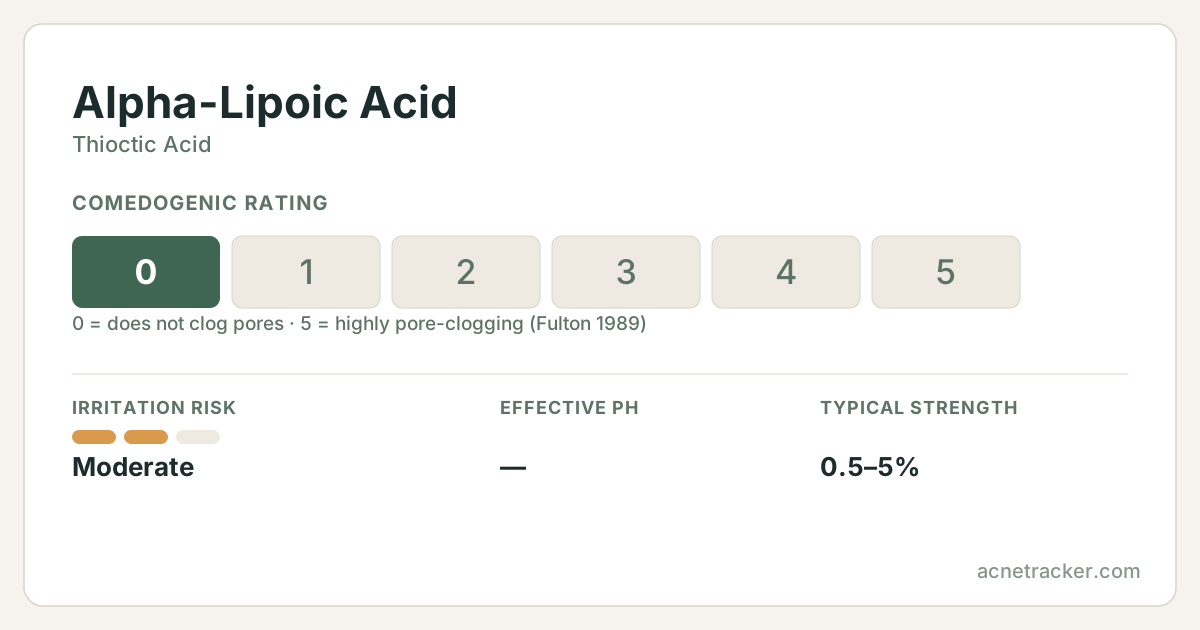
Alpha-lipoic acid, often abbreviated ALA and listed by its INCI name thioctic acid, is a distinctive antioxidant because it is soluble in both water and oil. That dual solubility, sometimes called being 'amphipathic', means it can work throughout the skin's watery and fatty compartments, which sets it apart from antioxidants that are limited to one or the other. Naturally made in the body and involved in energy metabolism, ALA is used in skincare for its antioxidant power and its reputation for improving the look of texture and radiance. It can be a potent addition to an anti-aging routine, though it needs sensible formulation and use because it can be irritating.
Quick facts
- Comedogenic rating
- our estimate — not measured
- Irritation risk
- Moderate
- Effective pH
- —
- Typical strength
- 0.5–5%
- Pregnancy
- Ask your doctor
- Suits skin types
- normalcombinationoilymature
Where this number comes from
No one has published a comedogenic rating for this ingredient. Fulton's 1989 table tested about 250 raw materials and this was not among them, and we found no later study measuring it. The figure shown is our own reasoning from the ingredient's chemistry and how it is used — treat it as an estimate, not a measurement.
Fulton read his own scale as 0-1 not significant, 2-3 borderline, 4-5 positive. The assay is the rabbit ear at 10% dilution, which the paper itself calls extremely sensitive and not fully predictive of human skin. Ratings describe the raw ingredient; concentration and formulation change real-world behaviour.
Caution profile
The four published fields on this page, on one 0–5 scale. Further from the centre means more care is needed — never that the ingredient is worse.
Derived, not measured: pore-clogging is the published comedogenic rating; irritation maps low/moderate/high to 1/3/5; pregnancy maps safe/caution/avoid to 0/3/5; skin-type limits is how many of the seven skin types this entry does NOT list. Every input is printed in words in the quick-facts card above.
Show the numbers
| Metric | 0–5 | Published field |
|---|---|---|
| Pore-clogging | 0 | 0/5 |
| Irritation | 3 | Moderate |
| Skin-type limits | 2.1 | 4/7 |
| Pregnancy | 3 | Ask your doctor |
Working pH and typical strength
Where this ingredient is formulated to sit, and at what concentration.
Both bars come from the fields above: the pH window and the typical strength range published for this ingredient. The tinted column is healthy skin's surface pH (about 4.7–5.75).
Show the numbers
| Metric | 0–5 |
|---|---|
| Typical strength | 0.5–5% |
What is it?
Alpha-lipoic acid is a sulphur-containing fatty acid that your cells use as a cofactor in the reactions that turn food into energy. Its two sulphur atoms give it strong antioxidant activity, letting it neutralise free radicals and help regenerate other antioxidants such as vitamin C, vitamin E and glutathione — which is why it is sometimes described as a 'network antioxidant'. In skincare, its rare ability to dissolve in both water and oil lets it move through different layers of the skin. Some research and anecdotal reports point to smoother texture and improved radiance, but ALA is also unstable and can sting, so it is used at modest concentrations and benefits from careful packaging.
Benefits
Dual-solubility antioxidant
Because alpha-lipoic acid dissolves in both water and oil, it can act across the skin's watery and fatty regions, giving broad antioxidant protection against free radical damage.
Regenerates other antioxidants
ALA helps recycle vitamin C, vitamin E and glutathione back to their active forms, so it strengthens the whole antioxidant network rather than acting alone.
Smooths and refines texture
Users and some studies report that alpha-lipoic acid can improve the look of skin texture and radiance over time, contributing to a smoother, healthier-looking surface.
Supports anti-aging routines
As a potent antioxidant involved in cellular energy, ALA complements other anti-aging actives, helping to defend the skin against the oxidative stress that drives visible aging.
How to use
Introduce alpha-lipoic acid gradually, as it can be more irritating than gentler antioxidants. Start with a lower-concentration product a few times a week, applied to clean skin, and build up as tolerated; many people prefer to use it at night. It pairs logically with vitamin C, vitamin E and coenzyme Q10 as part of an antioxidant network. Because ALA is unstable and sensitive to light and air, choose well-packaged products and replace anything that smells off or discolours. Follow with moisturiser, and continue daily sunscreen. If you notice stinging or redness, reduce frequency until your skin adjusts.
Side effects
Alpha-lipoic acid is more likely to cause irritation than many other antioxidants: some people experience tingling, stinging, redness or a warm sensation, especially at higher concentrations or when first starting. These effects usually lessen with lower frequency and as the skin adapts. Its instability can also make products degrade, sometimes with a sulphurous smell. Patch testing and a gradual introduction help you gauge your tolerance before regular use.
Who should avoid it
Sensitive or easily irritated skin should approach alpha-lipoic acid cautiously, starting low and slow, or choosing a gentler antioxidant instead. Because topical safety data during pregnancy and breastfeeding is limited, it is sensible to be cautious and check with your doctor. If your barrier is currently compromised, calm it before adding a potentially stinging antioxidant like ALA.
Pairs well with
Frequently asked questions
What makes alpha-lipoic acid special?
Its dual solubility in water and oil lets it work across different layers of the skin, and it helps regenerate other antioxidants like vitamin C, E and glutathione, strengthening the whole antioxidant network.
Can alpha-lipoic acid irritate skin?
Yes. ALA can cause tingling, stinging or redness, particularly at higher strengths or when you first start. Introduce it gradually and reduce frequency if irritation appears.
Can I use ALA with vitamin C?
Yes. Alpha-lipoic acid and vitamin C work well together, since ALA helps regenerate vitamin C, and combining antioxidants can enhance overall protection.
Is alpha-lipoic acid good for anti-aging?
It is a potent antioxidant that may improve texture and radiance and defends against oxidative stress, making it a useful, if sometimes irritating, addition to an anti-aging routine.
Is alpha-lipoic acid safe in pregnancy?
Topical safety data during pregnancy is limited, so caution is advised. Check with your doctor before using it if you are pregnant or breastfeeding.
Sources & further reading
Alpha-lipoic acid is a well-documented antioxidant in laboratory work. The dermatology source cited here concerns its capacity to sensitise skin rather than any cosmetic benefit, and we found no strong trial establishing the smoothing or anti-aging effects commonly attributed to it topically.
Medical disclaimer
Find your personal acne triggers
Our free Acne Tracker lets you log breakouts, sleep, stress and diet, and shows you which factors correlate with your flare-ups.