Arnica Extract: Comedogenic Rating & Ingredient Analysis
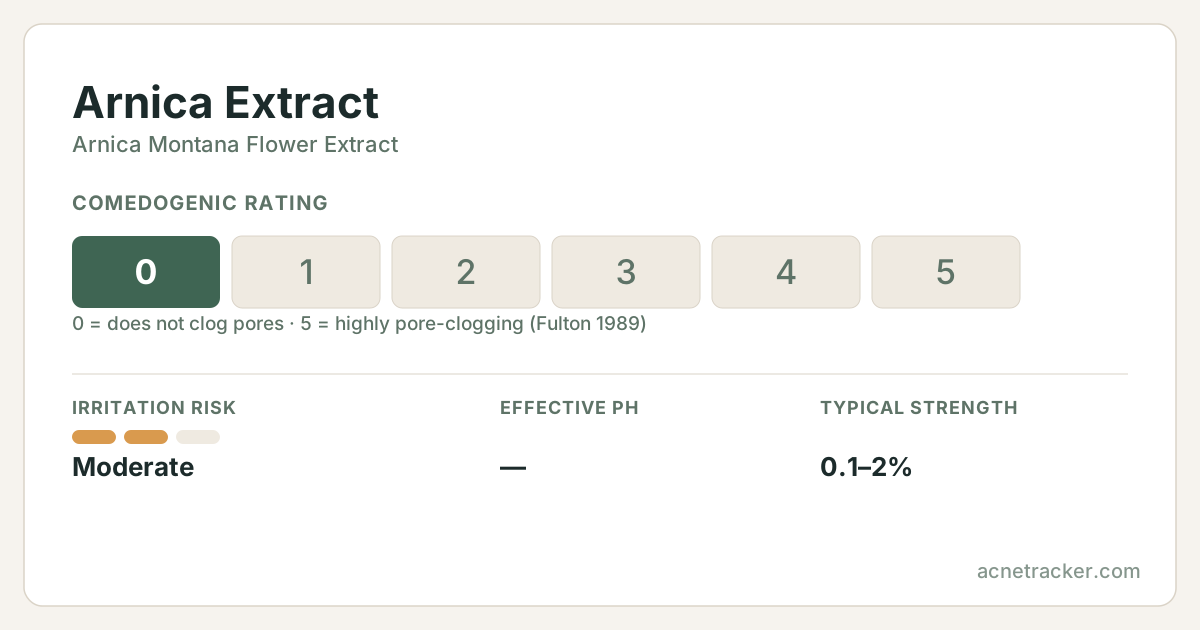
Arnica extract is a mountain flower with a strong reputation in traditional medicine for calming the look of bumps, bruises and stressed skin. Drawn from Arnica montana, it appears in soothing gels, after-sun products, post-procedure creams and formulas marketed for sensitive or reactive skin. Its folk history is long, and many people reach for arnica products after minor knocks. In skincare it is used for its soothing, conditioning character, but arnica comes with an important caveat: as a daisy-family plant it is a recognised contact allergen, so it demands more caution than a plain, hypoallergenic soother, especially on broken or very sensitive skin.
Quick facts
- Comedogenic rating
- our estimate — not measured
- Irritation risk
- Moderate
- Effective pH
- —
- Typical strength
- 0.1–2%
- Pregnancy
- Ask your doctor
- Suits skin types
- normalcombination
Where this number comes from
No one has published a comedogenic rating for this ingredient. Fulton's 1989 table tested about 250 raw materials and this was not among them, and we found no later study measuring it. The figure shown is our own reasoning from the ingredient's chemistry and how it is used — treat it as an estimate, not a measurement.
Fulton read his own scale as 0-1 not significant, 2-3 borderline, 4-5 positive. The assay is the rabbit ear at 10% dilution, which the paper itself calls extremely sensitive and not fully predictive of human skin. Ratings describe the raw ingredient; concentration and formulation change real-world behaviour.
Caution profile
The four published fields on this page, on one 0–5 scale. Further from the centre means more care is needed — never that the ingredient is worse.
Derived, not measured: pore-clogging is the published comedogenic rating; irritation maps low/moderate/high to 1/3/5; pregnancy maps safe/caution/avoid to 0/3/5; skin-type limits is how many of the seven skin types this entry does NOT list. Every input is printed in words in the quick-facts card above.
Show the numbers
| Metric | 0–5 | Published field |
|---|---|---|
| Pore-clogging | 0 | 0/5 |
| Irritation | 3 | Moderate |
| Skin-type limits | 3.6 | 2/7 |
| Pregnancy | 3 | Ask your doctor |
Working pH and typical strength
Where this ingredient is formulated to sit, and at what concentration.
Both bars come from the fields above: the pH window and the typical strength range published for this ingredient. The tinted column is healthy skin's surface pH (about 4.7–5.75).
Show the numbers
| Metric | 0–5 |
|---|---|
| Typical strength | 0.1–2% |
What is it?
Arnica flowers contain sesquiterpene lactones — chiefly helenalin — along with flavonoids and other compounds. Helenalin has documented anti-inflammatory activity in the laboratory, which underpins arnica's traditional use, but it is also the very compound responsible for arnica's reputation as a skin sensitiser. Arnica belongs to the Asteraceae (daisy) family, and allergic contact dermatitis is a well-recognised risk with repeated exposure. So the evidence is a double-edged sword: real soothing potential paired with real allergy potential. Its comedogenic rating is 0, but we rate irritation risk as moderate. Concentrated arnica should not be applied to broken skin or open wounds.
Benefits
Traditional soothing action
Arnica's helenalin content gives it anti-inflammatory activity in the lab, underpinning its long use in products that calm the look of stressed, bumped or reactive skin.
Calms the look of bruising
It is widely used in gels and creams marketed to reduce the appearance of bruises and minor marks, a role rooted in its herbal tradition.
Antioxidant flavonoids
Alongside its lactones, arnica supplies flavonoids that add light antioxidant support, complementing soothers like centella-asiatica.
Non-comedogenic
With a rating of 0, arnica will not clog pores, though its allergy potential means it is best reserved for resilient rather than very sensitive skin.
How to use
Use arnica extract in well-formulated soothing gels and creams at low levels, applied to intact skin after cleansing. Because of its sensitisation potential, patch test on the inner arm for several days before wider use, and avoid applying it to broken skin, open blemishes or wounds. Do not layer several strongly botanical, daisy-family products together. If you have sensitive or allergy-prone skin, a plain soother like panthenol or allantoin is a safer everyday choice. Discontinue at the first sign of redness or itching, as sensitisation tends to persist.
Side effects
The main concern with arnica is allergic contact dermatitis: helenalin is a known sensitiser, and repeated use can trigger redness, itching, rash or swelling in susceptible people. Those allergic to other daisy-family plants — ragweed, chrysanthemums, calendula-extract, chamomile-extract — are at higher risk. Applying arnica to broken skin increases absorption and irritation. Because of this profile, arnica is not the right soother for reactive skin, where gentler options are preferable.
Who should avoid it
People with sensitive, allergy-prone or eczema-prone skin, and anyone allergic to daisy-family plants, should avoid arnica or patch test very carefully. Do not apply it to broken skin or open wounds. Because oral arnica is toxic and its safety in pregnancy is not established, and topical arnica carries sensitising compounds, we mark it as caution during pregnancy — check with your doctor. Never ingest arnica products.
Pairs well with
Frequently asked questions
Does arnica extract clog pores?
No. Arnica flower extract has a comedogenic rating of 0. The real concern with arnica is not pore-clogging but its potential to cause allergic contact dermatitis.
Is arnica safe for sensitive skin?
Not especially. As a daisy-family plant containing helenalin, arnica can sensitise skin over time. Sensitive or allergy-prone users are usually better off with gentler soothers like panthenol or allantoin.
Can I put arnica on a popped pimple?
No. Arnica should not be applied to broken skin or open blemishes, as this increases absorption and irritation risk. Use it only on intact skin, and ideally patch test first.
Why is arnica considered an allergen?
Arnica belongs to the daisy (Asteraceae) family and contains helenalin, a compound that is both anti-inflammatory and a recognised contact sensitiser, so repeated use can make skin allergic to it.
Sources & further reading
Medical disclaimer
Find your personal acne triggers
Our free Acne Tracker lets you log breakouts, sleep, stress and diet, and shows you which factors correlate with your flare-ups.