Pyridoxine: Comedogenic Rating & Ingredient Analysis
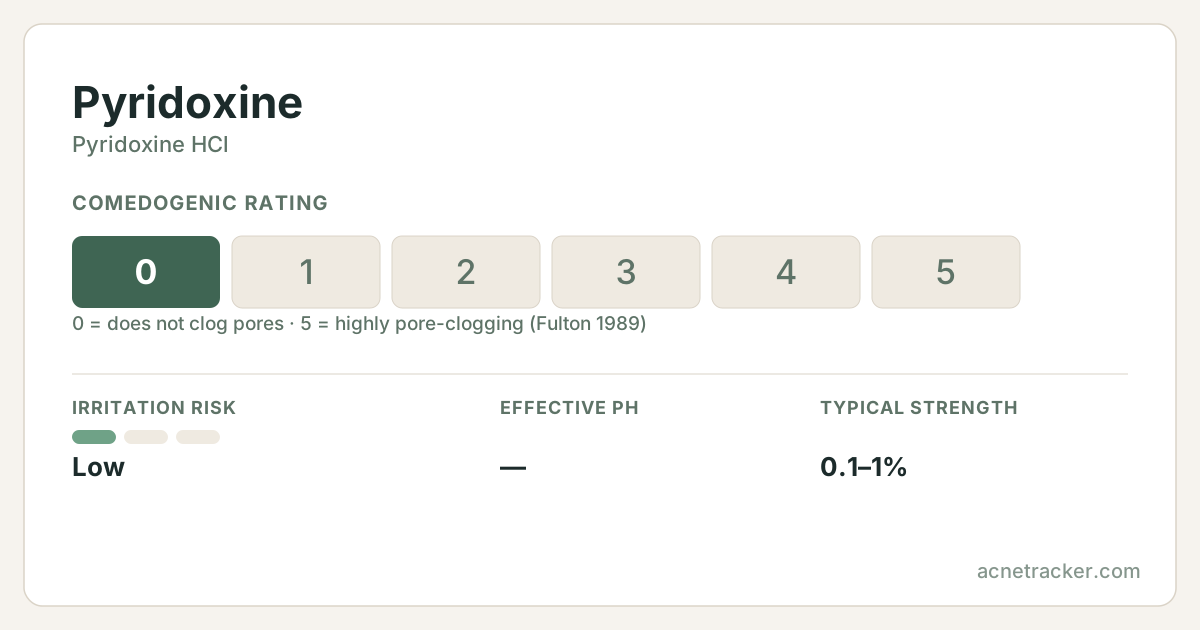
Pyridoxine is the skincare name for vitamin B6, a water-soluble vitamin essential to countless processes in the body, from protein metabolism to nerve function. In cosmetics it appears, usually as pyridoxine HCl, as a skin-conditioning ingredient sometimes associated with oil balance and calmer, clearer skin. Its reputation partly comes from the observation that vitamin B6 plays a role in hormone and sebum-related processes, and that a deficiency can show up as skin problems. As a topical addition it is gentle and supportive, though it is best understood as one helpful nutrient among many rather than a powerful standalone acne treatment.
Quick facts
- Comedogenic rating
- our estimate — not measured
- Irritation risk
- Low
- Effective pH
- —
- Typical strength
- 0.1–1%
- Pregnancy
- Considered safe
- Suits skin types
- oilycombinationacne-pronenormal
Where this number comes from
No one has published a comedogenic rating for this ingredient. Fulton's 1989 table tested about 250 raw materials and this was not among them, and we found no later study measuring it. The figure shown is our own reasoning from the ingredient's chemistry and how it is used — treat it as an estimate, not a measurement.
Fulton read his own scale as 0-1 not significant, 2-3 borderline, 4-5 positive. The assay is the rabbit ear at 10% dilution, which the paper itself calls extremely sensitive and not fully predictive of human skin. Ratings describe the raw ingredient; concentration and formulation change real-world behaviour.
Caution profile
The four published fields on this page, on one 0–5 scale. Further from the centre means more care is needed — never that the ingredient is worse.
Derived, not measured: pore-clogging is the published comedogenic rating; irritation maps low/moderate/high to 1/3/5; pregnancy maps safe/caution/avoid to 0/3/5; skin-type limits is how many of the seven skin types this entry does NOT list. Every input is printed in words in the quick-facts card above.
Show the numbers
| Metric | 0–5 | Published field |
|---|---|---|
| Pore-clogging | 0 | 0/5 |
| Irritation | 1 | Low |
| Skin-type limits | 2.1 | 4/7 |
| Pregnancy | 0 | Considered safe |
Working pH and typical strength
Where this ingredient is formulated to sit, and at what concentration.
Both bars come from the fields above: the pH window and the typical strength range published for this ingredient. The tinted column is healthy skin's surface pH (about 4.7–5.75).
Show the numbers
| Metric | 0–5 |
|---|---|
| Typical strength | 0.1–1% |
What is it?
Vitamin B6 is a group of related compounds, and pyridoxine (often as the stable pyridoxine hydrochloride) is the form usually used in skincare. In the body, B6 is a cofactor for a large number of enzyme reactions, including those involved in amino acid and fat metabolism, and it contributes to the maintenance of normal skin. Some interest in topical B6 relates to sebum and hormonal skin changes, since B6 is linked to these pathways internally, though the direct evidence for topical pyridoxine dramatically reducing oil or acne is limited. In practice it is used as a mild skin-conditioning and supportive ingredient, frequently combined with more established actives like niacinamide and zinc for oily, blemish-prone skin.
Benefits
Skin-conditioning nutrient
As vitamin B6, pyridoxine supports the maintenance of normal, healthy-looking skin and acts as a gentle conditioning ingredient within a broader formula.
Associated with oil balance
Because vitamin B6 is involved in sebum-related processes internally, topical pyridoxine is often included in products aimed at oily and blemish-prone skin seeking better balance.
Supports calmer-looking skin
Pyridoxine is a mild, well-tolerated ingredient that can contribute to a comfortable, calmer feel, particularly when paired with soothing and clarifying actives.
Complements clarifying routines
Pyridoxine works well alongside proven actives like niacinamide, zinc PCA and salicylic acid, adding supportive vitamin B6 to routines focused on oil and blemishes.
How to use
Pyridoxine is easy to use and typically appears as a supporting ingredient rather than the star of a product. Apply serums or moisturisers containing it once or twice daily to clean skin; there is no adjustment period. It fits naturally into routines for oily and blemish-prone skin, especially alongside niacinamide, zinc PCA or salicylic acid, which have stronger evidence for oil control and clearer skin. Keep expectations measured — topical B6 is a gentle helper, not a dramatic treatment on its own. As always, daily sunscreen supports the overall health and appearance of your skin regardless of the actives you use.
Side effects
Topical pyridoxine is gentle and rarely causes irritation, fitting its role as a mild, water-soluble vitamin used at low concentrations. Adverse reactions are uncommon. Note that skincare pyridoxine is a topical ingredient and is separate from oral vitamin B6 supplements, which can cause problems in very high doses over time; that concern does not apply to normal cosmetic use. Patch testing a new product for a few days remains a sensible precaution.
Who should avoid it
There is little reason for most people to avoid topical pyridoxine; it suits oily, combination and blemish-prone skin and is well tolerated. Those hoping it will single-handedly clear acne or control oil may be disappointed, as its topical evidence is modest and it works best as a supporting ingredient. It is considered safe in normal cosmetic use during pregnancy, though you can confirm your overall routine with your doctor.
Pairs well with
Frequently asked questions
What does pyridoxine (vitamin B6) do in skincare?
Pyridoxine is a gentle, skin-conditioning vitamin sometimes associated with oil balance and calmer skin. It is used as a supportive ingredient, often in products for oily, blemish-prone skin.
Can vitamin B6 help acne?
Vitamin B6 is linked to sebum and hormonal pathways internally, but direct evidence for topical pyridoxine treating acne is limited. It works best as a supporting ingredient alongside proven actives.
Is topical B6 the same as B6 supplements?
No. Skincare pyridoxine is applied to the skin and differs from oral B6 supplements. High-dose oral B6 can cause issues over time, but that concern does not apply to normal cosmetic use.
Can I use pyridoxine with niacinamide?
Yes. Pyridoxine (B6) and niacinamide (B3) pair well and are both gentle, supporting a clarifying routine for oily and blemish-prone skin without irritation.
Is pyridoxine safe in pregnancy?
Topical pyridoxine in normal cosmetic amounts is generally considered safe during pregnancy and breastfeeding. As always, check with your healthcare provider about your full routine.
Sources & further reading
Vitamin B6 deficiency is a documented cause of seborrhoeic skin changes, and that is where the sebum-related description originates. It is evidence about a deficiency corrected systemically, not evidence that applying pyridoxine to skin regulates oil in someone whose B6 status is normal.
Medical disclaimer
Find your personal acne triggers
Our free Acne Tracker lets you log breakouts, sleep, stress and diet, and shows you which factors correlate with your flare-ups.