Cucumber Extract: Comedogenic Rating & Ingredient Analysis
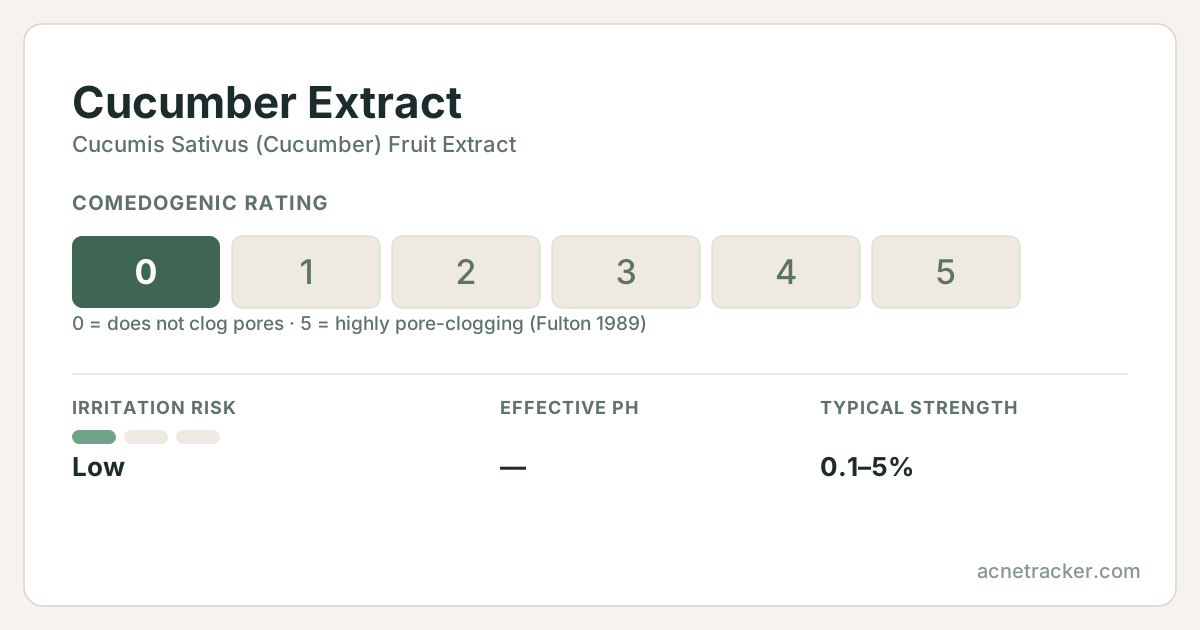
Cucumber extract is the skincare version of the classic slices-on-the-eyes spa image: cool, watery and refreshing. Pressed and extracted from the familiar salad cucumber, it appears in gels, mists, sheet masks and light moisturisers, usually those marketed for oily, hot or tired-looking skin. Its personality is gentle and hydrating rather than powerful; cucumber will not clear a breakout or fade a mark, but it delivers a pleasant cooling sensation and light conditioning that make it popular in summer and post-sun products. Because it is essentially plant water, it is one of the lightest, least pore-clogging botanicals you can put on skin.
Quick facts
- Comedogenic rating
- our estimate — not measured
- Irritation risk
- Low
- Effective pH
- —
- Typical strength
- 0.1–5%
- Pregnancy
- Considered safe
- Suits skin types
- oilycombinationnormalsensitiveacne-prone
Where this number comes from
No one has published a comedogenic rating for this ingredient. Fulton's 1989 table tested about 250 raw materials and this was not among them, and we found no later study measuring it. The figure shown is our own reasoning from the ingredient's chemistry and how it is used — treat it as an estimate, not a measurement.
Fulton read his own scale as 0-1 not significant, 2-3 borderline, 4-5 positive. The assay is the rabbit ear at 10% dilution, which the paper itself calls extremely sensitive and not fully predictive of human skin. Ratings describe the raw ingredient; concentration and formulation change real-world behaviour.
Caution profile
The four published fields on this page, on one 0–5 scale. Further from the centre means more care is needed — never that the ingredient is worse.
Derived, not measured: pore-clogging is the published comedogenic rating; irritation maps low/moderate/high to 1/3/5; pregnancy maps safe/caution/avoid to 0/3/5; skin-type limits is how many of the seven skin types this entry does NOT list. Every input is printed in words in the quick-facts card above.
Show the numbers
| Metric | 0–5 | Published field |
|---|---|---|
| Pore-clogging | 0 | 0/5 |
| Irritation | 1 | Low |
| Skin-type limits | 1.4 | 5/7 |
| Pregnancy | 0 | Considered safe |
Working pH and typical strength
Where this ingredient is formulated to sit, and at what concentration.
Both bars come from the fields above: the pH window and the typical strength range published for this ingredient. The tinted column is healthy skin's surface pH (about 4.7–5.75).
Show the numbers
| Metric | 0–5 |
|---|---|
| Typical strength | 0.1–5% |
What is it?
Cucumber fruit is around 95% water, and its extract carries small amounts of vitamin C, silica, amino acids and mild antioxidant compounds along with that high water content. In cosmetics it functions mostly as a soothing, refreshing humectant-style ingredient rather than a targeted active. Traditional and folk use has long valued cucumber for calming puffy, tired skin, and the cooling feel is real, but rigorous clinical evidence for dramatic effects is thin — its value is comfort and light hydration. As a watery fruit extract it has a comedogenic rating of 0, an extremely low irritation risk, and it suits practically every skin type, which is why it shows up so often in gentle, everyday formulas.
Benefits
Cools and refreshes
Cucumber's high water content gives an immediate cooling, soothing feel, which is why it is a staple of after-sun gels, morning mists and de-puffing eye products.
Light, non-greasy hydration
It adds a thin layer of moisture without any oil, making it a comfortable choice for oily and combination skin that dislikes heavy creams.
Calms the look of irritation
Its mild antioxidants and soothing character help skin look less red and reactive, pairing nicely with dedicated soothers like aloe-vera and panthenol.
Suits sensitive, breakout-prone skin
With a comedogenic rating of 0 and minimal irritation potential, cucumber is safe for acne-prone and reactive skin and layers under any active.
How to use
Cucumber extract is undemanding: apply it in a toner, mist, gel or moisturiser after cleansing, at whatever time of day suits you. It is a good morning refresher and a soothing step after sun exposure or exercise. Because it is so mild, it layers under sunscreen and over acne actives such as niacinamide or salicylic-acid without conflict, and it needs no adjustment period. Store gel-type cucumber products in the fridge if you enjoy the extra cooling effect. Sensitive users can patch test, though reactions are rare.
Side effects
Cucumber extract is among the least irritating cosmetic ingredients, and side effects are uncommon. As with any botanical, isolated allergy is possible, so people with unusually reactive skin should patch test. Beyond that, most stinging blamed on a cucumber product usually comes from other components such as fragrance, essential oils or high alcohol content in the same formula, not the cucumber itself.
Who should avoid it
There is almost no one who needs to avoid cucumber extract. Only those with a specific, known cucumber or melon-family allergy should steer clear or patch test carefully. Pregnancy and breastfeeding change nothing about that verdict — this is a food plant applied at cosmetic dilution. If a cucumber-labelled product stings, check the rest of the ingredient list rather than assuming the cucumber is the cause.
Pairs well with
Frequently asked questions
Does cucumber extract clog pores?
No. Cucumber extract is essentially plant water with a comedogenic rating of 0, so it is one of the safest botanicals for oily and acne-prone skin.
Is cucumber extract good for oily skin?
Yes. Its light, oil-free hydration and cooling feel suit oily and combination skin that finds richer moisturisers uncomfortable, and it will not add to congestion.
Does cucumber extract reduce puffiness?
It can give a temporary cooling, de-puffing sensation, which is why it appears in eye gels. The effect is soothing and short-lived rather than a lasting structural change.
Can I use cucumber extract every day?
Yes. It is gentle enough for daily, twice-a-day use on all skin types, including sensitive and acne-prone, and it layers under sunscreen and other actives without trouble.
Sources & further reading
Medical disclaimer
Find your personal acne triggers
Our free Acne Tracker lets you log breakouts, sleep, stress and diet, and shows you which factors correlate with your flare-ups.