Cannabidiol (CBD): Comedogenic Rating & Ingredient Analysis
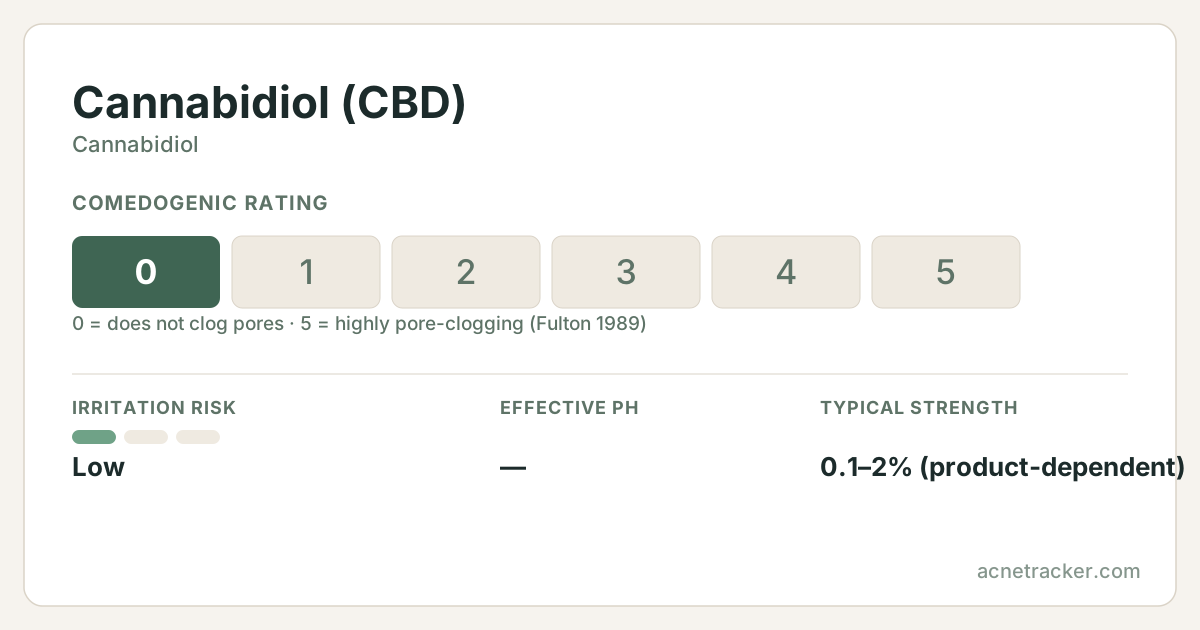
Cannabidiol, usually shortened to CBD, is a compound derived from the cannabis plant that has become a fashionable addition to serums, creams and balms. It is non-intoxicating, meaning it does not produce the high associated with THC. This page discusses CBD strictly as a cosmetic, skin-conditioning ingredient; it is not a medicine, and topical cosmetic CBD is not a treatment for any skin disease. The consumer research on skin is still limited and emerging, so it is best approached with measured expectations rather than the sweeping claims that often accompany it.
Quick facts
- Comedogenic rating
- our estimate — not measured
- Irritation risk
- Low
- Effective pH
- —
- Typical strength
- 0.1–2% (product-dependent)
- Pregnancy
- Ask your doctor
- Suits skin types
- oilycombinationsensitivenormalacne-prone
Where this number comes from
No one has published a comedogenic rating for this ingredient. Fulton's 1989 table tested about 250 raw materials and this was not among them, and we found no later study measuring it. The figure shown is our own reasoning from the ingredient's chemistry and how it is used — treat it as an estimate, not a measurement.
Fulton read his own scale as 0-1 not significant, 2-3 borderline, 4-5 positive. The assay is the rabbit ear at 10% dilution, which the paper itself calls extremely sensitive and not fully predictive of human skin. Ratings describe the raw ingredient; concentration and formulation change real-world behaviour.
Caution profile
The four published fields on this page, on one 0–5 scale. Further from the centre means more care is needed — never that the ingredient is worse.
Derived, not measured: pore-clogging is the published comedogenic rating; irritation maps low/moderate/high to 1/3/5; pregnancy maps safe/caution/avoid to 0/3/5; skin-type limits is how many of the seven skin types this entry does NOT list. Every input is printed in words in the quick-facts card above.
Show the numbers
| Metric | 0–5 | Published field |
|---|---|---|
| Pore-clogging | 0 | 0/5 |
| Irritation | 1 | Low |
| Skin-type limits | 1.4 | 5/7 |
| Pregnancy | 3 | Ask your doctor |
Working pH and typical strength
Where this ingredient is formulated to sit, and at what concentration.
Both bars come from the fields above: the pH window and the typical strength range published for this ingredient. The tinted column is healthy skin's surface pH (about 4.7–5.75).
Show the numbers
| Metric | 0–5 |
|---|---|
| Typical strength | 0.1–2% (product-dependent) |
What is it?
CBD is one of many cannabinoids found in cannabis, extracted and purified for use in cosmetics. It is not the same thing as hemp-seed-oil, which is pressed from the seeds and contains essentially no cannabinoids; CBD comes from the flowers and leaves. In cosmetic formulas it is used at low percentages, usually dissolved in a carrier oil, and is valued for a pleasant, conditioning feel and antioxidant properties observed in laboratory settings. Because it is delivered in oil and used at tiny amounts, it does not clog pores, and we place it at a comedogenic rating of 0. Its legal status varies widely by country and even by region, so its availability in cosmetics is not universal.
Benefits
Antioxidant properties in lab studies
Laboratory research suggests CBD can act as an antioxidant on the skin surface, part of why it is added to products marketed for a comfortable, well-conditioned complexion.
Pleasant, conditioning feel
In a well-made oil or cream, CBD contributes to a soft, soothed skin-feel that many users enjoy, without the greasiness of a heavy botanical oil.
Very low pore-clogging risk
Used at the small percentages found in cosmetics and carried in light oils, CBD does not contribute to congestion, earning a comedogenic rating of 0.
Pairs cleanly with gentle actives
It sits comfortably alongside barrier-supporting ingredients like niacinamide, so it can be worked into a calming routine without obvious conflicts.
How to use
Follow the individual product's directions, as CBD concentration and format vary enormously. Typically a CBD serum or oil is applied to cleansed skin once or twice a day, before a heavier moisturiser. Because the evidence for skin benefits is still emerging, treat it as a nice-to-have conditioning ingredient rather than a problem-solver, and do not use a cosmetic CBD product in place of medical care for a diagnosed skin condition. Patch test a new product first, and buy from brands that publish third-party testing, since cannabinoid content in cosmetics can be inconsistent.
Side effects
Topical cosmetic CBD is generally reported as well tolerated, but because product quality varies, reactions are usually down to the carrier oils, fragrance or other ingredients rather than CBD itself. As research is limited, long-term data are thin. Do not expect or rely on medical effects. If a product causes redness, itching or breakouts, stop using it.
Who should avoid it
Because safety data during pregnancy and breastfeeding are limited, cosmetic CBD is best avoided or cleared with a doctor in that period — treat it as caution. Anyone subject to drug testing should note that some products are inconsistently labelled. Check your local laws, as the legal status of CBD in cosmetics differs by country and region. Do not use it to self-treat a medical skin condition.
Pairs well with
Frequently asked questions
Is CBD skincare the same as hemp seed oil?
No. Cannabidiol is extracted from the flowers and leaves and added as an active, while hemp-seed-oil is pressed from the seeds and contains virtually no cannabinoids. A product may contain one, the other or both, so read the ingredient list.
Does topical CBD treat acne or eczema?
Cosmetic CBD is not a medicine and should not be presented as a treatment for any skin disease. Some early laboratory research is interesting, but the consumer evidence is limited and emerging. See a clinician for a diagnosed condition.
Will CBD skincare make me feel high?
No. CBD is non-intoxicating and, applied to the skin at cosmetic levels, it does not produce a high. That effect is associated with THC, a different cannabinoid that cosmetic products are not meant to contain.
Is CBD legal in skincare where I live?
It depends on your country and sometimes your region, as rules differ and change. Check local regulations and buy from reputable brands that provide third-party testing, since labelling and legality both vary.
Sources & further reading
CBD's anti-inflammatory and antioxidant activity is documented in pharmacology research that is largely systemic and preclinical. We found no robust trial of a cosmetic CBD concentration on human skin, so the descriptions here reflect a proposed mechanism rather than a demonstrated topical effect.
Medical disclaimer
Find your personal acne triggers
Our free Acne Tracker lets you log breakouts, sleep, stress and diet, and shows you which factors correlate with your flare-ups.