Pentylene Glycol: Comedogenic Rating & Ingredient Analysis
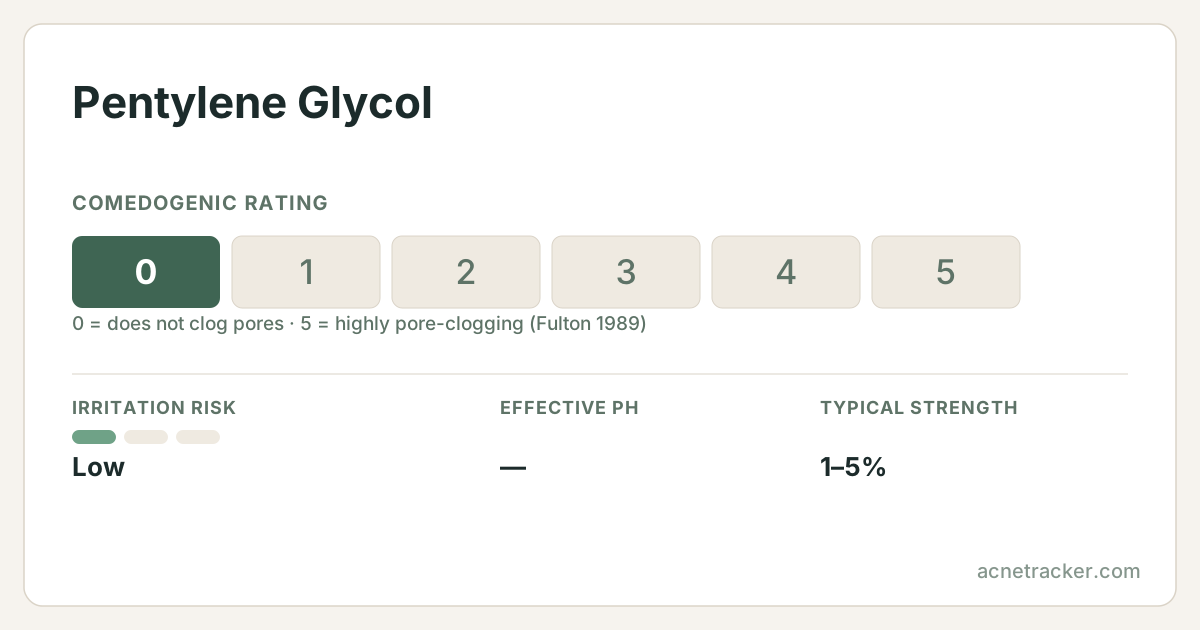
Pentylene glycol is a small, versatile diol that shows up near the top of many ingredient lists yet rarely gets attention on the front of the bottle. It does three quiet jobs at once: it draws water into the upper layers of skin like a humectant, it dissolves ingredients that would otherwise be hard to formulate, and it makes the product harder for microbes to spoil. Because it is odourless, non-acidic and extremely well tolerated, it appears in everything from gentle cleansers to serums aimed at sensitive and acne-prone skin. It is not an active that changes the skin on its own, but a formulation workhorse that helps everything else perform.
Quick facts
- Comedogenic rating
- our estimate — not measured
- Irritation risk
- Low
- Effective pH
- —
- Typical strength
- 1–5%
- Pregnancy
- Considered safe
- Suits skin types
- oilydrycombinationsensitivenormalacne-prone
Where this number comes from
No one has published a comedogenic rating for this ingredient. Fulton's 1989 table tested about 250 raw materials and this was not among them, and we found no later study measuring it. The figure shown is our own reasoning from the ingredient's chemistry and how it is used — treat it as an estimate, not a measurement.
Fulton read his own scale as 0-1 not significant, 2-3 borderline, 4-5 positive. The assay is the rabbit ear at 10% dilution, which the paper itself calls extremely sensitive and not fully predictive of human skin. Ratings describe the raw ingredient; concentration and formulation change real-world behaviour.
Caution profile
The four published fields on this page, on one 0–5 scale. Further from the centre means more care is needed — never that the ingredient is worse.
Derived, not measured: pore-clogging is the published comedogenic rating; irritation maps low/moderate/high to 1/3/5; pregnancy maps safe/caution/avoid to 0/3/5; skin-type limits is how many of the seven skin types this entry does NOT list. Every input is printed in words in the quick-facts card above.
Show the numbers
| Metric | 0–5 | Published field |
|---|---|---|
| Pore-clogging | 0 | 0/5 |
| Irritation | 1 | Low |
| Skin-type limits | 0.7 | 6/7 |
| Pregnancy | 0 | Considered safe |
Working pH and typical strength
Where this ingredient is formulated to sit, and at what concentration.
Both bars come from the fields above: the pH window and the typical strength range published for this ingredient. The tinted column is healthy skin's surface pH (about 4.7–5.75).
Show the numbers
| Metric | 0–5 |
|---|---|
| Typical strength | 1–5% |
What is it?
Chemically, pentylene glycol is a five-carbon glycol (1,2-pentanediol) that can be derived from sugarcane or corn or made synthetically. Its structure gives it a split personality: one end likes water, the other likes oil, which is why it works as both a humectant and a solvent. As a humectant it binds moisture in the stratum corneum, softening the surface and supporting flexibility. As a solvent it helps disperse botanical extracts, preservatives and poorly soluble actives evenly through a formula. It also has mild antimicrobial activity, so formulators use it to reduce the amount of traditional preservative a product needs. It carries a comedogenic rating of 0 and is considered non-sensitising at cosmetic levels.
Benefits
Lightweight hydration
It attracts and holds water in the outermost skin layers, giving a hydrated, supple feel without heaviness — useful in gels and fluids for oily and acne-prone skin.
Boosts preservation
Its mild antimicrobial action lets formulators cut back on stronger preservatives, which can make a product gentler for reactive skin.
Improves absorption of actives
As a solvent it keeps botanicals and active ingredients evenly dissolved, helping them spread and penetrate consistently across the skin.
Non-comedogenic and calm
With a comedogenic rating of 0 and a very low irritation profile, it suits people who react to richer emollients or heavier humectants.
How to use
There is nothing to dose or time with pentylene glycol — you simply use products that contain it. It sits comfortably in morning and evening routines and layers under sunscreen, makeup and any active. Because it is a supporting ingredient, judge the product as a whole rather than the glycol alone. If your skin is very reactive and a new product stings, pentylene glycol is an unlikely culprit; look first at fragrance, essential oils or exfoliating acids in the same formula. It pairs naturally with humectants like glycerin and hyaluronic acid and with soothing actives such as niacinamide.
Side effects
Pentylene glycol is very well tolerated. Reports of irritation are rare and usually linked to high concentrations or to other ingredients in the same product. It is not an alpha or beta hydroxy acid, does not exfoliate and does not increase sun sensitivity. A small number of people with highly reactive skin may find any glycol slightly tingly, but true allergy is uncommon.
Who should avoid it
Almost no one needs to avoid it. If you have previously reacted to propanediol or other glycols, patch test a new product for a few nights before applying it to the whole face. Otherwise it is suitable across all skin types, including sensitive and acne-prone.
Pairs well with
Frequently asked questions
Does pentylene glycol clog pores?
No. It has a comedogenic rating of 0 and is water-loving rather than oily, so it does not contribute to clogged pores. It is common in products designed for acne-prone skin.
Is pentylene glycol a preservative?
Not a standalone one, but it has mild antimicrobial activity that supports the main preservative system. Formulators often use it to reduce how much traditional preservative a product needs.
Is pentylene glycol the same as propylene glycol?
No. They are related glycols but different molecules. Pentylene glycol has a longer carbon chain, tends to be better tolerated and also acts as a preservative booster.
Is pentylene glycol safe during pregnancy?
Topical pentylene glycol is considered low risk and there is no specific reason to avoid it while pregnant or breastfeeding. If you are auditing a routine for pregnancy, a supporting glycol used at 1–5% is rarely the line worth a conversation — bring your doctor the actives instead.
Where this ingredient shows up here
Counted across this database, not the web — these are the pages on this site that reason about this ingredient.
Buying guides 1
Sources & further reading
Medical disclaimer
Find your personal acne triggers
Our free Acne Tracker lets you log breakouts, sleep, stress and diet, and shows you which factors correlate with your flare-ups.