Oleic Acid: Comedogenic Rating & Ingredient Analysis
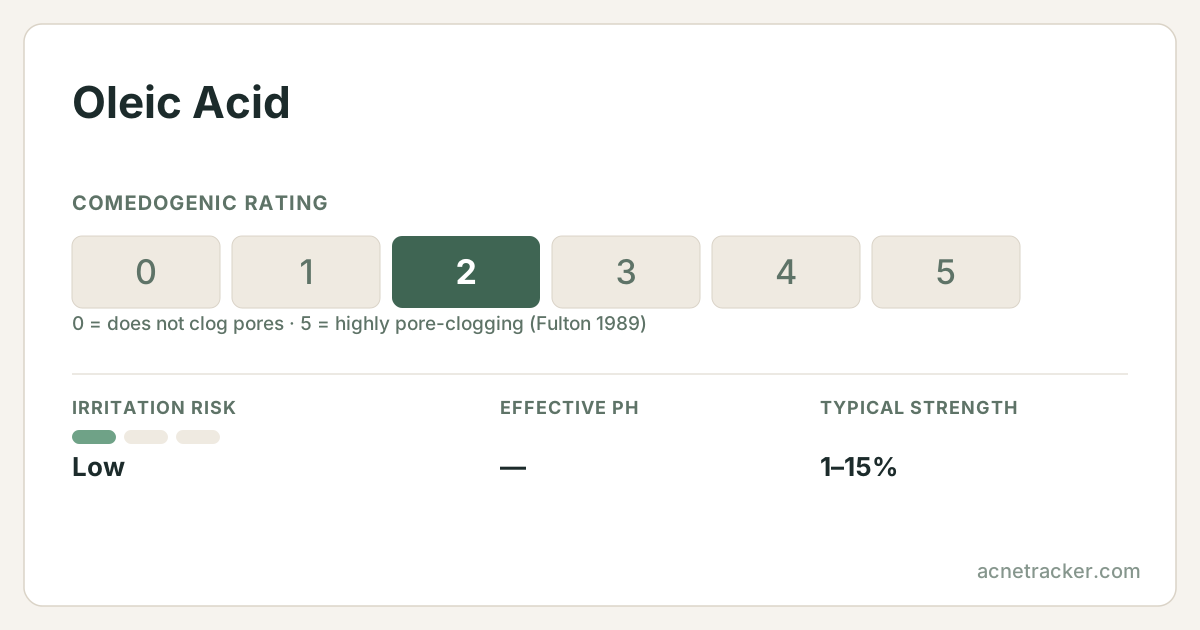
Oleic acid is the rich, cushioning fatty acid that makes oils like olive, marula, avocado and shea feel deeply nourishing on the skin. It is a monounsaturated omega-9 and, unlike essential omega-6 linoleic acid, the body can make it itself. For dry and mature skin oleic acid is a gift: it is a heavy emollient that softens rough patches and holds moisture in. For oily and acne-prone skin it is more of a caution, because it is rated comedogenic 2 in Fulton's classic testing and because acne-prone sebum is already skewed toward oleic acid. Understanding which camp your skin is in is the single most useful thing to know about this ingredient.
Quick facts
- Comedogenic rating
- measured
- Irritation risk
- Low
- Effective pH
- —
- Typical strength
- 1–15%
- Pregnancy
- Considered safe
- Suits skin types
- drymaturenormalsensitive
Where this number comes from
Measured in published research. The study is linked below.
This one has been measured directly. A 1983 study applied oleic acid to rabbit ear skin and found it induced fairly large comedones, with comedone size tracking the level of lipid peroxide present. The same study found squalene itself scarcely comedogenic while its peroxides were highly so — which is the useful practical point: oxidised oil is the greater problem, and that is a storage and formulation question as much as an ingredient one.
Fulton read his own scale as 0-1 not significant, 2-3 borderline, 4-5 positive. The assay is the rabbit ear at 10% dilution, which the paper itself calls extremely sensitive and not fully predictive of human skin. Ratings describe the raw ingredient; concentration and formulation change real-world behaviour.
Caution profile
The four published fields on this page, on one 0–5 scale. Further from the centre means more care is needed — never that the ingredient is worse.
Derived, not measured: pore-clogging is the published comedogenic rating; irritation maps low/moderate/high to 1/3/5; pregnancy maps safe/caution/avoid to 0/3/5; skin-type limits is how many of the seven skin types this entry does NOT list. Every input is printed in words in the quick-facts card above.
Show the numbers
| Metric | 0–5 | Published field |
|---|---|---|
| Pore-clogging | 2 | 2/5 |
| Irritation | 1 | Low |
| Skin-type limits | 2.1 | 4/7 |
| Pregnancy | 0 | Considered safe |
Working pH and typical strength
Where this ingredient is formulated to sit, and at what concentration.
Both bars come from the fields above: the pH window and the typical strength range published for this ingredient. The tinted column is healthy skin's surface pH (about 4.7–5.75).
Show the numbers
| Metric | 0–5 |
|---|---|
| Typical strength | 1–15% |
What is it?
Oleic acid is a long-chain monounsaturated fatty acid with a single double bond, which gives it a liquid, oily texture at room temperature. In cosmetics it works as an emollient and, importantly, as a penetration enhancer: it loosens the ordered lipids of the outer skin, which lets other ingredients pass through more easily. That is useful in a formula designed to deliver actives, but it also means oleic-rich oils can disrupt the barrier of already-compromised or acne-prone skin if overused. It is naturally the dominant fatty acid in olive, marula, avocado, camellia and high-oleic sunflower oils, and it is what makes those oils feel plush rather than dry.
Benefits
Deeply softens dry skin
As a heavy emollient, oleic acid smooths rough, flaky patches and gives dry and mature skin a supple, cushioned feel that lighter fatty acids cannot match.
Seals in moisture
Its occlusive character slows water loss from the surface, making oleic-rich oils useful as the final nourishing step over a humectant on parched skin.
Boosts absorption of other actives
Oleic acid gently loosens the skin's surface lipids, which can help partner ingredients penetrate more effectively in a well-designed formula.
Comfortable for barrier-dry skin
For people whose main problem is tightness and flaking rather than breakouts, oleic-rich oils deliver fast relief and a lasting soft finish.
How to use
If your skin is dry, mature or simply tolerant of oils, use an oleic-rich oil (olive, marula, avocado, camellia) as the last step at night, warming a few drops between the palms and pressing them in. It layers well over humectants like glycerin and hyaluronic acid, and blends nicely with lighter linoleic oils to balance the texture. If your skin is oily or acne-prone, use oleic-rich oils sparingly or choose a linoleic-dominant oil instead. Because oleic acid enhances penetration, be a little more cautious when layering it with strong actives, and always patch test a new oil first.
Side effects
Oleic acid is low-irritation for most people, but its comedogenic rating of 2 means it can contribute to clogged pores and small bumps in those prone to congestion. Its penetration-enhancing effect can also make an already-irritated barrier more reactive. Rancid, oxidised oil is more likely to irritate, so keep products fresh. If you notice new closed comedones after adding an oleic-rich oil, that is a sign it does not suit your skin.
Who should avoid it
Oily and acne-prone skin should be cautious with pure oleic acid and oleic-heavy oils, since both the comedogenic rating and the fatty-acid profile of acne-prone sebum argue against piling on more. Anyone with a currently damaged or very reactive barrier should favour balanced or linoleic-rich options until the skin settles.
Pairs well with
Frequently asked questions
Is oleic acid bad for acne?
It can be. Oleic acid is rated comedogenic 2, and acne-prone sebum already tends to be high in oleic acid, so oleic-rich oils may worsen congestion. Acne-prone skin usually does better with linoleic-rich oils.
Is oleic or linoleic acid better for my skin?
It depends on skin type. Dry and mature skin often loves oleic-rich, cushioning oils, while oily and acne-prone skin tends to prefer light, non-comedogenic linoleic-rich oils.
Which oils are high in oleic acid?
Olive, marula, avocado, camellia and high-oleic sunflower oils are all rich in oleic acid, which is why they feel plush and are usually recommended for dry rather than breakout-prone skin.
Does oleic acid clog pores?
It has a comedogenic rating of 2, so it can clog pores in people who are prone to congestion. Dry, non-acne-prone skin generally tolerates it without any pore problems.
Is oleic acid safe during pregnancy?
Yes. Topical oleic acid and the plant oils that contain it are considered safe during pregnancy and breastfeeding. As always, patch test new products and check with your doctor if unsure.
Sources & further reading
Medical disclaimer
Find your personal acne triggers
Our free Acne Tracker lets you log breakouts, sleep, stress and diet, and shows you which factors correlate with your flare-ups.