Myristic Acid: Comedogenic Rating & Ingredient Analysis
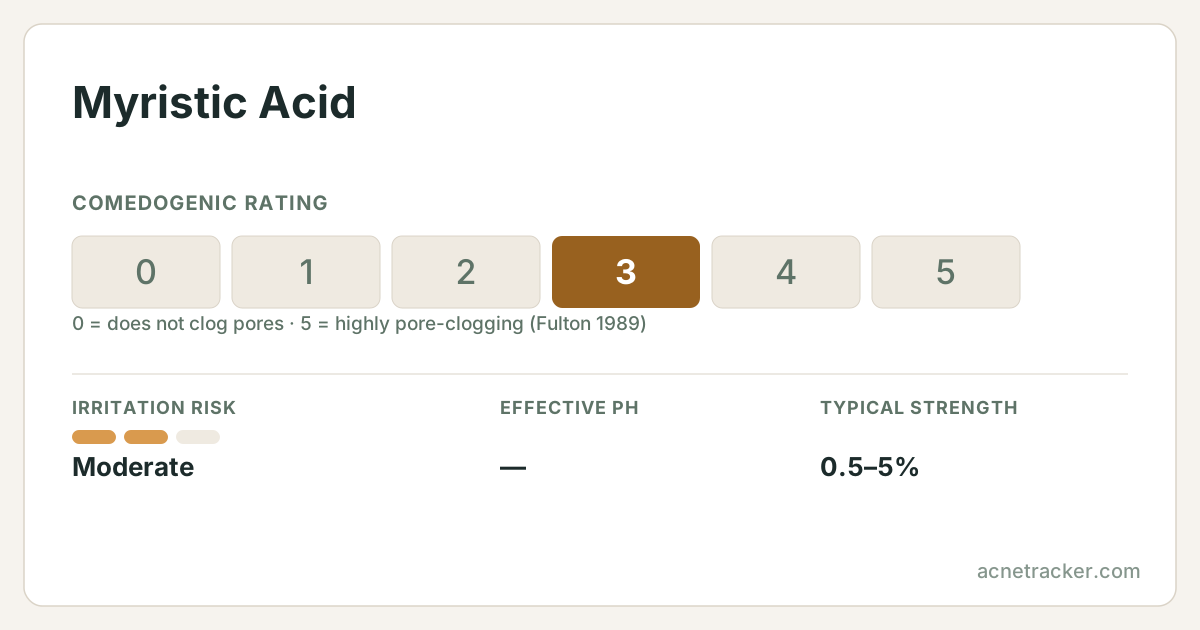
Myristic acid is a saturated fatty acid you meet most often in foaming cleansers rather than in creams. When combined with an alkali such as potassium hydroxide, it forms a soap that produces the rich, fluffy lather many Japanese and Korean cleansers are known for. That makes it very effective at removing oil and makeup, but it also means those cleansers can be more stripping than a gentle low-pH wash. As a leave-on lipid, myristic acid is moderately comedogenic, rated 3 in Fulton's testing, so its role is squarely on the cleansing side of a routine rather than as a nourishing ingredient you leave on the skin.
Quick facts
- Comedogenic rating
- measured (Fulton 1989)
- Irritation risk
- Moderate
- Effective pH
- —
- Typical strength
- 0.5–5%
- Pregnancy
- Considered safe
- Suits skin types
- normaloily
Where this number comes from
Read directly from Table I of Fulton's 1989 paper — the primary source, not one of the copied tables that circulate online.
Fulton read his own scale as 0-1 not significant, 2-3 borderline, 4-5 positive. The assay is the rabbit ear at 10% dilution, which the paper itself calls extremely sensitive and not fully predictive of human skin. Ratings describe the raw ingredient; concentration and formulation change real-world behaviour.
Caution profile
The four published fields on this page, on one 0–5 scale. Further from the centre means more care is needed — never that the ingredient is worse.
Derived, not measured: pore-clogging is the published comedogenic rating; irritation maps low/moderate/high to 1/3/5; pregnancy maps safe/caution/avoid to 0/3/5; skin-type limits is how many of the seven skin types this entry does NOT list. Every input is printed in words in the quick-facts card above.
Show the numbers
| Metric | 0–5 | Published field |
|---|---|---|
| Pore-clogging | 3 | 3/5 |
| Irritation | 3 | Moderate |
| Skin-type limits | 3.6 | 2/7 |
| Pregnancy | 0 | Considered safe |
Working pH and typical strength
Where this ingredient is formulated to sit, and at what concentration.
Both bars come from the fields above: the pH window and the typical strength range published for this ingredient. The tinted column is healthy skin's surface pH (about 4.7–5.75).
Show the numbers
| Metric | 0–5 |
|---|---|
| Typical strength | 0.5–5% |
What is it?
Myristic acid is a fourteen-carbon saturated fatty acid, sitting between lauric and palmitic acids in chain length. It occurs naturally in nutmeg, coconut and palm kernel oils and in butterfat. In cosmetics its main job is as a precursor to soap-based surfactants: reacted with an alkali it becomes potassium or sodium myristate, a cleansing agent that foams generously and lifts sebum efficiently. It can also help build and stabilise foam and act as a mild emulsifier. Because saponified fatty-acid cleansers run at a higher pH than the skin's natural surface, they clean thoroughly but can leave skin feeling tight if overused.
Benefits
Creates rich cleansing foam
Turned into a soap, myristic acid produces a dense, cushiony lather that many people love in a facial cleanser, giving a satisfying deep-clean feel.
Removes oil effectively
Its surfactant chemistry lifts sebum, sunscreen and makeup efficiently, making myristic-based cleansers a good match for oily skin that wants a thorough wash.
Boosts and stabilises foam
Even in small amounts it helps other surfactants build a stable, generous lather, improving the sensory experience of foaming washes and shaving products.
Plant-derived option
Sourced from coconut, palm kernel or nutmeg oils, myristic acid offers formulators a vegetable-based route to classic soap-style foaming cleansers.
How to use
You will encounter myristic acid almost exclusively in rinse-off foaming cleansers, so simply use those products as a wash, then rinse thoroughly. Because saponified fatty-acid cleansers are more alkaline and can be drying, they suit oily skin best; if your skin is dry or sensitive, a low-pH gentle cleanser is usually a better everyday choice. Always follow a foaming myristic cleanser with a good moisturiser to restore comfort. There is no reason to seek out leave-on products high in myristic acid, given its moderate comedogenic rating.
Side effects
The main practical downsides are dryness and tightness from the higher pH of soap-based cleansers, especially with twice-daily use on skin that is not very oily. As a leave-on lipid, myristic acid is moderately comedogenic (rated 3), so it is not an ingredient you want sitting on acne-prone skin. Over-cleansing with foaming myristate washes can compromise the barrier, which paradoxically can worsen both dryness and breakouts.
Who should avoid it
Dry, sensitive and barrier-compromised skin should generally avoid heavy reliance on saponified myristic-acid foaming cleansers and choose a gentler, low-pH formula instead. Acne-prone skin should avoid leave-on products high in myristic acid because of its comedogenic rating, though rinse-off use is usually fine.
Pairs well with
Frequently asked questions
Does myristic acid clog pores?
As a leave-on lipid it is moderately comedogenic, rated 3, so it can contribute to clogged pores. In rinse-off cleansers, where it is washed away, the practical pore-clogging risk is much lower.
What is myristic acid used for in skincare?
Mostly to make foaming, soap-based cleansers. Reacted with an alkali it becomes a myristate surfactant that produces rich lather and removes oil and makeup effectively.
Is myristic acid drying?
It can be. Soap-based myristate cleansers run at a higher pH than skin and clean thoroughly, which can leave dry or sensitive skin feeling tight. Always follow with a moisturiser.
Is myristic acid safe for skin?
In rinse-off cleansers it is considered safe and well established, though it can be drying. It is not ideal as a leave-on ingredient for acne-prone skin because of its comedogenic rating.
Where does myristic acid come from?
It occurs naturally in nutmeg, coconut and palm kernel oils and in butterfat. Cosmetic myristic acid is usually derived from these vegetable oils.
Sources & further reading
Medical disclaimer
Find your personal acne triggers
Our free Acne Tracker lets you log breakouts, sleep, stress and diet, and shows you which factors correlate with your flare-ups.