Lauric Acid: Comedogenic Rating & Ingredient Analysis
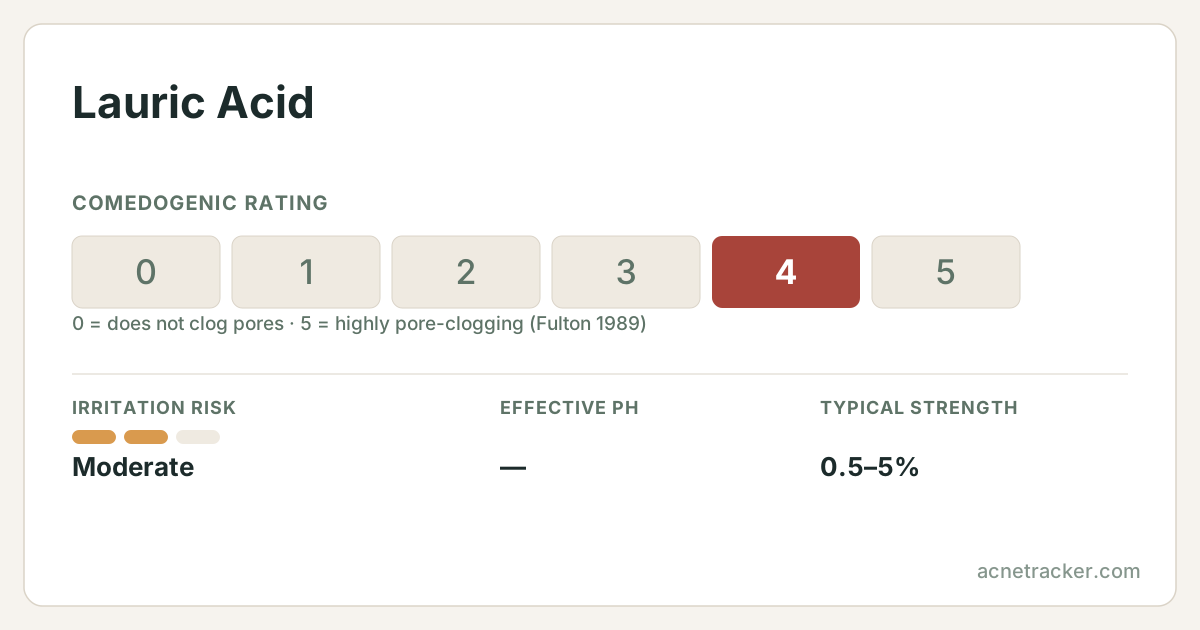
Lauric acid is the fatty acid that gives coconut oil its double reputation. On one hand, laboratory research has shown that lauric acid is strongly antibacterial against Cutibacterium acnes, the bacterium involved in acne, which is why it appears in some cleansing and blemish products and why coconut-derived surfactants are so common. On the other hand, lauric acid is one of the most comedogenic fatty acids there is, rated 4 out of 5 in Fulton's testing, which is precisely why applying pure coconut oil to the face causes breakouts in so many people. It is a genuinely interesting ingredient, but one to approach with your eyes open.
Quick facts
- Comedogenic rating
- measured (Fulton 1989)
- Irritation risk
- Moderate
- Effective pH
- —
- Typical strength
- 0.5–5%
- Pregnancy
- Considered safe
- Suits skin types
- normaldry
Where this number comes from
Read directly from Table I of Fulton's 1989 paper — the primary source, not one of the copied tables that circulate online.
Fulton read his own scale as 0-1 not significant, 2-3 borderline, 4-5 positive. The assay is the rabbit ear at 10% dilution, which the paper itself calls extremely sensitive and not fully predictive of human skin. Ratings describe the raw ingredient; concentration and formulation change real-world behaviour.
Caution profile
The four published fields on this page, on one 0–5 scale. Further from the centre means more care is needed — never that the ingredient is worse.
Derived, not measured: pore-clogging is the published comedogenic rating; irritation maps low/moderate/high to 1/3/5; pregnancy maps safe/caution/avoid to 0/3/5; skin-type limits is how many of the seven skin types this entry does NOT list. Every input is printed in words in the quick-facts card above.
Show the numbers
| Metric | 0–5 | Published field |
|---|---|---|
| Pore-clogging | 4 | 4/5 |
| Irritation | 3 | Moderate |
| Skin-type limits | 3.6 | 2/7 |
| Pregnancy | 0 | Considered safe |
Working pH and typical strength
Where this ingredient is formulated to sit, and at what concentration.
Both bars come from the fields above: the pH window and the typical strength range published for this ingredient. The tinted column is healthy skin's surface pH (about 4.7–5.75).
Show the numbers
| Metric | 0–5 |
|---|---|
| Typical strength | 0.5–5% |
What is it?
Lauric acid is a saturated medium-chain fatty acid with twelve carbons, sitting between the very short caprylic and capric acids and the longer myristic and palmitic acids. It is the dominant fatty acid in coconut and palm kernel oils and is a starting material for a huge range of gentle cleansing surfactants (it is the lauryl in many ingredient names). Its antimicrobial action against acne bacteria has been demonstrated in the lab, and it has surfactant-like cleansing behaviour. The catch is its very high comedogenic rating: as a leave-on lipid it readily clogs pores, so its benefits are best captured in rinse-off products or as part of a balanced formula rather than a straight oil.
Benefits
Antibacterial against acne bacteria
Laboratory studies show lauric acid inhibits Cutibacterium acnes more strongly than some conventional agents, which is why it appears in certain cleansers and spot products.
Effective in cleansers
As a precursor to mild coconut-derived surfactants, lauric acid helps products lift away oil and grime, making it a workhorse behind many gentle facial washes.
Softens in balanced formulas
In a properly formulated cream or balm, lauric acid contributes emollient softness, though it is used in moderation because of its pore-clogging tendency.
Naturally derived
Sourced mainly from coconut and palm kernel oil, lauric acid is a plant-derived building block that fits naturally into vegetable-based cleansing and skincare formulas.
How to use
Because lauric acid is highly comedogenic, the safest way to benefit from it is in rinse-off cleansers or in carefully balanced leave-on products, rather than by slathering neat coconut oil on your face. If you want to try coconut-derived cleansing, look for a gentle wash rather than pure oil, and follow with a non-comedogenic, linoleic-rich moisturiser. Reserve raw coconut oil for the body, hair or as a rinse-off cleansing step. Patch test any product high in lauric acid or coconut oil for a week or two on the jaw before using it across acne-prone areas.
Side effects
The headline concern is comedogenicity: with a rating of 4, leave-on lauric acid and coconut oil frequently cause closed comedones and breakouts, especially on the face. Some people also find coconut-derived cleansers a little drying. It is otherwise fairly low in true irritation, but the pore-clogging risk on acne-prone skin is real and well documented anecdotally, so treat leave-on use with caution.
Who should avoid it
Acne-prone and congestion-prone skin should avoid leave-on lauric acid and pure coconut oil on the face, since the high comedogenic rating makes breakouts likely. If your skin tends to develop small bumps easily, keep lauric-rich products to rinse-off use only, or skip them in favour of linoleic-rich alternatives.
Pairs well with
Frequently asked questions
Is lauric acid good or bad for acne?
Both, depending on use. It is antibacterial against acne bacteria in the lab, but it is also highly comedogenic (rated 4), so as a leave-on it often causes breakouts. It is best benefited from in rinse-off cleansers.
Why does coconut oil break me out?
Coconut oil is very high in lauric acid, which has a comedogenic rating of 4. On acne-prone facial skin this readily clogs pores and triggers closed comedones, even though the oil feels nourishing.
Can I use lauric acid on my face?
Only cautiously. Prefer rinse-off cleansers or balanced formulas over pure lauric-rich oils. If you are acne-prone, avoid leave-on lauric acid and coconut oil on the face and choose linoleic-rich oils instead.
Is lauric acid antibacterial?
Yes. Laboratory research shows lauric acid strongly inhibits Cutibacterium acnes, the bacterium linked to acne, which is why it is explored in cleansers and spot treatments.
What is the comedogenic rating of lauric acid?
Lauric acid is rated 4 out of 5 on the comedogenic scale in Fulton's testing, making it one of the more pore-clogging fatty acids and a poor choice as a leave-on for acne-prone skin.
Sources & further reading
- PubChem — Lauric acid compound summary (CID 3893)
- Antimicrobial property of lauric acid against Propionibacterium acnes: its therapeutic potential for inflammatory acne vulgaris (J Invest Dermatol, 2009; PubMed)
- Fulton JE. Comedogenicity and irritancy of commonly used ingredients in skin care products. J Soc Cosmet Chem 40:321–333 (1989) — Table I, pp. 324–326
Medical disclaimer
Find your personal acne triggers
Our free Acne Tracker lets you log breakouts, sleep, stress and diet, and shows you which factors correlate with your flare-ups.