Mugwort Extract: Comedogenic Rating & Ingredient Analysis
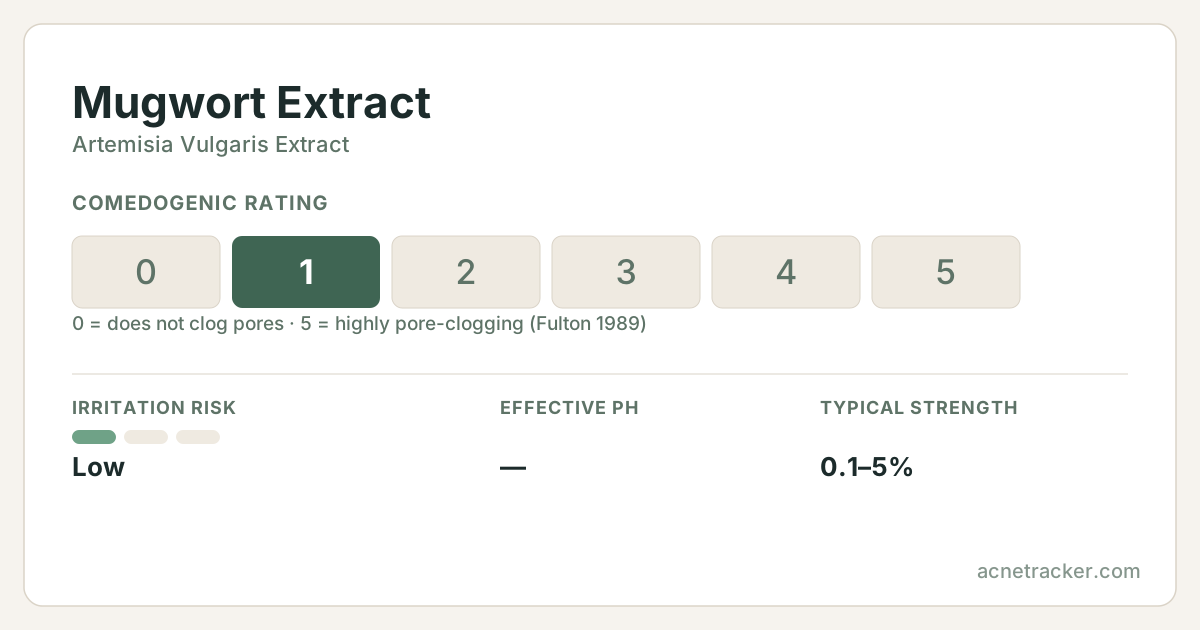
Mugwort extract, drawn from the Artemisia plant, is a botanical that rose to fame through Korean skincare, where it is known as ssuk and used in calming toners, essences and masks. It is prized as a gentle soother for red, reactive and blemish-prone skin, and it carries a long history of traditional use. Modern formulations pair it with hydrators and other calming actives to make comforting products for sensitive skin. It has a low comedogenic rating and low irritation risk for most people, though, because it is a plant extract in the same family as ragweed, those with related allergies should approach it with a little care.
Quick facts
- Comedogenic rating
- our estimate — not measured
- Irritation risk
- Low
- Effective pH
- —
- Typical strength
- 0.1–5%
- Pregnancy
- Ask your doctor
- Suits skin types
- drycombinationsensitivenormalacne-prone
Where this number comes from
No one has published a comedogenic rating for this ingredient. Fulton's 1989 table tested about 250 raw materials and this was not among them, and we found no later study measuring it. The figure shown is our own reasoning from the ingredient's chemistry and how it is used — treat it as an estimate, not a measurement.
Fulton read his own scale as 0-1 not significant, 2-3 borderline, 4-5 positive. The assay is the rabbit ear at 10% dilution, which the paper itself calls extremely sensitive and not fully predictive of human skin. Ratings describe the raw ingredient; concentration and formulation change real-world behaviour.
Caution profile
The four published fields on this page, on one 0–5 scale. Further from the centre means more care is needed — never that the ingredient is worse.
Derived, not measured: pore-clogging is the published comedogenic rating; irritation maps low/moderate/high to 1/3/5; pregnancy maps safe/caution/avoid to 0/3/5; skin-type limits is how many of the seven skin types this entry does NOT list. Every input is printed in words in the quick-facts card above.
Show the numbers
| Metric | 0–5 | Published field |
|---|---|---|
| Pore-clogging | 1 | 1/5 |
| Irritation | 1 | Low |
| Skin-type limits | 1.4 | 5/7 |
| Pregnancy | 3 | Ask your doctor |
Working pH and typical strength
Where this ingredient is formulated to sit, and at what concentration.
Both bars come from the fields above: the pH window and the typical strength range published for this ingredient. The tinted column is healthy skin's surface pH (about 4.7–5.75).
Show the numbers
| Metric | 0–5 |
|---|---|
| Typical strength | 0.1–5% |
What is it?
Mugwort extract is a botanical made from the leaves and stems of Artemisia vulgaris (and related Artemisia species). Like most plant extracts it is a complex mixture, carrying antioxidant flavonoids, tannins and aromatic compounds. In skincare it is valued mainly for soothing and antioxidant effects, and it is often described as calming heat and redness in the skin. It is not a strongly active treatment ingredient in the way an acid or retinoid is; instead it plays a supporting comfort role, buffering sensitivity and adding botanical antioxidant defense. Because it is a whole extract, potency and exact composition vary between products and sources.
Benefits
Soothes redness and heat
Mugwort's traditional and modern reputation centers on calming: it helps settle the flushed, reactive feeling of irritated and blemish-prone skin.
Antioxidant protection
Its flavonoid and polyphenol content provides botanical antioxidant support, helping defend the skin surface against everyday oxidative stress.
Comforts sensitive skin
As a gentle, non-acidic extract, it cushions the skin and is often layered with hydrators to ease tightness and reactivity.
Supports clearer-feeling skin
Traditionally used on troubled skin, mugwort adds a calming, purifying feel to routines aimed at congestion and minor blemishes.
How to use
Mugwort extract is most common in toners, essences, ampoules and soothing masks. Apply it after cleansing as one of the first watery steps, then follow with your other treatments and a moisturizer. It works morning and night and layers happily with hydrators and other calming ingredients. Because it is soothing rather than a strong active, there is no adjustment period and it pairs freely with actives to cushion their effects. If your skin is prone to plant sensitivities, patch test a new mugwort product for a few nights before applying it all over.
Side effects
For most people mugwort extract is gentle and well tolerated. The notable exception is allergy: Artemisia is in the same botanical family as ragweed and related plants, so people with pollen or ragweed allergies can occasionally react to it on the skin. Reactions, when they happen, tend to be redness or itching. Patch testing is sensible for reactive or allergy-prone skin, and any product with added fragrance should be judged on the whole formula.
Who should avoid it
People with known Artemisia, ragweed or related pollen allergies should be cautious and patch test, as cross-reactivity is possible. As a precaution during pregnancy, some prefer to avoid concentrated Artemisia botanicals; confirm with your doctor. Everyone else can generally use it, ideally starting with a patch test if their skin is highly reactive.
Frequently asked questions
What is mugwort extract used for in skincare?
It is used mainly as a soothing, antioxidant botanical for red, reactive and blemish-prone skin, popularized by Korean skincare in calming toners, essences and masks.
Can mugwort extract cause allergic reactions?
It can in people allergic to ragweed or related Artemisia plants, since they share a botanical family. If you have those pollen allergies, patch test a mugwort product first.
Does mugwort extract clog pores?
Rarely. At a rating of 1 it sits near the bottom of the comedogenic scale, and mugwort usually arrives in watery essences and toners rather than anything rich enough to block a pore. If a mugwort product congests you, look at the base it was formulated into before blaming the extract.
Can I use mugwort extract with active ingredients?
Yes. It is a gentle, non-acidic soother that layers freely with hydrators, niacinamide and stronger actives, helping cushion irritation from acids and retinoids.
Is mugwort extract safe during pregnancy?
Topical use is generally low risk, but because concentrated Artemisia has traditional internal uses that are discouraged in pregnancy, some prefer caution. Confirm with your doctor.
Sources & further reading
Medical disclaimer
Find your personal acne triggers
Our free Acne Tracker lets you log breakouts, sleep, stress and diet, and shows you which factors correlate with your flare-ups.