Lavender Extract: Comedogenic Rating & Ingredient Analysis
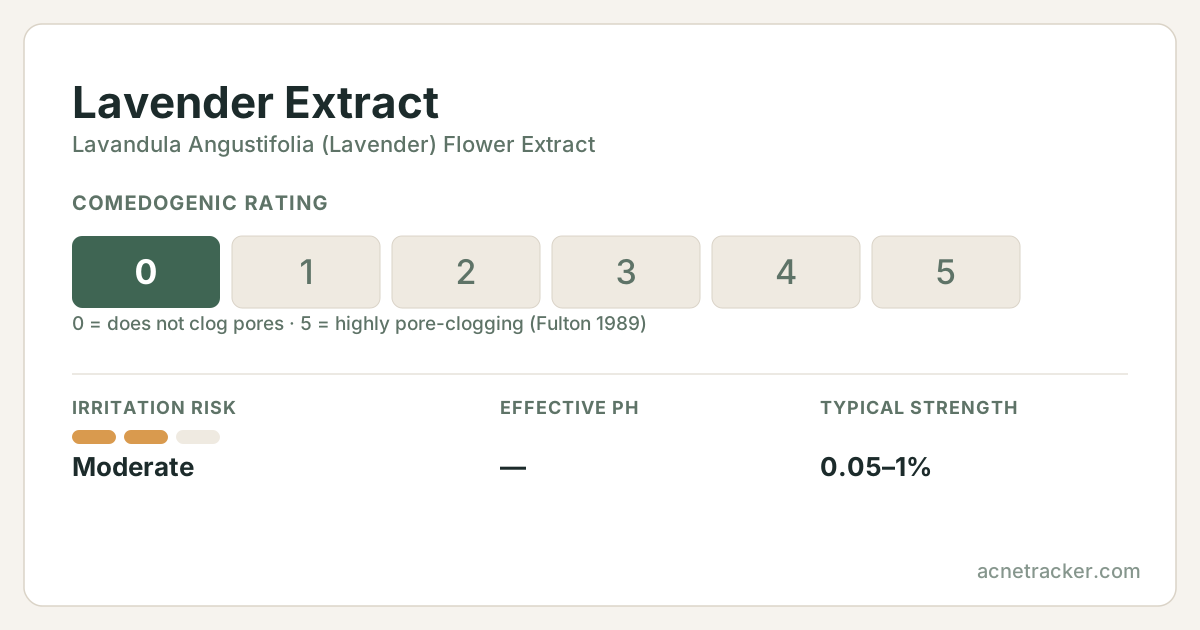
Lavender is one of the most recognisable scents in personal care, evoking calm and relaxation, and lavender flower extract is added to countless creams, mists and masks partly for that association. On the skin it has a gentle, soothing reputation and some antioxidant activity, but lavender is first and foremost a fragrant botanical, and that is the key to understanding it. The same aromatic molecules that make it smell lovely — chiefly linalool and linalyl acetate — are recognised skin sensitisers that can build up allergy over time. So while lavender extract is pleasant and popular, it is best approached with the same care you would give any fragrance, especially on sensitive or reactive skin.
Quick facts
- Comedogenic rating
- our estimate — not measured
- Irritation risk
- Moderate
- Effective pH
- —
- Typical strength
- 0.05–1%
- Pregnancy
- Ask your doctor
- Suits skin types
- normalcombinationoily
Where this number comes from
No one has published a comedogenic rating for this ingredient. Fulton's 1989 table tested about 250 raw materials and this was not among them, and we found no later study measuring it. The figure shown is our own reasoning from the ingredient's chemistry and how it is used — treat it as an estimate, not a measurement.
Fulton read his own scale as 0-1 not significant, 2-3 borderline, 4-5 positive. The assay is the rabbit ear at 10% dilution, which the paper itself calls extremely sensitive and not fully predictive of human skin. Ratings describe the raw ingredient; concentration and formulation change real-world behaviour.
Caution profile
The four published fields on this page, on one 0–5 scale. Further from the centre means more care is needed — never that the ingredient is worse.
Derived, not measured: pore-clogging is the published comedogenic rating; irritation maps low/moderate/high to 1/3/5; pregnancy maps safe/caution/avoid to 0/3/5; skin-type limits is how many of the seven skin types this entry does NOT list. Every input is printed in words in the quick-facts card above.
Show the numbers
| Metric | 0–5 | Published field |
|---|---|---|
| Pore-clogging | 0 | 0/5 |
| Irritation | 3 | Moderate |
| Skin-type limits | 2.9 | 3/7 |
| Pregnancy | 3 | Ask your doctor |
Working pH and typical strength
Where this ingredient is formulated to sit, and at what concentration.
Both bars come from the fields above: the pH window and the typical strength range published for this ingredient. The tinted column is healthy skin's surface pH (about 4.7–5.75).
Show the numbers
| Metric | 0–5 |
|---|---|
| Typical strength | 0.05–1% |
What is it?
Lavender flower extract is drawn from Lavandula angustifolia (true lavender). It naturally contains linalool, linalyl acetate and related terpenes, which give both the scent and a degree of antioxidant and soothing activity seen in laboratory studies. In practice, lavender in a cosmetic often functions as much as a natural fragrance as an active ingredient. The concern is that linalool oxidises on contact with air to form compounds that are established contact allergens, and repeated exposure can sensitise skin. Its comedogenic rating is 0, so it will not clog pores, but we rate irritation risk as moderate because of that fragrance-allergen potential. Traditional calming claims are largely about aromatherapy rather than proven topical treatment.
Benefits
Pleasant, calming scent
Lavender's signature aroma is the main reason it appears in skincare, lending products a relaxing, spa-like character valued in evening and sleep-time routines.
Mild antioxidant activity
Its terpene compounds show some free-radical scavenging in the lab, offering light antioxidant support alongside dedicated actives such as green-tea-extract.
Soothing traditional reputation
Lavender has a long folk history as a calming botanical, and low levels in a well-formulated product can feel comforting on non-reactive skin.
Fits balanced, resilient skin
For people without fragrance sensitivity, lavender is non-comedogenic and blends into everyday creams and mists aimed at normal and combination skin.
How to use
If you enjoy lavender and your skin tolerates fragrance, use it in a moisturiser, mist or mask as part of an evening wind-down routine. Keep in mind it is a fragrant botanical: patch test on the inner arm for several days, avoid piling multiple fragranced products together, and do not apply concentrated lavender essential oil neat to the face. For sensitive, eczema-prone or acne-treatment-compromised skin, a fragrance-free alternative is the safer choice. Store lavender-containing products away from heat and air, since oxidised linalool is more allergenic than fresh.
Side effects
The main issue with lavender is fragrance-related contact allergy and irritation. Linalool and its oxidation products are common allergens, and repeated use can gradually sensitise skin, leading to redness, itching or dermatitis in susceptible people. This risk is higher with lavender essential oil than with a low-level flower extract. If you develop irritation from a lavender product, discontinue it; sensitisation, once established, tends to persist.
Who should avoid it
People with sensitive, allergy-prone or eczema-prone skin, and anyone with a known fragrance allergy, should avoid lavender or choose fragrance-free products. Because lavender essential oil is sometimes cautioned against in pregnancy and it carries sensitising fragrance components, we mark it as caution during pregnancy — check with your doctor. Anyone whose barrier is compromised by strong acne treatment is better off with a plain, unscented soother.
Pairs well with
Frequently asked questions
Does lavender extract clog pores?
No. Lavender flower extract has a comedogenic rating of 0 and does not clog pores. The concern is fragrance-related sensitisation from linalool, not pore-clogging.
Is lavender bad for skin?
Not inherently, but it is a fragrant botanical whose linalool content can sensitise skin over time. On resilient skin used occasionally it is usually fine; on sensitive or reactive skin, fragrance-free options are safer.
Why is lavender considered a sensitiser?
Lavender naturally contains linalool and linalyl acetate. When linalool oxidises in air it forms established contact allergens, and repeated exposure can gradually make the skin allergic to it.
Can I use lavender extract for acne?
It is not an acne treatment and its fragrance can irritate already-compromised skin. If breakouts are the concern, rely on proven actives like salicylic-acid or niacinamide and treat lavender as an optional scent, not a solution.
Sources & further reading
Medical disclaimer
Find your personal acne triggers
Our free Acne Tracker lets you log breakouts, sleep, stress and diet, and shows you which factors correlate with your flare-ups.