Hydroxyacetophenone: Comedogenic Rating & Ingredient Analysis
Hydroxyacetophenone is one of those ingredients you see near the end of an INCI list and wonder about. It is a multitasking phenolic compound used mainly behind the scenes: it lends mild antioxidant and soothing support, and it helps stabilise formulas and boost the performance of a product's preservative system so fewer traditional preservatives are needed. Because it is gentle and well tolerated, it turns up in a lot of products aimed at sensitive skin. It is not a hero active you would buy a product for on its own, but it is a useful, low-key ingredient that helps a formula stay fresh, stable and comfortable.
Quick facts
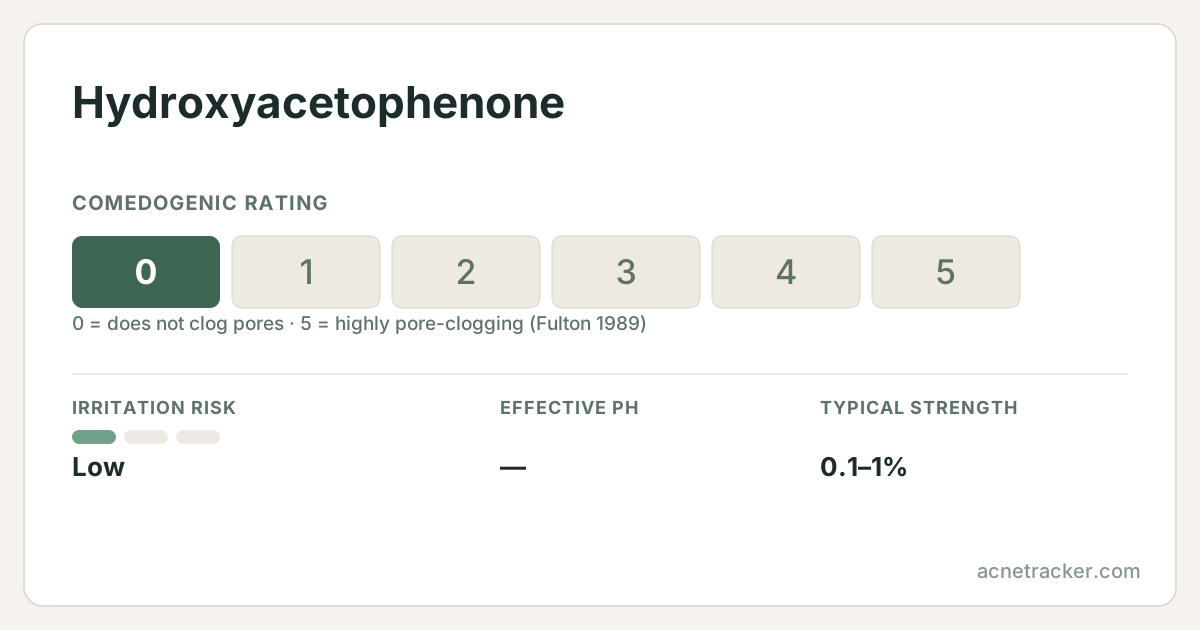
- Comedogenic rating
- our estimate — not measured
- Irritation risk
- Low
- Effective pH
- —
- Typical strength
- 0.1–1%
- Pregnancy
- Considered safe
- Suits skin types
- sensitivedrynormalcombinationoilyacne-prone
Where this number comes from
No one has published a comedogenic rating for this ingredient. Fulton's 1989 table tested about 250 raw materials and this was not among them, and we found no later study measuring it. The figure shown is our own reasoning from the ingredient's chemistry and how it is used — treat it as an estimate, not a measurement.
Fulton read his own scale as 0-1 not significant, 2-3 borderline, 4-5 positive. The assay is the rabbit ear at 10% dilution, which the paper itself calls extremely sensitive and not fully predictive of human skin. Ratings describe the raw ingredient; concentration and formulation change real-world behaviour.
Caution profile
The four published fields on this page, on one 0–5 scale. Further from the centre means more care is needed — never that the ingredient is worse.
Derived, not measured: pore-clogging is the published comedogenic rating; irritation maps low/moderate/high to 1/3/5; pregnancy maps safe/caution/avoid to 0/3/5; skin-type limits is how many of the seven skin types this entry does NOT list. Every input is printed in words in the quick-facts card above.
Show the numbers
| Metric | 0–5 | Published field |
|---|---|---|
| Pore-clogging | 0 | 0/5 |
| Irritation | 1 | Low |
| Skin-type limits | 0.7 | 6/7 |
| Pregnancy | 0 | Considered safe |
Working pH and typical strength
Where this ingredient is formulated to sit, and at what concentration.
Both bars come from the fields above: the pH window and the typical strength range published for this ingredient. The tinted column is healthy skin's surface pH (about 4.7–5.75).
Show the numbers
| Metric | 0–5 |
|---|---|
| Typical strength | 0.1–1% |
What is it?
Hydroxyacetophenone, most often the 4'-hydroxyacetophenone isomer, is a small phenolic molecule related to compounds found in some plants. In cosmetics it serves several supporting roles. It has antioxidant-supportive activity, helping to neutralise some free radicals and protect both the formula and the skin from oxidative stress. It has soothing properties, which is why it appears in products for reactive skin. And it acts as a stabiliser and preservative booster, improving the efficacy of the preservative system so a formula can stay safe with a gentler overall preservative load. It is water-dispersible, used at low concentrations and chosen for reliability rather than dramatic effect.
Benefits
Adds antioxidant support
Hydroxyacetophenone offers mild antioxidant activity, helping protect the formula and skin from oxidative stress and complementing dedicated antioxidants in a product.
Soothes reactive skin
It has soothing qualities, which is why it is often included in products designed for sensitive and easily irritated skin.
Boosts the preservative system
By improving preservative efficacy, it helps keep formulas safe and fresh with a gentler overall load of traditional preservatives.
Stabilises the formula
It contributes to the stability of a product, helping active ingredients and the emulsion stay effective and pleasant over the product's shelf life.
How to use
There is nothing special to do with hydroxyacetophenone, because it is a supporting ingredient rather than a stand-alone active. You will encounter it inside serums, moisturisers and other leave-on products, often those formulated for sensitive skin, where it has been included at a low level to help with antioxidant support, soothing and preservation. Simply use those products as directed. It is compatible with essentially any active, so there are no layering, timing or pH restrictions to worry about; it works quietly in the background whenever you use the product.
Side effects
Hydroxyacetophenone is well tolerated, non-comedogenic and low in irritation, which is a large part of why it is favoured in gentle formulas. Genuine reactions are uncommon. As with any cosmetic ingredient, an individual could react to a specific finished product, so patch test if your skin is highly reactive, but hydroxyacetophenone itself is not considered a typical sensitiser.
Who should avoid it
There is essentially no group that must avoid hydroxyacetophenone. It is used specifically because it is gentle and suits sensitive skin. Anyone with a rare, specifically documented sensitivity to a particular product should identify the actual trigger, which is very unlikely to be this low-level supporting ingredient.
Pairs well with
Frequently asked questions
What does hydroxyacetophenone do in skincare?
It is a multitasking supporting ingredient that adds mild antioxidant activity, soothes reactive skin, and helps stabilise the formula and boost its preservative system so fewer traditional preservatives are needed.
Is hydroxyacetophenone a preservative?
Not exactly. It is a preservative booster and stabiliser rather than a primary preservative, improving the efficacy of the preservative system so a formula can use a gentler overall load.
Is hydroxyacetophenone safe for sensitive skin?
Yes. It is non-comedogenic, low-irritation and even chosen for its soothing qualities, which is why it commonly appears in products formulated for sensitive and reactive skin.
Is hydroxyacetophenone an antioxidant?
It has antioxidant-supportive activity, helping neutralise some free radicals. It is a supporting antioxidant rather than a primary one like vitamin C, and it complements dedicated antioxidants.
Why is hydroxyacetophenone in my product?
It is usually there to provide antioxidant and soothing support and to boost the preservative system, allowing a gentler formula. It is a background multitasker rather than a headline active.
Sources & further reading
Medical disclaimer
Find your personal acne triggers
Our free Acne Tracker lets you log breakouts, sleep, stress and diet, and shows you which factors correlate with your flare-ups.