Ferulic Acid: Comedogenic Rating & Ingredient Analysis
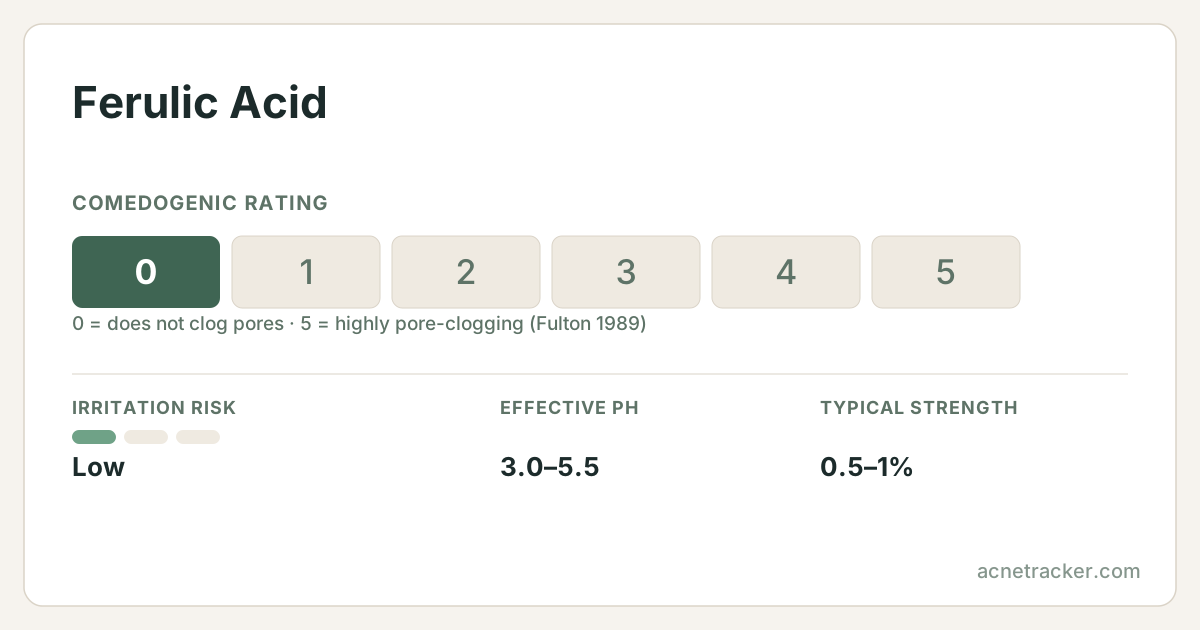
Ferulic acid is a plant-derived antioxidant best known not for what it does alone but for how much it improves the ingredients around it. Found in the cell walls of oats, rice bran and apple seeds, it is a supporting player that stabilises fragile antioxidants like vitamin C and vitamin E, keeping them potent for longer and multiplying their protective effect against daily environmental damage. On its own it neutralises free radicals; in the classic combination with vitamins C and E it forms one of the most researched daytime defence formulas in skincare. It is gentle, non-comedogenic and suitable across skin types.
Quick facts
- Comedogenic rating
- our estimate — not measured
- Irritation risk
- Low
- Effective pH
- 3.0–5.5
- Typical strength
- 0.5–1%
- Pregnancy
- Considered safe
- Suits skin types
- oilydrycombinationsensitivenormalmature
Where this number comes from
No one has published a comedogenic rating for this ingredient. Fulton's 1989 table tested about 250 raw materials and this was not among them, and we found no later study measuring it. The figure shown is our own reasoning from the ingredient's chemistry and how it is used — treat it as an estimate, not a measurement.
Fulton read his own scale as 0-1 not significant, 2-3 borderline, 4-5 positive. The assay is the rabbit ear at 10% dilution, which the paper itself calls extremely sensitive and not fully predictive of human skin. Ratings describe the raw ingredient; concentration and formulation change real-world behaviour.
Caution profile
The four published fields on this page, on one 0–5 scale. Further from the centre means more care is needed — never that the ingredient is worse.
Derived, not measured: pore-clogging is the published comedogenic rating; irritation maps low/moderate/high to 1/3/5; pregnancy maps safe/caution/avoid to 0/3/5; skin-type limits is how many of the seven skin types this entry does NOT list. Every input is printed in words in the quick-facts card above.
Show the numbers
| Metric | 0–5 | Published field |
|---|---|---|
| Pore-clogging | 0 | 0/5 |
| Irritation | 1 | Low |
| Skin-type limits | 0.7 | 6/7 |
| Pregnancy | 0 | Considered safe |
Working pH and typical strength
Where this ingredient is formulated to sit, and at what concentration.
Both bars come from the fields above: the pH window and the typical strength range published for this ingredient. The tinted column is healthy skin's surface pH (about 4.7–5.75).
Show the numbers
| Metric | 0–5 |
|---|---|
| Working pH | 3.0–5.5 |
| Typical strength | 0.5–1% |
What is it?
Chemically ferulic acid is a hydroxycinnamic acid, a type of polyphenol that plants use to shield themselves from ultraviolet stress. On skin it does the same job, quenching the reactive oxygen species that UV light and pollution generate and that drive collagen breakdown and dark spots. Its most valuable trick is synergy: added to a vitamin C and E serum it not only makes the blend more stable against oxidation but roughly doubles the photoprotection the antioxidants provide. It does not replace sunscreen — it works underneath it, catching the free radicals that slip past UV filters.
Benefits
Stabilises vitamin C and E
Ferulic acid slows the oxidation of these easily degraded antioxidants, so a serum containing it stays effective for longer and delivers more active ingredient to the skin.
Boosts antioxidant protection
Combined with vitamins C and E it substantially increases defence against UV-generated free radicals, reinforcing rather than replacing your sunscreen.
Helps limit environmental damage
By neutralising reactive molecules from sun and pollution, it reduces the everyday oxidative stress that contributes to dullness, fine lines and uneven tone.
Gentle and broadly compatible
It is non-comedogenic, low-irritation and layers well with most actives, making it an easy addition to a morning antioxidant step for almost any skin type.
How to use
Ferulic acid is a morning ingredient. Use it after cleansing, typically as part of a vitamin C and E serum, then follow with moisturiser and sunscreen so the antioxidants can guard against the day's UV and pollution. It needs a low pH to stay stable, which is why it usually appears in well-formulated, appropriately acidic vitamin C products rather than sold alone. Store the product away from light and heat, and replace it if it turns deep orange or brown, a sign the antioxidants have oxidised.
Side effects
Ferulic acid is very well tolerated, and reactions are uncommon. The mild acidity of the serums it lives in can occasionally cause slight tingling on sensitive skin. Any pronounced irritation from a vitamin C and ferulic acid serum usually comes from the vitamin C concentration or the low pH rather than the ferulic acid itself.
Who should avoid it
There is little reason for anyone to avoid ferulic acid specifically. Those with very reactive skin should introduce the vitamin C serum it accompanies gradually and watch for stinging from the formula's acidity. It is regarded as a safe topical antioxidant, including during pregnancy, though you should always confirm your full routine with your clinician.
Pairs well with
Frequently asked questions
What does ferulic acid do for skin?
It is an antioxidant that neutralises free radicals from sun and pollution, and it stabilises and strengthens vitamins C and E, roughly doubling their protective effect when combined in a daytime serum.
Should I use ferulic acid morning or night?
Morning is ideal, because its main value is boosting antioxidant defence against the day's UV and pollution when used under sunscreen. It can be used at night too but adds most where daytime protection is concerned.
Can I use ferulic acid with vitamin C?
Yes, this is its signature pairing. Ferulic acid stabilises vitamin C, extends its shelf life and amplifies its photoprotective power, which is why the two so often appear together.
Does ferulic acid replace sunscreen?
No. It works underneath sunscreen, mopping up free radicals that get past UV filters. It reinforces protection but cannot block ultraviolet rays, so daily SPF is still essential.
Where this ingredient shows up here
Counted across this database, not the web — these are the pages on this site that reason about this ingredient.
Combination guides 1
Sources & further reading
Medical disclaimer
Find your personal acne triggers
Our free Acne Tracker lets you log breakouts, sleep, stress and diet, and shows you which factors correlate with your flare-ups.