Hydrogenated Lecithin: Comedogenic Rating & Ingredient Analysis
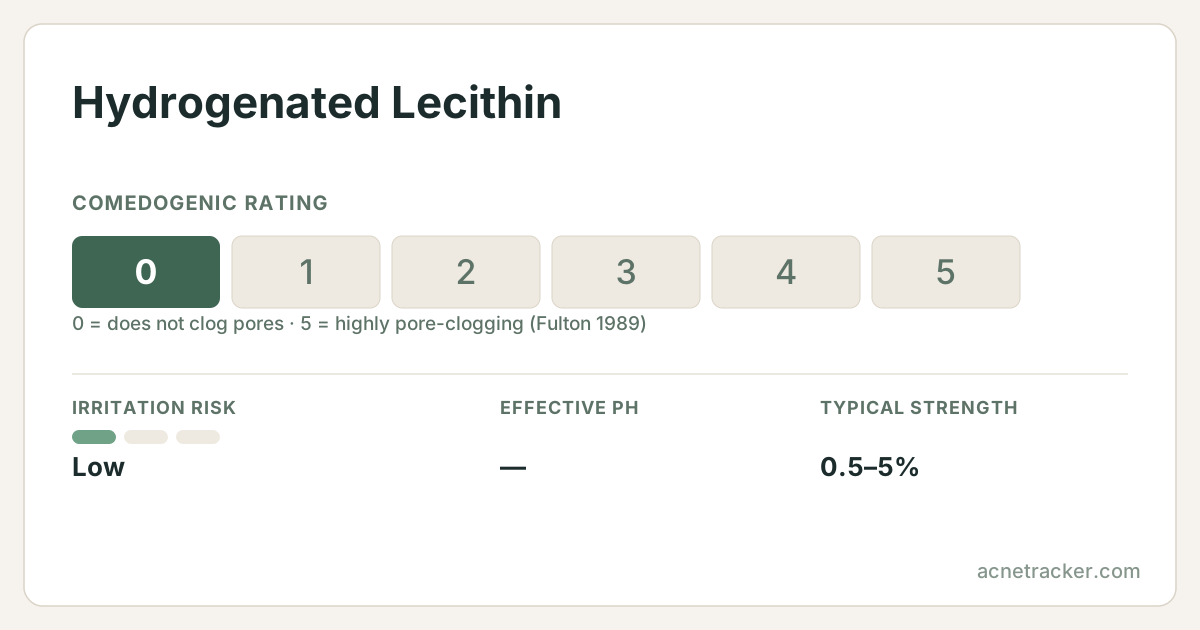
Hydrogenated lecithin is the more stable, refined cousin of regular lecithin. It is made by hydrogenating (saturating) the fatty acids in lecithin, which removes the reactive double bonds that make ordinary lecithin prone to going rancid. The result is a phospholipid that keeps all the useful behaviour — emulsifying, softening, forming liposomes to carry actives — while being lighter in feel and far more resistant to oxidation. Because of this stability, formulators often prefer hydrogenated lecithin, especially in products designed to have a long shelf life or to deliver delicate active ingredients. It is gentle, skin-compatible and non-comedogenic.
Quick facts
- Comedogenic rating
- our estimate — not measured
- Irritation risk
- Low
- Effective pH
- —
- Typical strength
- 0.5–5%
- Pregnancy
- Considered safe
- Suits skin types
- drysensitivenormalcombinationmatureacne-prone
Where this number comes from
No one has published a comedogenic rating for this ingredient. Fulton's 1989 table tested about 250 raw materials and this was not among them, and we found no later study measuring it. The figure shown is our own reasoning from the ingredient's chemistry and how it is used — treat it as an estimate, not a measurement.
Fulton read his own scale as 0-1 not significant, 2-3 borderline, 4-5 positive. The assay is the rabbit ear at 10% dilution, which the paper itself calls extremely sensitive and not fully predictive of human skin. Ratings describe the raw ingredient; concentration and formulation change real-world behaviour.
Caution profile
The four published fields on this page, on one 0–5 scale. Further from the centre means more care is needed — never that the ingredient is worse.
Derived, not measured: pore-clogging is the published comedogenic rating; irritation maps low/moderate/high to 1/3/5; pregnancy maps safe/caution/avoid to 0/3/5; skin-type limits is how many of the seven skin types this entry does NOT list. Every input is printed in words in the quick-facts card above.
Show the numbers
| Metric | 0–5 | Published field |
|---|---|---|
| Pore-clogging | 0 | 0/5 |
| Irritation | 1 | Low |
| Skin-type limits | 0.7 | 6/7 |
| Pregnancy | 0 | Considered safe |
Working pH and typical strength
Where this ingredient is formulated to sit, and at what concentration.
Both bars come from the fields above: the pH window and the typical strength range published for this ingredient. The tinted column is healthy skin's surface pH (about 4.7–5.75).
Show the numbers
| Metric | 0–5 |
|---|---|
| Typical strength | 0.5–5% |
What is it?
Hydrogenated lecithin is lecithin whose unsaturated fatty acid tails have been chemically saturated with hydrogen. Structurally it is still a phospholipid, with a water-loving head and oil-loving tails, so it retains lecithin's dual nature as an emulsifier and its ability to self-assemble into liposomes. What changes is stability: saturated fats do not oxidise the way unsaturated ones do, so hydrogenated lecithin resists rancidity and gives products a longer, more reliable shelf life. It also tends to feel lighter and less greasy on the skin. As a phospholipid it is compatible with the barrier and often used to build liposomal delivery systems that encapsulate vitamins and other actives. It has a comedogenic rating of 0 and is very well tolerated.
Benefits
Stable and long-lasting
Saturating its fatty acids makes hydrogenated lecithin resistant to oxidation, so products stay fresh and effective for longer.
Emulsifies and softens
It keeps oil and water phases blended into smooth, stable formulas while conditioning and softening the skin surface.
Builds liposomal delivery
Its phospholipids self-assemble into liposomes that encapsulate delicate actives and help carry them into the upper skin layers.
Barrier-friendly and light
Made of skin-compatible phospholipids, it supports the barrier with a lighter, less greasy feel than standard lecithin, and is non-comedogenic.
How to use
Use products with hydrogenated lecithin as directed; it is part of the formula base rather than a dosed active. Its lighter feel and stability make it a good choice across skin types, including oily and acne-prone skin that may find richer lecithin heavy. It commonly appears in liposomal serums, moisturisers and barrier creams, layering well with ceramides, squalane and other phospholipids. There is no adjustment period, no photosensitivity concern and no incompatibility with common actives, so it fits easily into any routine.
Side effects
Hydrogenated lecithin is very well tolerated, with irritation and allergy being uncommon. Its saturated structure makes it more stable and less likely to oxidise than standard lecithin, which also means less risk of the irritation that oxidised lipids can cause. It carries a comedogenic rating of 0, and with no double bonds left to react, sunlight neither degrades it in the bottle nor makes your skin more sensitive on your face. For nearly all users it is comfortable and problem-free.
Who should avoid it
No skin type needs to avoid hydrogenated lecithin; its light, stable nature suits even oily and acne-prone skin. Since the usual complaint about lecithin — a rancid, oxidised batch — is engineered out of this form, there is very little left to react to; patch test if you have a known phospholipid reaction. Those wary of soy can look for sunflower-derived versions.
Pairs well with
Frequently asked questions
What is hydrogenated lecithin used for?
It is a stable phospholipid used as an emulsifier and emollient and to build liposomes that deliver active ingredients. It softens skin and supports the barrier with a light feel.
Is hydrogenated lecithin better than lecithin?
For stability, yes. Saturating its fatty acids makes it resistant to oxidation and lighter in feel, so formulators often prefer it, especially in long-lasting or liposomal products.
Does hydrogenated lecithin clog pores?
No. It has a comedogenic rating of 0 and a lighter feel than standard lecithin, so it does not clog pores and is suitable for acne-prone skin.
Is hydrogenated lecithin natural?
It is derived from natural lecithin but chemically modified by hydrogenation, so it is best described as nature-derived and processed for stability rather than fully natural.
Sources & further reading
Medical disclaimer
Find your personal acne triggers
Our free Acne Tracker lets you log breakouts, sleep, stress and diet, and shows you which factors correlate with your flare-ups.