Phospholipids: Comedogenic Rating & Ingredient Analysis
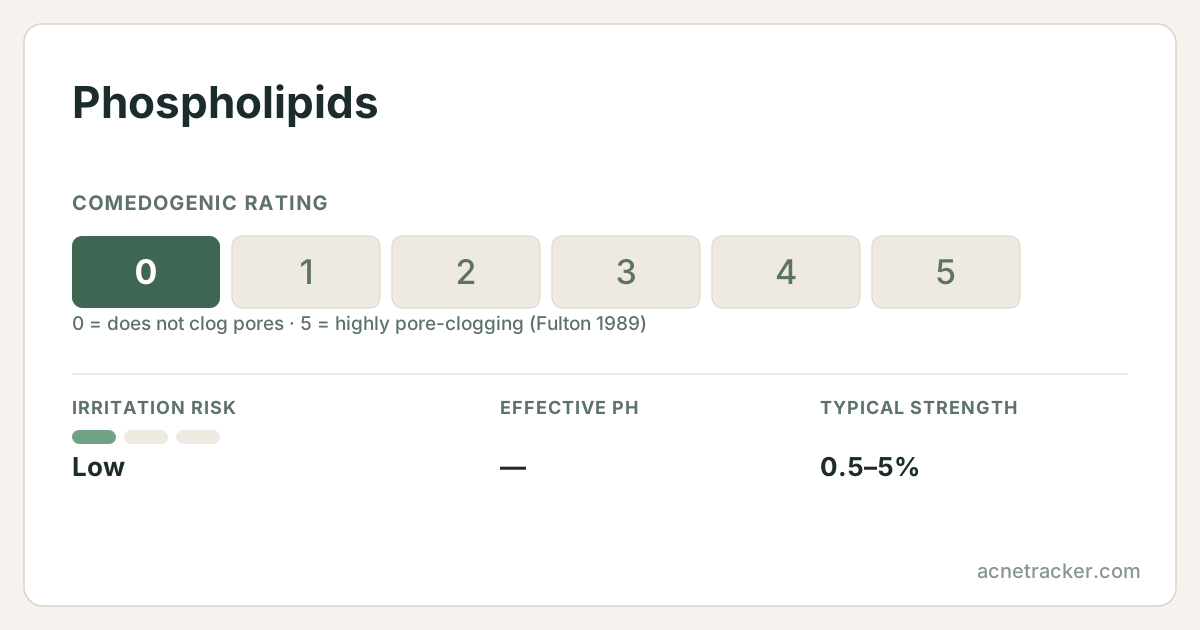
Phospholipids are the fundamental building blocks of every cell membrane in the body, which makes them among the most skin-compatible ingredients possible. On an ingredient list, phospholipids usually refers to a purified fraction of these membrane lipids, related to lecithin but often more concentrated. They do several jobs at once: they reinforce the skin barrier with lipids it recognises, they soften and condition the surface, they help emulsify formulas, and, because they naturally form membrane-like structures, they build the liposomes that carry delicate actives into the skin. Gentle and non-comedogenic, phospholipids are a quietly foundational ingredient in barrier and delivery-focused skincare.
Quick facts
- Comedogenic rating
- our estimate — not measured
- Irritation risk
- Low
- Effective pH
- —
- Typical strength
- 0.5–5%
- Pregnancy
- Considered safe
- Suits skin types
- drysensitivenormalcombinationmatureacne-prone
Where this number comes from
No one has published a comedogenic rating for this ingredient. Fulton's 1989 table tested about 250 raw materials and this was not among them, and we found no later study measuring it. The figure shown is our own reasoning from the ingredient's chemistry and how it is used — treat it as an estimate, not a measurement.
Fulton read his own scale as 0-1 not significant, 2-3 borderline, 4-5 positive. The assay is the rabbit ear at 10% dilution, which the paper itself calls extremely sensitive and not fully predictive of human skin. Ratings describe the raw ingredient; concentration and formulation change real-world behaviour.
Caution profile
The four published fields on this page, on one 0–5 scale. Further from the centre means more care is needed — never that the ingredient is worse.
Derived, not measured: pore-clogging is the published comedogenic rating; irritation maps low/moderate/high to 1/3/5; pregnancy maps safe/caution/avoid to 0/3/5; skin-type limits is how many of the seven skin types this entry does NOT list. Every input is printed in words in the quick-facts card above.
Show the numbers
| Metric | 0–5 | Published field |
|---|---|---|
| Pore-clogging | 0 | 0/5 |
| Irritation | 1 | Low |
| Skin-type limits | 0.7 | 6/7 |
| Pregnancy | 0 | Considered safe |
Working pH and typical strength
Where this ingredient is formulated to sit, and at what concentration.
Both bars come from the fields above: the pH window and the typical strength range published for this ingredient. The tinted column is healthy skin's surface pH (about 4.7–5.75).
Show the numbers
| Metric | 0–5 |
|---|---|
| Typical strength | 0.5–5% |
What is it?
Phospholipids are a class of lipids defined by a phosphate-containing, water-loving head group and two oil-loving fatty acid tails. This amphiphilic structure is exactly what allows them to form the bilayer membranes that enclose cells, and it is why they behave as they do in skincare. In the skin barrier, phospholipids and their relatives contribute to the ordered lipid layers that keep moisture in. As cosmetic ingredients they act as emulsifiers, bridging oil and water; as emollients, softening the surface; and as liposome formers, self-assembling into tiny spheres that encapsulate vitamins and other actives to improve their delivery. Phosphatidylcholine is a prominent example, and this fraction overlaps with lecithin and hydrogenated lecithin. Phospholipids are non-comedogenic and very well tolerated.
Benefits
Reinforces the barrier
Being the same class of lipids as cell membranes, phospholipids integrate with and support the skin barrier, helping reduce water loss.
Softens and conditions
As emollients they smooth and soften the skin surface, improving suppleness and comfort in dry or depleted skin.
Forms liposomes for delivery
Their membrane-forming nature builds liposomes that encapsulate delicate actives and help carry them into the upper skin layers.
Emulsifies gentle formulas
Their dual water- and oil-loving structure lets them emulsify creams smoothly, often replacing harsher synthetic emulsifiers.
How to use
Use products containing phospholipids as directed, morning or night; they are part of the formulation base rather than a dosed active. They are especially valuable in barrier-repair and liposomal delivery products, where they pair naturally with ceramides, cholesterol and softening emollients like squalane to rebuild and reinforce the barrier. They layer over humectants and under richer occlusives without conflict. There is no adjustment period, no photosensitivity concern, and they are compatible with the common actives you might use alongside them.
Side effects
Phospholipids are very well tolerated, with irritation and allergy being uncommon, as they mirror the skin's own membrane lipids. They have a comedogenic rating of 0 and do not increase sun sensitivity. Fractions containing unsaturated fatty acids can oxidise over time, which is managed through formulation and stabilisers or by using hydrogenated forms. For nearly all users they are comfortable and supportive.
Who should avoid it
No skin type specifically needs to avoid phospholipids; even acne-prone skin generally tolerates them well because they are non-comedogenic. People with a specific known reaction can patch test first. Those avoiding soy can look for phospholipids from sunflower or other sources.
Pairs well with
Frequently asked questions
What are phospholipids in skincare?
They are skin-identical membrane lipids that support the barrier, soften the skin, emulsify formulas and form liposomes to help deliver active ingredients into the upper skin layers.
Are phospholipids good for the skin barrier?
Yes. Phospholipids are the same class of lipids that build cell membranes, so they integrate with and reinforce the skin barrier, complementing ceramides and cholesterol.
Do phospholipids clog pores?
No. Phospholipids have a comedogenic rating of 0 and are skin-identical lipids, so they do not clog pores and are generally suitable for acne-prone skin.
How are phospholipids related to lecithin?
Lecithin is a natural blend rich in phospholipids like phosphatidylcholine. The ingredient phospholipids usually refers to a more purified fraction of the same membrane lipids.
Sources & further reading
Medical disclaimer
Find your personal acne triggers
Our free Acne Tracker lets you log breakouts, sleep, stress and diet, and shows you which factors correlate with your flare-ups.