BHT: Comedogenic Rating & Ingredient Analysis
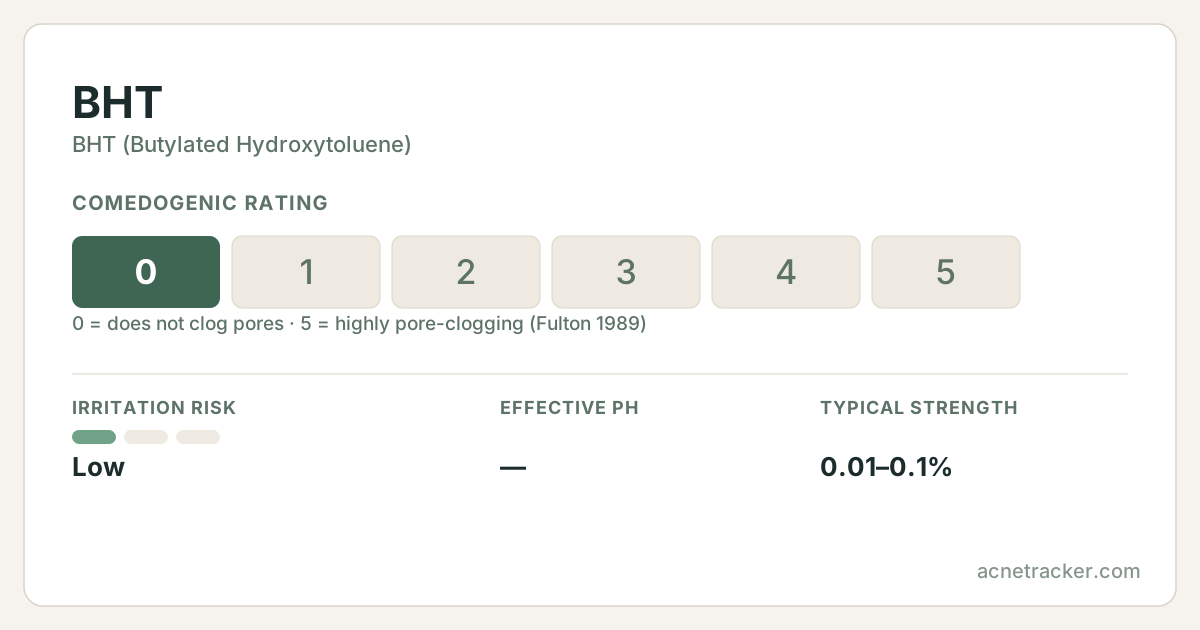
BHT, short for butylated hydroxytoluene, is a synthetic antioxidant used at tiny concentrations to stop the oils and fats in a product from going rancid. It is not a microbial preservative like phenoxyethanol; instead it protects the formula from oxidation — the chemical spoilage that turns oils stale, changes their colour and smell, and can irritate skin. BHT and its close relative BHA (butylated hydroxyanisole) are the two classic cosmetic antioxidant stabilisers, used for decades in everything from lip balms to moisturisers, and both are also familiar as food preservatives.
Quick facts
- Comedogenic rating
- our estimate — not measured
- Irritation risk
- Low
- Effective pH
- —
- Typical strength
- 0.01–0.1%
- Pregnancy
- Considered safe
- Suits skin types
- oilydrycombinationsensitivenormalacne-prone
Where this number comes from
No one has published a comedogenic rating for this ingredient. Fulton's 1989 table tested about 250 raw materials and this was not among them, and we found no later study measuring it. The figure shown is our own reasoning from the ingredient's chemistry and how it is used — treat it as an estimate, not a measurement.
Fulton read his own scale as 0-1 not significant, 2-3 borderline, 4-5 positive. The assay is the rabbit ear at 10% dilution, which the paper itself calls extremely sensitive and not fully predictive of human skin. Ratings describe the raw ingredient; concentration and formulation change real-world behaviour.
Caution profile
The four published fields on this page, on one 0–5 scale. Further from the centre means more care is needed — never that the ingredient is worse.
Derived, not measured: pore-clogging is the published comedogenic rating; irritation maps low/moderate/high to 1/3/5; pregnancy maps safe/caution/avoid to 0/3/5; skin-type limits is how many of the seven skin types this entry does NOT list. Every input is printed in words in the quick-facts card above.
Show the numbers
| Metric | 0–5 | Published field |
|---|---|---|
| Pore-clogging | 0 | 0/5 |
| Irritation | 1 | Low |
| Skin-type limits | 0.7 | 6/7 |
| Pregnancy | 0 | Considered safe |
Working pH and typical strength
Where this ingredient is formulated to sit, and at what concentration.
Both bars come from the fields above: the pH window and the typical strength range published for this ingredient. The tinted column is healthy skin's surface pH (about 4.7–5.75).
Show the numbers
| Metric | 0–5 |
|---|---|
| Typical strength | 0.01–0.1% |
What is it?
Chemically, BHT is a phenolic antioxidant that sacrifices itself to neutralise free radicals before they can attack the vulnerable double bonds in oils and butters. This keeps a product stable and pleasant for its full shelf life. It is used at very low levels, typically 0.01–0.1%, which is all that is needed. The EU SCCS has assessed BHT and concluded it is safe as used in cosmetics at the low concentrations typical of the category. It is worth distinguishing this BHT/BHA antioxidant pair from beta hydroxy acid (also abbreviated BHA), which is salicylic-acid, an exfoliant — the shared abbreviation causes frequent confusion but the ingredients are completely different.
Benefits
Prevents oils going rancid
BHT neutralises free radicals that would otherwise oxidise the oils and butters in a formula, keeping the product from turning stale, discoloured or smelly.
Extends shelf life
By slowing oxidation, it helps a product stay stable and effective from opening to the end of its shelf life, reducing waste.
Protects other ingredients
It can shield oxidation-sensitive components, working alongside antioxidants such as vitamin-e to keep the whole formula fresh.
Effective at trace levels
Only a fraction of a percent is needed, so it stabilises formulas without adding any meaningful load to the ingredient list.
How to use
BHT is a background stabiliser; there is nothing to apply separately and no routine impact. It sits comfortably alongside oils, butters and antioxidants like vitamin-e and squalane, and it is compatible with all common actives. Its presence simply means a brand has taken steps to keep an oil-containing product from spoiling. There is no evidence-based reason to avoid it for skin health, and no special storage or layering is required.
Side effects
At the low concentrations used in cosmetics, BHT has a very low irritation and allergy profile, and reactions are uncommon. Occasional contact allergy has been reported but is rare. Broader safety debates about BHT usually reference high-dose oral studies in animals, which do not represent the trace topical exposure in skincare; regulators have reviewed the cosmetic use and consider it safe as used.
Who should avoid it
There is no general reason to avoid BHT; only those with a specific, confirmed allergy need to. Its job is protecting the oils in the formula from going rancid, not acting on your skin, and at the trace levels involved neither sensitive nor acne-prone skin has cause for concern. Consumers who prefer to avoid synthetic antioxidants can look for products stabilised with natural alternatives such as tocopherol (vitamin E) and rosemary extract, which is a preference rather than a safety requirement.
Frequently asked questions
Is BHT the same as BHA exfoliant?
No. BHT and the antioxidant BHA are oil-stabilising antioxidants, while BHA as a beta hydroxy acid means salicylic acid, an exfoliant. The shared abbreviation is confusing but the ingredients are unrelated.
Is BHT safe in skincare?
Yes. The EU SCCS assessed BHT and concluded it is safe at the low concentrations used in cosmetics. Its role is to prevent oils from oxidising, and it is used at just a fraction of a percent.
Does BHT cause acne?
No. It has a comedogenic rating of zero, is used in trace amounts, and does not clog pores, so it does not cause breakouts and is appropriate for acne-prone skin.
What is the difference between a preservative and an antioxidant like BHT?
A preservative such as phenoxyethanol stops microbial growth, while an antioxidant like BHT stops chemical oxidation of oils. Products often contain both because they solve different spoilage problems.
Sources & further reading
Medical disclaimer
Find your personal acne triggers
Our free Acne Tracker lets you log breakouts, sleep, stress and diet, and shows you which factors correlate with your flare-ups.