BHA (Butylated Hydroxyanisole): Comedogenic Rating & Ingredient Analysis
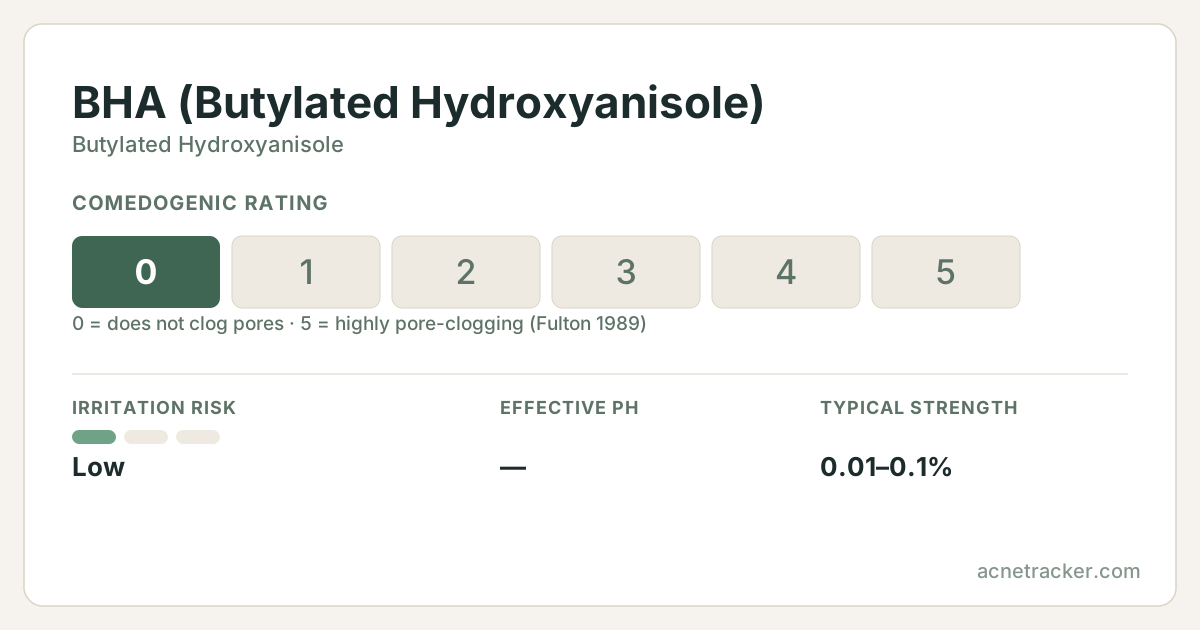
This BHA — butylated hydroxyanisole — is a synthetic antioxidant, and it is important not to confuse it with the other BHA in skincare. Beta hydroxy acid (salicylic-acid) is an exfoliant, while butylated hydroxyanisole is an oil-stabilising antioxidant used at tiny amounts to stop fats from going rancid. They share an abbreviation but do completely different jobs. Butylated hydroxyanisole is the close partner of BHT, and the two are often used together as a classic antioxidant duo in cosmetics and foods to protect oil-rich formulas from oxidation.
Quick facts
- Comedogenic rating
- our estimate — not measured
- Irritation risk
- Low
- Effective pH
- —
- Typical strength
- 0.01–0.1%
- Pregnancy
- Ask your doctor
- Suits skin types
- oilydrycombinationnormalacne-prone
Where this number comes from
No one has published a comedogenic rating for this ingredient. Fulton's 1989 table tested about 250 raw materials and this was not among them, and we found no later study measuring it. The figure shown is our own reasoning from the ingredient's chemistry and how it is used — treat it as an estimate, not a measurement.
Fulton read his own scale as 0-1 not significant, 2-3 borderline, 4-5 positive. The assay is the rabbit ear at 10% dilution, which the paper itself calls extremely sensitive and not fully predictive of human skin. Ratings describe the raw ingredient; concentration and formulation change real-world behaviour.
Caution profile
The four published fields on this page, on one 0–5 scale. Further from the centre means more care is needed — never that the ingredient is worse.
Derived, not measured: pore-clogging is the published comedogenic rating; irritation maps low/moderate/high to 1/3/5; pregnancy maps safe/caution/avoid to 0/3/5; skin-type limits is how many of the seven skin types this entry does NOT list. Every input is printed in words in the quick-facts card above.
Show the numbers
| Metric | 0–5 | Published field |
|---|---|---|
| Pore-clogging | 0 | 0/5 |
| Irritation | 1 | Low |
| Skin-type limits | 1.4 | 5/7 |
| Pregnancy | 3 | Ask your doctor |
Working pH and typical strength
Where this ingredient is formulated to sit, and at what concentration.
Both bars come from the fields above: the pH window and the typical strength range published for this ingredient. The tinted column is healthy skin's surface pH (about 4.7–5.75).
Show the numbers
| Metric | 0–5 |
|---|---|
| Typical strength | 0.01–0.1% |
What is it?
Butylated hydroxyanisole is a phenolic antioxidant that intercepts free radicals before they can degrade the oils, butters and other oxidation-prone materials in a product. Used at 0.01–0.1%, it keeps formulas from developing off colours, off smells and irritating breakdown products. Because it performs the same protective job as BHT, formulators sometimes list both. Its safety has been assessed by regulators, and while some general-toxicology discussions of butylated hydroxyanisole exist, the cosmetic use is at extremely low levels; the EU permits it as a cosmetic antioxidant. The single most useful thing to understand about it is simply that it is not the exfoliating acid people usually mean by "BHA".
Benefits
Stops oil oxidation
It neutralises free radicals that would otherwise turn the oils in a formula rancid, protecting both the product's smell and its skin feel.
Preserves product quality
By preventing oxidative breakdown, it keeps colour, texture and performance consistent through the product's shelf life.
Works with BHT and vitamin E
It is often paired with BHT or vitamin-e in an antioxidant system, giving oil-rich formulas robust protection against going off.
Trace-level efficiency
Only a fraction of a percent is required, so it stabilises a formula without adding meaningful bulk or clogging potential.
How to use
Butylated hydroxyanisole is a background antioxidant — you do not apply or layer it, and it needs no routine attention. Its job is done inside the bottle, protecting oils and butters. It is compatible with all common actives and sits well alongside vitamin-e and squalane. The practical takeaway for shoppers is interpretive rather than procedural: if you see "BHA" high on an ingredient list as butylated hydroxyanisole, it is an antioxidant, not the salicylic-acid exfoliant, so do not treat it as an active.
Side effects
At cosmetic concentrations, butylated hydroxyanisole has a low irritation and allergy profile, and reactions are uncommon. As with BHT, broader safety debates cite high-dose oral animal studies that are not representative of trace topical exposure. Some consumers choose to limit it out of caution, which is why the pregnancySafe status here is marked as caution rather than a definite yes, but at cosmetic levels it is generally regarded as low risk.
Who should avoid it
Only those with a confirmed allergy to butylated hydroxyanisole need to avoid it specifically. People who prefer to minimise synthetic antioxidants, or who want extra caution during pregnancy, can choose products stabilised with tocopherol (vitamin E) or rosemary extract instead. For most users at cosmetic levels it is an uneventful stabiliser.
Frequently asked questions
Is butylated hydroxyanisole the same as salicylic acid BHA?
No. Butylated hydroxyanisole is an antioxidant that protects oils, while BHA as a beta hydroxy acid means salicylic acid, an exfoliant. They share the abbreviation but are entirely different ingredients.
What does BHA antioxidant do in a product?
It stops the oils and fats in a formula from oxidising and going rancid, which protects the product's colour, smell and skin feel. It is used at just a fraction of a percent.
Is butylated hydroxyanisole safe in cosmetics?
At the very low levels used as a cosmetic antioxidant it is permitted by regulators and has a low irritation profile. Broader safety debates reference high-dose oral studies, not trace topical use.
Why do labels use BHA for two different things?
BHA is an abbreviation for both butylated hydroxyanisole (an antioxidant) and beta hydroxy acid (salicylic acid, an exfoliant). Reading the full INCI name tells you which one a product actually contains.
Sources & further reading
Medical disclaimer
Find your personal acne triggers
Our free Acne Tracker lets you log breakouts, sleep, stress and diet, and shows you which factors correlate with your flare-ups.