Resveratrol: Comedogenic Rating & Ingredient Analysis
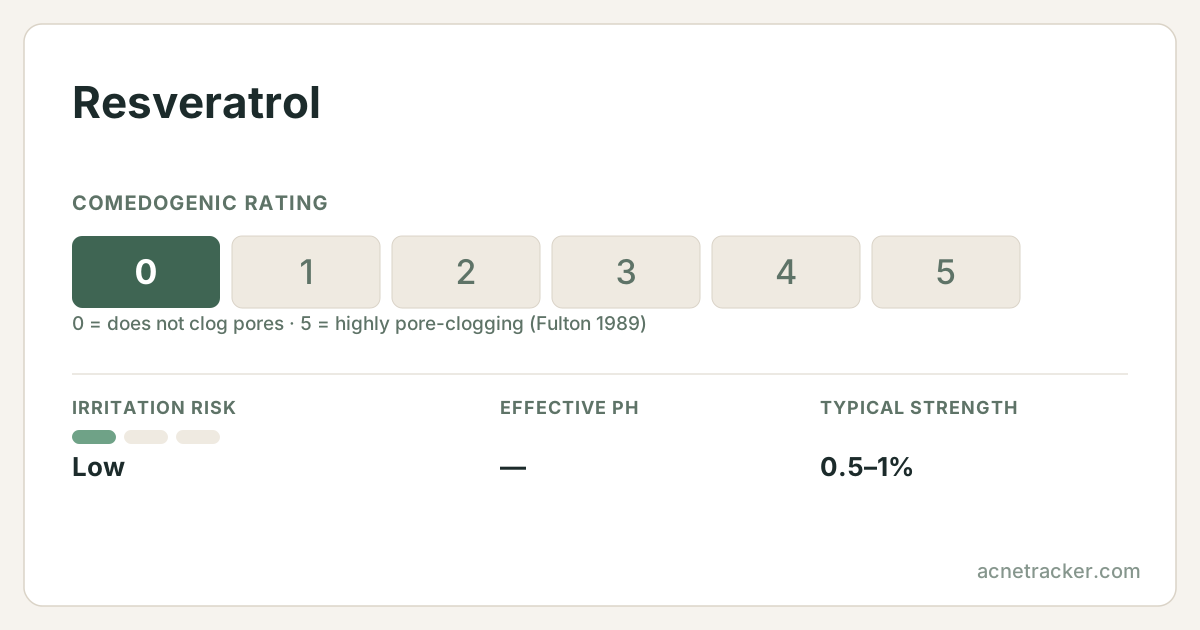
Resveratrol is a polyphenol antioxidant most famous as the compound in red grapes and wine, but in skincare it earns its place as a potent night-time defender against oxidative stress. Plants produce it as a distress signal when attacked by fungi or UV, and that protective heritage carries over to skin, where it neutralises free radicals, calms inflammation and even shows mild antimicrobial activity. It is often positioned as an evening counterpart to daytime vitamin C: while your skin repairs overnight, resveratrol helps shield it from the residue of the day's damage. It suits all skin types and is comfortable even for sensitive complexions.
Quick facts
- Comedogenic rating
- our estimate — not measured
- Irritation risk
- Low
- Effective pH
- —
- Typical strength
- 0.5–1%
- Pregnancy
- Considered safe
- Suits skin types
- oilydrycombinationsensitivenormalmature
Where this number comes from
No one has published a comedogenic rating for this ingredient. Fulton's 1989 table tested about 250 raw materials and this was not among them, and we found no later study measuring it. The figure shown is our own reasoning from the ingredient's chemistry and how it is used — treat it as an estimate, not a measurement.
Fulton read his own scale as 0-1 not significant, 2-3 borderline, 4-5 positive. The assay is the rabbit ear at 10% dilution, which the paper itself calls extremely sensitive and not fully predictive of human skin. Ratings describe the raw ingredient; concentration and formulation change real-world behaviour.
Caution profile
The four published fields on this page, on one 0–5 scale. Further from the centre means more care is needed — never that the ingredient is worse.
Derived, not measured: pore-clogging is the published comedogenic rating; irritation maps low/moderate/high to 1/3/5; pregnancy maps safe/caution/avoid to 0/3/5; skin-type limits is how many of the seven skin types this entry does NOT list. Every input is printed in words in the quick-facts card above.
Show the numbers
| Metric | 0–5 | Published field |
|---|---|---|
| Pore-clogging | 0 | 0/5 |
| Irritation | 1 | Low |
| Skin-type limits | 0.7 | 6/7 |
| Pregnancy | 0 | Considered safe |
Working pH and typical strength
Where this ingredient is formulated to sit, and at what concentration.
Both bars come from the fields above: the pH window and the typical strength range published for this ingredient. The tinted column is healthy skin's surface pH (about 4.7–5.75).
Show the numbers
| Metric | 0–5 |
|---|---|
| Typical strength | 0.5–1% |
What is it?
Resveratrol belongs to a class of plant compounds called stilbenes, produced in grape skins, Japanese knotweed and berries. Its antioxidant capacity is considerable, and research also credits it with activating cellular pathways linked to repair and with tempering the inflammatory signals that worsen redness and breakouts. It is unstable in light, so it is best used at night and packaged carefully. Because it pairs so well with other antioxidants, formulators frequently combine it with vitamin E to broaden and prolong the protective effect, creating a night serum that complements a morning antioxidant routine.
Benefits
Strong antioxidant defence
Resveratrol scavenges the free radicals produced by UV and pollution, helping to limit the oxidative damage that dulls skin and accelerates visible ageing.
Calms inflammation
Its anti-inflammatory action soothes redness and irritation, which makes it a comfortable antioxidant choice for reactive and blemish-prone skin.
Mild antimicrobial activity
Studies note a modest ability to discourage acne-related microbes, a small supporting benefit for those managing breakouts alongside its calming effect.
Complements daytime antioxidants
Used at night it extends antioxidant coverage around the clock, working best when paired with a morning vitamin C step for continuous protection.
How to use
Because it is light-sensitive, resveratrol is best applied in the evening after cleansing, before your moisturiser. Look for it in opaque, well-sealed packaging, and combine it with a morning antioxidant such as vitamin C for full-day, full-night coverage. It layers easily with hydrating and barrier-supporting ingredients and does not require a tolerance-building ramp. As with any antioxidant, discard the product if it darkens noticeably, since that suggests it has oxidised and lost potency.
Side effects
Resveratrol is gentle and rarely causes problems. Occasional mild redness or sensitivity can occur, particularly in very reactive skin, but true irritation is unusual. Its low comedogenicity means it will not clog pores. Any reaction to a resveratrol serum is more likely tied to other components of the formula, such as the base oils or fragrance.
Who should avoid it
Few people need to avoid topical resveratrol; it is considered a low-risk cosmetic antioxidant. Those with highly sensitive skin should patch test any new serum. As with all actives, if you are pregnant or breastfeeding, run your full routine past your clinician, though topical antioxidant use is generally regarded as low concern.
Pairs well with
Frequently asked questions
What is resveratrol good for in skincare?
It is a powerful antioxidant that neutralises free radicals, calms inflammation and offers mild antimicrobial support. Used at night it helps defend skin against oxidative stress and complements a daytime vitamin C routine.
Should resveratrol be used day or night?
Night is preferable because resveratrol is light-sensitive. Applying it in the evening pairs neatly with a morning antioxidant like vitamin C, giving continuous protection around the clock.
Can I use resveratrol with vitamin C?
Yes. Many people use vitamin C in the morning and resveratrol at night so their skin has antioxidant coverage throughout the day and night, and the two are fully compatible.
Does resveratrol help with acne?
It is not a primary acne treatment, but its anti-inflammatory and mild antimicrobial effects can support calmer, less reactive skin alongside dedicated acne actives like salicylic acid or benzoyl peroxide.
Sources & further reading
Medical disclaimer
Find your personal acne triggers
Our free Acne Tracker lets you log breakouts, sleep, stress and diet, and shows you which factors correlate with your flare-ups.