Sea Salt: Comedogenic Rating & Ingredient Analysis
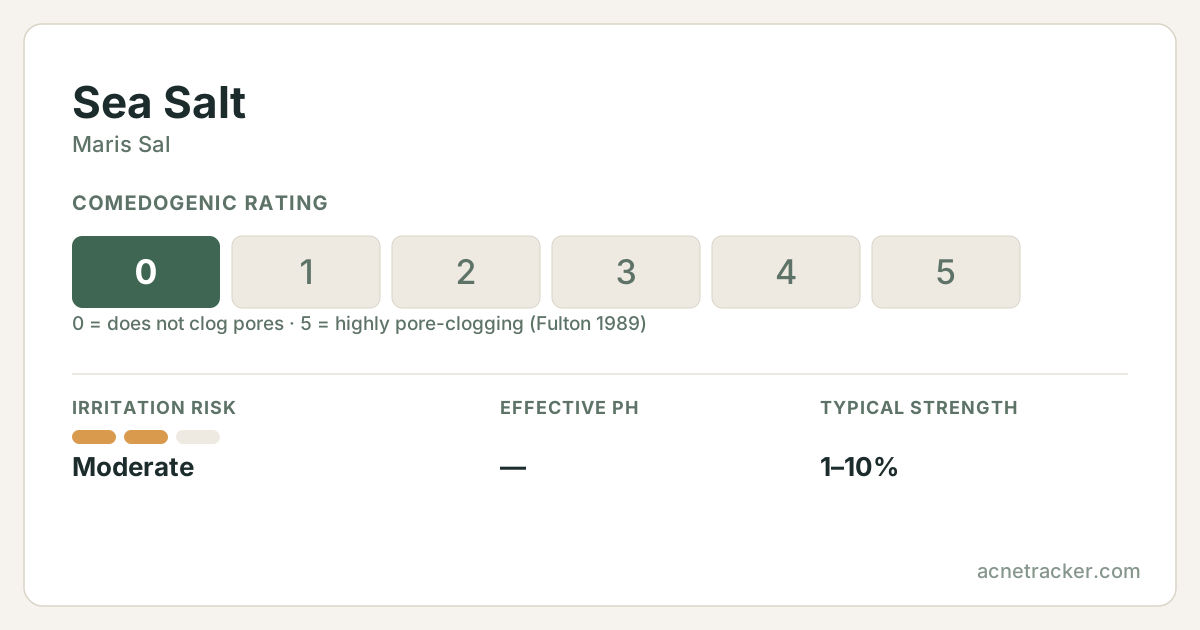
Sea salt, listed on labels as Maris Sal, is evaporated seawater rich in sodium chloride along with trace minerals such as magnesium, calcium and potassium. In skincare it turns up in exfoliating scrubs, bath products, cleansers and toners, valued both for its gritty texture and for the minerals it contains. It can be genuinely useful for gently buffing the skin and for oily or body skin, but coarse salt is also abrasive and drawing, so it needs to be used thoughtfully. On the face in particular, gentler exfoliation is often the wiser choice.
Quick facts
- Comedogenic rating
- our estimate — not measured
- Irritation risk
- Moderate
- Effective pH
- —
- Typical strength
- 1–10%
- Pregnancy
- Considered safe
- Suits skin types
- oilycombinationnormal
Where this number comes from
No one has published a comedogenic rating for this ingredient. Fulton's 1989 table tested about 250 raw materials and this was not among them, and we found no later study measuring it. The figure shown is our own reasoning from the ingredient's chemistry and how it is used — treat it as an estimate, not a measurement.
Fulton read his own scale as 0-1 not significant, 2-3 borderline, 4-5 positive. The assay is the rabbit ear at 10% dilution, which the paper itself calls extremely sensitive and not fully predictive of human skin. Ratings describe the raw ingredient; concentration and formulation change real-world behaviour.
Caution profile
The four published fields on this page, on one 0–5 scale. Further from the centre means more care is needed — never that the ingredient is worse.
Derived, not measured: pore-clogging is the published comedogenic rating; irritation maps low/moderate/high to 1/3/5; pregnancy maps safe/caution/avoid to 0/3/5; skin-type limits is how many of the seven skin types this entry does NOT list. Every input is printed in words in the quick-facts card above.
Show the numbers
| Metric | 0–5 | Published field |
|---|---|---|
| Pore-clogging | 0 | 0/5 |
| Irritation | 3 | Moderate |
| Skin-type limits | 2.9 | 3/7 |
| Pregnancy | 0 | Considered safe |
Working pH and typical strength
Where this ingredient is formulated to sit, and at what concentration.
Both bars come from the fields above: the pH window and the typical strength range published for this ingredient. The tinted column is healthy skin's surface pH (about 4.7–5.75).
Show the numbers
| Metric | 0–5 |
|---|---|
| Typical strength | 1–10% |
What is it?
Sea salt is mostly sodium chloride, produced by evaporating seawater, and it retains small amounts of other sea minerals depending on its source. Those minerals are part of its appeal, and salt-rich waters like the Dead Sea have been studied for soothing effects in certain skin conditions. In cosmetics, sea salt plays several roles: as a physical exfoliant when granular, as a cleansing and texturising agent, and as a mineral-bearing ingredient in toners and soaks. Salt is also mildly antibacterial and drawing, which is why it appears in products for oily and blemish-prone body skin. Its abrasiveness, however, means the grain size and how you use it matter a great deal.
Benefits
Physical exfoliation
As a granular scrub, sea salt buffs away dead surface cells and rough texture, which can leave the skin — especially on the body — feeling smoother and refreshed.
Mineral content
Sea salt carries trace minerals such as magnesium, calcium and potassium; magnesium-rich salt waters in particular have been studied for soothing effects in some skin conditions.
Suits oily and body skin
Its mildly drawing, antibacterial character makes salt a common ingredient in scrubs and soaks for oily, congested or rough body skin.
Adds texture to formulas
Beyond exfoliation, salt is used to adjust the texture and cleansing feel of products, and dissolved in toners and soaks it delivers minerals without abrasion.
How to use
Use sea salt with care, matching the format to the area. Coarse salt scrubs suit the body but are usually too harsh for the face; if you exfoliate facial skin, choose a fine, dissolved or gentle format and a light hand. Salt baths and soaks are a gentler way to enjoy the minerals. Avoid scrubbing broken, irritated or freshly shaved skin, and never combine salt scrubs with chemical exfoliants in the same session. Moisturise afterwards, since salt can be drying.
Side effects
Coarse salt is abrasive and can cause micro-tears, stinging and irritation if scrubbed too hard, especially on the face or sensitive skin. Salt is also drying and can sting broken or freshly shaved skin. Overusing salt scrubs can compromise the skin barrier. If you notice redness, tightness or a burning sensation, stop scrubbing and switch to gentler exfoliation.
Who should avoid it
Sensitive, dry or eczema-prone skin should be cautious with salt scrubs, and facial skin is generally better exfoliated by gentler means. Avoid salt on broken, sunburned or freshly shaved skin. If your barrier is already compromised, skip abrasive salt products until it recovers.
Pairs well with
Avoid combining with
Frequently asked questions
Is sea salt good for the skin?
It can be, in the right format. As a body scrub it smooths rough skin, and mineral-rich salt soaks can be soothing. But coarse salt is abrasive and drying, so it needs careful, moderate use.
Can I use a sea salt scrub on my face?
It is usually too harsh for facial skin, where it can cause micro-tears and irritation. If you exfoliate the face, gentler chemical or fine physical exfoliants are a better choice.
Does sea salt help with acne?
Salt is mildly drawing and antibacterial, so it may help oily or congested body skin feel cleaner, but it does not treat acne directly and can irritate if overused.
Does sea salt dry out the skin?
Yes, salt is drawing and can be drying, especially in scrubs. Always moisturise afterwards, and avoid using salt products on already dry, broken or sensitive skin.
Are the minerals in sea salt beneficial?
Sea salt carries trace minerals like magnesium, and magnesium-rich salt waters have been studied for soothing effects. In a rinse-off or soak, though, the contact time limits how much benefit the skin gains.
Sources & further reading
Medical disclaimer
Find your personal acne triggers
Our free Acne Tracker lets you log breakouts, sleep, stress and diet, and shows you which factors correlate with your flare-ups.