Echinacea Extract: Comedogenic Rating & Ingredient Analysis
Echinacea is best known as the purple coneflower people reach for during cold season, but the same plant has quietly become a skincare ingredient valued for soothing and conditioning the skin. Echinacea purpurea extract appears in calming serums, hydrating creams and products marketed for stressed, reactive or blemish-prone skin. Its appeal is a combination of soothing plant compounds and a naturally hydrating character. Like most botanicals its clinical evidence in cosmetics is modest and best described honestly as promising rather than proven, but as a gentle, non-comedogenic extract it is a comfortable addition to routines aimed at calming and supporting the skin.
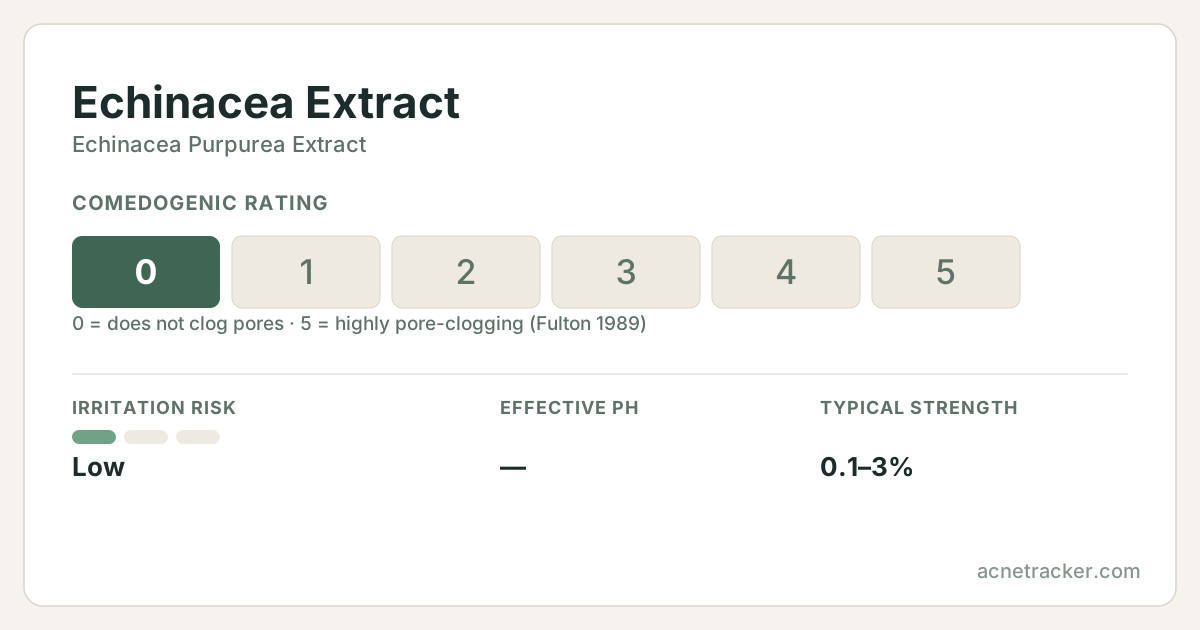
Quick facts
- Comedogenic rating
- our estimate — not measured
- Irritation risk
- Low
- Effective pH
- —
- Typical strength
- 0.1–3%
- Pregnancy
- Considered safe
- Suits skin types
- normalcombinationsensitiveoilyacne-prone
Where this number comes from
No one has published a comedogenic rating for this ingredient. Fulton's 1989 table tested about 250 raw materials and this was not among them, and we found no later study measuring it. The figure shown is our own reasoning from the ingredient's chemistry and how it is used — treat it as an estimate, not a measurement.
Fulton read his own scale as 0-1 not significant, 2-3 borderline, 4-5 positive. The assay is the rabbit ear at 10% dilution, which the paper itself calls extremely sensitive and not fully predictive of human skin. Ratings describe the raw ingredient; concentration and formulation change real-world behaviour.
Caution profile
The four published fields on this page, on one 0–5 scale. Further from the centre means more care is needed — never that the ingredient is worse.
Derived, not measured: pore-clogging is the published comedogenic rating; irritation maps low/moderate/high to 1/3/5; pregnancy maps safe/caution/avoid to 0/3/5; skin-type limits is how many of the seven skin types this entry does NOT list. Every input is printed in words in the quick-facts card above.
Show the numbers
| Metric | 0–5 | Published field |
|---|---|---|
| Pore-clogging | 0 | 0/5 |
| Irritation | 1 | Low |
| Skin-type limits | 1.4 | 5/7 |
| Pregnancy | 0 | Considered safe |
Working pH and typical strength
Where this ingredient is formulated to sit, and at what concentration.
Both bars come from the fields above: the pH window and the typical strength range published for this ingredient. The tinted column is healthy skin's surface pH (about 4.7–5.75).
Show the numbers
| Metric | 0–5 |
|---|---|
| Typical strength | 0.1–3% |
What is it?
Echinacea purpurea contains a mix of active compounds including alkylamides, polysaccharides, caffeic acid derivatives (such as cichoric acid) and flavonoids. The polysaccharides give the extract a mildly hydrating, film-forming quality, while the caffeic acid derivatives and flavonoids contribute antioxidant and soothing activity seen in laboratory studies. Echinacea is famous in supplement form, but in skincare it is used topically for its conditioning and calming character rather than any immune claim, which does not translate to the skin surface. As a water- or glycol-based extract it is non-comedogenic with a rating of 0 and a low irritation profile, suiting sensitive and acne-prone skin.
Benefits
Soothes reactive skin
Echinacea's caffeic acid derivatives and flavonoids help calm the look of redness and irritation, making it useful for stressed and easily-reactive skin.
Light hydration
Its polysaccharides hold water at the skin surface for a soft, conditioned feel, pairing naturally with humectants such as hyaluronic-acid.
Antioxidant support
The flavonoid and caffeic acid content helps defend against everyday oxidative stress, complementing soothing antioxidants like green-tea-extract.
Gentle for blemish-prone skin
With a rating of 0 and low irritation risk, echinacea suits acne-prone and combination skin and layers well with actives like niacinamide.
How to use
Echinacea extract fits easily into a soothing routine: use it in a serum, essence or moisturiser after cleansing, morning or night. It layers comfortably with hydrating and calming actives such as hyaluronic-acid, niacinamide and centella-asiatica, and needs no adjustment period. There is no photosensitivity concern. As with any daisy-family botanical, patch test if your skin is very reactive, since a minority of people are sensitive to the plant family. It works well as part of a barrier-supporting routine alongside stronger acne treatments.
Side effects
Echinacea is generally well tolerated in cosmetics, with irritation being uncommon. Because it belongs to the daisy (Asteraceae) family, people allergic to ragweed, chrysanthemums or related plants may react, so a patch test is sensible for allergy-prone users. Beyond that, any stinging from an echinacea product usually comes from other formula components such as fragrance or alcohol rather than the extract itself.
Who should avoid it
Most people can use topical echinacea extract, including those with sensitive and acne-prone skin. People with a known allergy to daisy-family plants should patch test carefully or avoid it. Topical echinacea is considered low-risk in pregnancy for normal cosmetic use, but if you are unsure or have plant allergies, check with your doctor. Oral echinacea's cautions do not apply to a topical cosmetic.
Pairs well with
Frequently asked questions
Does echinacea extract clog pores?
No. Water- or glycol-based echinacea extract has a comedogenic rating of 0 and does not clog pores, making it suitable for acne-prone and combination skin.
What does echinacea do for skin?
In skincare it soothes and lightly hydrates, using caffeic acid derivatives and flavonoids to calm the look of reactive skin and polysaccharides to condition the surface. Its immune reputation does not apply topically.
Is echinacea good for acne-prone skin?
It can be a helpful soothing, non-comedogenic addition, but it is not an acne treatment. Pair it with proven actives like salicylic-acid or niacinamide if breakouts are your main concern.
Can echinacea cause an allergic reaction?
Occasionally. As a daisy-family plant, echinacea may trigger reactions in people sensitive to ragweed, chrysanthemums or related plants, so a patch test is wise if your skin is allergy-prone.
Sources & further reading
Medical disclaimer
Find your personal acne triggers
Our free Acne Tracker lets you log breakouts, sleep, stress and diet, and shows you which factors correlate with your flare-ups.