Astaxanthin: Comedogenic Rating & Ingredient Analysis
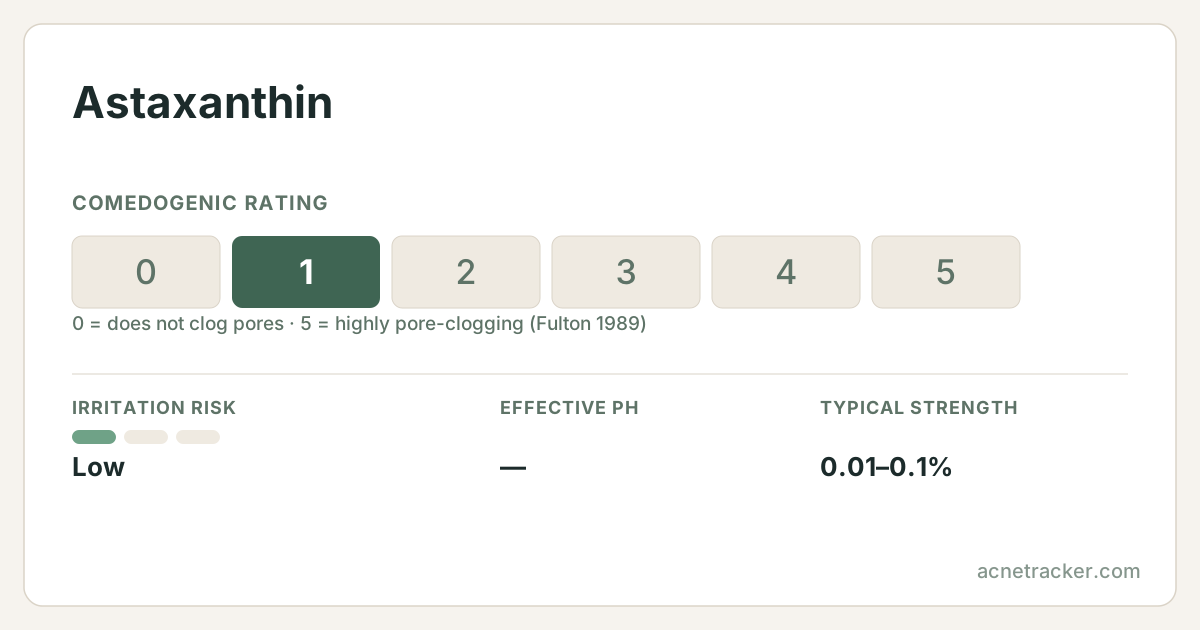
Astaxanthin is a deep-red carotenoid antioxidant, the pigment that gives salmon and some algae their color, and one of the more potent antioxidants used in skincare. It is typically sourced from the microalga Haematococcus pluvialis and used at very low concentrations because a little goes a long way and it stains intensely. In skincare it is valued for defending the skin against oxidative and environmental stress and supporting a healthier-looking complexion. It has a low comedogenic rating and low irritation risk, making it a gentle, antioxidant-focused addition to anti-aging and protective routines.
Quick facts
- Comedogenic rating
- our estimate — not measured
- Irritation risk
- Low
- Effective pH
- —
- Typical strength
- 0.01–0.1%
- Pregnancy
- Considered safe
- Suits skin types
- drycombinationnormalsensitivemature
Where this number comes from
No one has published a comedogenic rating for this ingredient. Fulton's 1989 table tested about 250 raw materials and this was not among them, and we found no later study measuring it. The figure shown is our own reasoning from the ingredient's chemistry and how it is used — treat it as an estimate, not a measurement.
Fulton read his own scale as 0-1 not significant, 2-3 borderline, 4-5 positive. The assay is the rabbit ear at 10% dilution, which the paper itself calls extremely sensitive and not fully predictive of human skin. Ratings describe the raw ingredient; concentration and formulation change real-world behaviour.
Caution profile
The four published fields on this page, on one 0–5 scale. Further from the centre means more care is needed — never that the ingredient is worse.
Derived, not measured: pore-clogging is the published comedogenic rating; irritation maps low/moderate/high to 1/3/5; pregnancy maps safe/caution/avoid to 0/3/5; skin-type limits is how many of the seven skin types this entry does NOT list. Every input is printed in words in the quick-facts card above.
Show the numbers
| Metric | 0–5 | Published field |
|---|---|---|
| Pore-clogging | 1 | 1/5 |
| Irritation | 1 | Low |
| Skin-type limits | 1.4 | 5/7 |
| Pregnancy | 0 | Considered safe |
Working pH and typical strength
Where this ingredient is formulated to sit, and at what concentration.
Both bars come from the fields above: the pH window and the typical strength range published for this ingredient. The tinted column is healthy skin's surface pH (about 4.7–5.75).
Show the numbers
| Metric | 0–5 |
|---|---|
| Typical strength | 0.01–0.1% |
What is it?
Astaxanthin belongs to the carotenoid family, the same broad group as beta-carotene, and is produced in nature by algae as a protective response to stress. Its molecular structure lets it neutralize free radicals effectively, and laboratory comparisons often rank its antioxidant capacity highly among common antioxidants. In cosmetics it is used in tiny amounts, both because it is potent and because its intense red color would otherwise tint products and skin. It defends against the oxidative stress generated by UV and pollution, and it has some soothing character too. As with all antioxidants, it is a supporting player that works best alongside daily sunscreen.
Benefits
Strong antioxidant defense
Astaxanthin is a potent free-radical scavenger, helping protect the skin surface from the oxidative stress caused by UV and pollution.
Supports skin against aging
By defending against oxidative damage, it supports a healthier, more resilient-looking complexion as part of an anti-aging routine.
Calming character
Beyond its antioxidant role, astaxanthin has a soothing quality that can help support comfortable, less reactive-feeling skin.
Complements other antioxidants
It pairs well with vitamins C and E and CoQ10, and antioxidant blends provide broader environmental protection than any single ingredient.
How to use
Astaxanthin is found in serums and moisturizers, usually at low levels because of its potency and color. Apply after cleansing, and it is particularly useful in the morning, where its antioxidant action complements sunscreen against daytime stress. It pairs well with other antioxidants like vitamin C, vitamin E and CoQ10, and layers comfortably with hydrators and most actives. As with every antioxidant, it supports rather than replaces sunscreen, which remains the foundation of protection against oxidative skin aging.
Side effects
Astaxanthin is well tolerated and side effects are rare. Its low irritation profile makes it suitable even for sensitive skin. The most notable practical point is its intense red-orange color, which formulators keep at low levels to avoid tinting the skin; well-made products should not stain. It does not increase sun sensitivity. Any reaction is usually attributable to other ingredients in the formula.
Who should avoid it
There is no group that specifically needs to avoid topical astaxanthin. Those worried about color transfer should simply choose reputable, well-formulated products that use it at appropriate levels. Otherwise it suits all skin types, including sensitive and mature skin looking for strong antioxidant support.
Pairs well with
Frequently asked questions
What is astaxanthin good for in skincare?
It is a powerful antioxidant used to defend the skin against oxidative and environmental stress from UV and pollution, supporting a healthier, more resilient-looking complexion.
Is astaxanthin a strong antioxidant?
Yes. It is a carotenoid often ranked highly among common antioxidants in lab tests, which is why it is used at very low concentrations in skincare.
Will astaxanthin stain my skin?
It has an intense red-orange color, but formulators use it at low levels specifically to avoid tinting the skin, so well-made products should not stain.
Does astaxanthin clog pores?
It has a low comedogenic rating (1) and is used at tiny concentrations, so it is generally suitable for most skin types, including those prone to breakouts.
Is astaxanthin safe during pregnancy?
Yes. Topical astaxanthin is a gentle antioxidant with no systemic concern and is generally considered safe during pregnancy and breastfeeding.
Sources & further reading
Medical disclaimer
Find your personal acne triggers
Our free Acne Tracker lets you log breakouts, sleep, stress and diet, and shows you which factors correlate with your flare-ups.