Coconut Oil: Comedogenic Rating & Ingredient Analysis
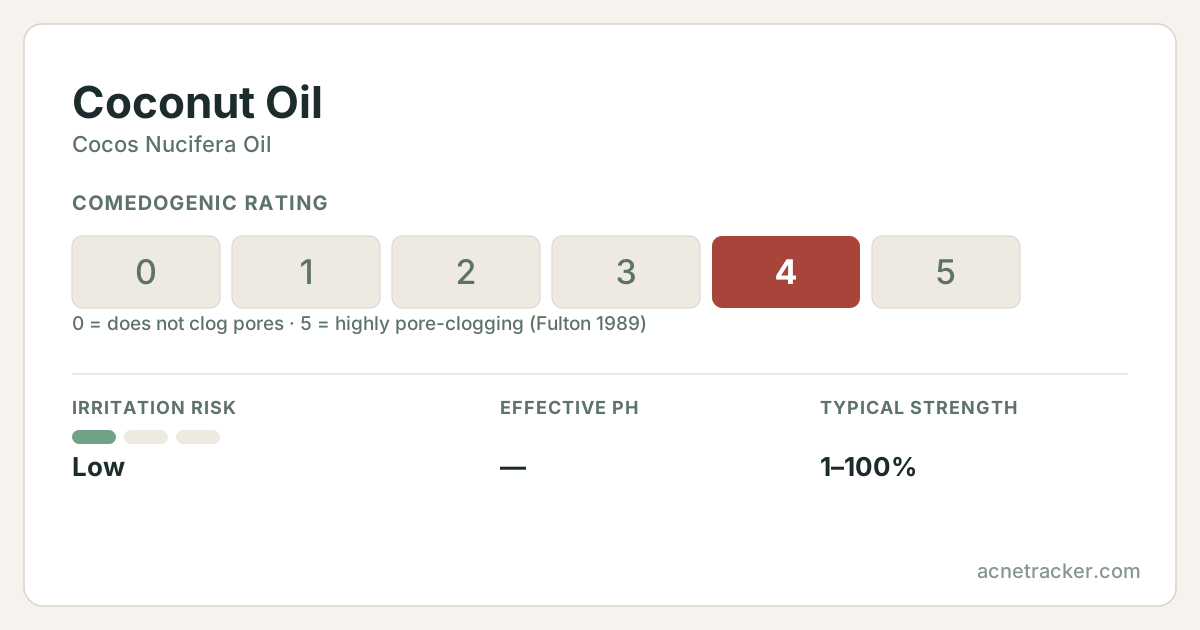
Coconut oil is one of the most popular natural moisturisers, prized for softening dry skin, conditioning hair and its pleasant scent. It is a rich, largely saturated fat that spreads easily and forms a lasting occlusive layer, which makes it genuinely useful for very dry body skin and as a hair treatment. Yet it is also one of the most frequently blamed ingredients for breakouts, and for good reason: on the comedogenic scale it rates high, so despite containing antimicrobial lauric acid, it is a classic pore-clogger on the face. Understanding this split, great for the body, risky for acne-prone faces, is the key to using it wisely.
Quick facts
- Comedogenic rating
- our estimate — not measured
- Irritation risk
- Low
- Effective pH
- —
- Typical strength
- 1–100%
- Pregnancy
- Considered safe
- Suits skin types
- drynormal
Where this number comes from
No one has published a comedogenic rating for this ingredient. Fulton's 1989 table tested about 250 raw materials and this was not among them, and we found no later study measuring it. The figure shown is our own reasoning from the ingredient's chemistry and how it is used — treat it as an estimate, not a measurement.
Fulton read his own scale as 0-1 not significant, 2-3 borderline, 4-5 positive. The assay is the rabbit ear at 10% dilution, which the paper itself calls extremely sensitive and not fully predictive of human skin. Ratings describe the raw ingredient; concentration and formulation change real-world behaviour.
Caution profile
The four published fields on this page, on one 0–5 scale. Further from the centre means more care is needed — never that the ingredient is worse.
Derived, not measured: pore-clogging is the published comedogenic rating; irritation maps low/moderate/high to 1/3/5; pregnancy maps safe/caution/avoid to 0/3/5; skin-type limits is how many of the seven skin types this entry does NOT list. Every input is printed in words in the quick-facts card above.
Show the numbers
| Metric | 0–5 | Published field |
|---|---|---|
| Pore-clogging | 4 | 4/5 |
| Irritation | 1 | Low |
| Skin-type limits | 3.6 | 2/7 |
| Pregnancy | 0 | Considered safe |
Working pH and typical strength
Where this ingredient is formulated to sit, and at what concentration.
Both bars come from the fields above: the pH window and the typical strength range published for this ingredient. The tinted column is healthy skin's surface pH (about 4.7–5.75).
Show the numbers
| Metric | 0–5 |
|---|---|
| Typical strength | 1–100% |
What is it?
Coconut oil is dominated by saturated medium-chain fatty acids, especially lauric acid, along with myristic and palmitic acids. Lauric acid has documented antimicrobial activity, including against some acne-associated bacteria, which is why coconut oil is sometimes promoted for acne, but this benefit is outweighed for most people by its comedogenicity. In Fulton's testing the oil rated high, around 4 out of 5, meaning it readily clogs pores. Its saturated composition also makes it solid below roughly 24°C and gives it a strong occlusive, moisture-sealing quality that is excellent on tougher body skin and hair but too heavy and clogging for facial use in acne-prone people.
Benefits
Rich moisture for the body
Its saturated fats deeply soften and seal dry body skin, making coconut oil a satisfying, inexpensive moisturiser for legs, arms and rough areas that are not acne-prone.
Excellent hair conditioner
Coconut oil penetrates the hair shaft better than many oils, reducing protein loss and smoothing frizz, which is why it is a staple of hair masks and pre-wash treatments.
Antimicrobial lauric acid
Its high lauric acid content gives it antimicrobial properties against certain microbes, a genuine chemical feature, even though this does not offset its pore-clogging tendency on facial skin.
Strong occlusive seal
It forms a durable protective layer that locks in moisture, useful for very dry hands, feet and body skin exposed to cold or water.
How to use
Use coconut oil on the body and hair rather than the acne-prone face. As a body moisturiser, apply to damp skin after showering; as a hair treatment, work it through mid-lengths and ends before washing. If you have dry, non-acne-prone facial skin you may tolerate it, but anyone who breaks out should keep it below the neck and choose a low-comedogenic facial oil instead. It also works well as a cleansing balm to dissolve makeup, provided you fully rinse or double-cleanse afterwards so none is left sitting in pores.
Side effects
Coconut oil is gentle and rarely causes true irritation, so the primary issue is comedogenicity rather than allergy. On acne-prone or oily facial skin its high pore-clogging potential frequently triggers closed comedones and breakouts. Used generously it can also leave a greasy film. As a cleansing balm, incomplete removal can leave residue that contributes to congestion.
Who should avoid it
Acne-prone and oily skin should avoid coconut oil on the face because of its high comedogenic rating. It remains a good body and hair product for most people. It is regarded as safe for topical use in pregnancy. Those with a specific coconut sensitivity should patch test before use anywhere.
Pairs well with
Frequently asked questions
Does coconut oil cause acne?
It can, on the face. Coconut oil rates high on the comedogenic scale, around 4 out of 5, so it readily clogs pores on acne-prone skin and often triggers breakouts, even though its lauric acid has antimicrobial properties.
Is coconut oil good for the body?
Yes. Its rich, occlusive fats make it an effective, affordable moisturiser for dry body skin and a good hair conditioner. The comedogenic concern applies mainly to facial use on acne-prone skin.
Can I use coconut oil to remove makeup?
It works well as a cleansing balm to dissolve makeup and sunscreen, but you must fully rinse or double-cleanse afterwards so no residue is left in the pores, especially if your skin is acne-prone.
Does the lauric acid in coconut oil help acne?
Lauric acid has real antimicrobial activity against some acne bacteria, but for most people this is outweighed by the oil's high comedogenicity on the face, so it is not a reliable acne treatment.
Where this ingredient shows up here
Counted across this database, not the web — these are the pages on this site that reason about this ingredient.
Condition pages 1
Sources & further reading
Medical disclaimer
Find your personal acne triggers
Our free Acne Tracker lets you log breakouts, sleep, stress and diet, and shows you which factors correlate with your flare-ups.