Cocoa Butter: Comedogenic Rating & Ingredient Analysis
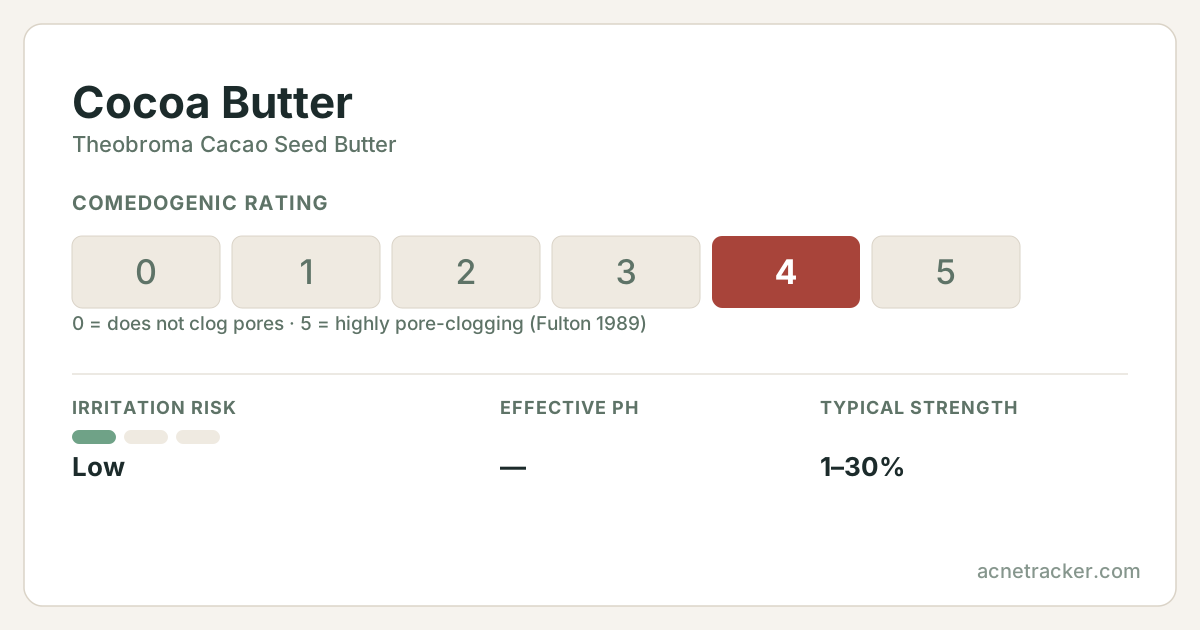
Cocoa butter is the solid, fragrant fat pressed from cocoa beans, best known as a luxurious body moisturiser that melts on contact with skin. It is intensely emollient and occlusive, forming a rich protective layer that makes it wonderful for very dry body skin, chapped areas and traditional stretch-mark balms. But it carries an important caveat for the face: cocoa butter scores high on the comedogenic scale in Fulton's classic testing, meaning it is one of the more likely plant fats to clog pores. For acne-prone skin, that makes it a body ingredient rather than a facial one.
Quick facts
- Comedogenic rating
- measured (Fulton 1989)
- Irritation risk
- Low
- Effective pH
- —
- Typical strength
- 1–30%
- Pregnancy
- Considered safe
- Suits skin types
- drynormalmature
Where this number comes from
Read directly from Table I of Fulton's 1989 paper — the primary source, not one of the copied tables that circulate online.
Fulton read his own scale as 0-1 not significant, 2-3 borderline, 4-5 positive. The assay is the rabbit ear at 10% dilution, which the paper itself calls extremely sensitive and not fully predictive of human skin. Ratings describe the raw ingredient; concentration and formulation change real-world behaviour.
Caution profile
The four published fields on this page, on one 0–5 scale. Further from the centre means more care is needed — never that the ingredient is worse.
Derived, not measured: pore-clogging is the published comedogenic rating; irritation maps low/moderate/high to 1/3/5; pregnancy maps safe/caution/avoid to 0/3/5; skin-type limits is how many of the seven skin types this entry does NOT list. Every input is printed in words in the quick-facts card above.
Show the numbers
| Metric | 0–5 | Published field |
|---|---|---|
| Pore-clogging | 4 | 4/5 |
| Irritation | 1 | Low |
| Skin-type limits | 2.9 | 3/7 |
| Pregnancy | 0 | Considered safe |
Working pH and typical strength
Where this ingredient is formulated to sit, and at what concentration.
Both bars come from the fields above: the pH window and the typical strength range published for this ingredient. The tinted column is healthy skin's surface pH (about 4.7–5.75).
Show the numbers
| Metric | 0–5 |
|---|---|
| Typical strength | 1–30% |
What is it?
Cocoa butter is composed largely of saturated and monounsaturated fatty acids, chiefly stearic, oleic and palmitic acids, which give it a firm texture at room temperature and a melting point close to skin temperature. This is what produces its signature melt-on-skin feel. The high proportion of these fats makes it strongly occlusive and long-lasting on the skin surface, excellent for locking in moisture. The same richness, however, is why Fulton's 1989 comedogenicity work rated it high, a rating of around 4 out of 5, marking it as prone to clogging pores when used on acne-prone facial skin.
Benefits
Intense moisture for dry body skin
Its rich, occlusive fats deeply soften and protect very dry or chapped skin, making it a classic choice for hands, elbows, heels and winter body care.
Melts smoothly on contact
With a melting point near body temperature, cocoa butter glides on and forms a comforting, cushioning layer, which is why it feels so indulgent in balms and body butters.
Strong occlusive protection
It creates a durable barrier on the skin surface that slows water loss, helping shield exposed skin from cold, wind and environmental dryness.
Conditioning for lips and rough spots
Its emollient fats soften chapped lips and stubborn rough patches, which is why cocoa butter is a mainstay of lip balms and intensive body treatments.
How to use
Reserve cocoa butter for the body rather than the face, especially if you are acne-prone. Use it as a rich balm or body butter on dry limbs, hands, heels and lips, applying to slightly damp skin to seal in moisture. Because it is firm, warm a small amount between the palms until it melts before spreading. If you love the scent and want facial richness, choose a lower-comedogenic alternative like shea for the face and keep cocoa butter below the neck. Store it somewhere cool so it stays solid.
Side effects
Cocoa butter itself is gentle and rarely irritating, so the main concern is not irritation but comedogenicity. On acne-prone or oily facial skin its high pore-clogging potential can trigger or worsen breakouts and closed comedones. Used on the body, problems are uncommon apart from a heavy, greasy feel if applied too generously to skin that does not need it.
Who should avoid it
Acne-prone and oily skin should avoid cocoa butter on the face given its high comedogenic rating; choose lighter, low-comedogenic emollients instead. It remains a fine body moisturiser for most people. It is regarded as safe for topical use in pregnancy, and is a traditional, if unproven, ingredient in stretch-mark balms.
Pairs well with
Frequently asked questions
Does cocoa butter clog pores?
Yes, it scores high on the comedogenic scale, around 4 out of 5 in Fulton's testing, so it is one of the more pore-clogging plant fats and is best kept off acne-prone facial skin.
Can I use cocoa butter on my face?
If your skin is acne-prone or oily, it is best avoided on the face due to its high comedogenic rating. Dry, non-acne-prone skin may tolerate small amounts, but lower-comedogenic options like shea are safer facial choices.
Is cocoa butter good for stretch marks?
It is a traditional stretch-mark balm and provides rich moisture that keeps skin supple, though strong evidence that it prevents or removes stretch marks is limited. It is safe to use on the body during pregnancy.
Why does cocoa butter melt on the skin?
Its fatty acids give it a melting point close to body temperature, so it stays solid at room temperature but softens and spreads on contact with warm skin, producing its signature melt-on feel.
Sources & further reading
Medical disclaimer
Find your personal acne triggers
Our free Acne Tracker lets you log breakouts, sleep, stress and diet, and shows you which factors correlate with your flare-ups.