Xylitol: Comedogenic Rating & Ingredient Analysis
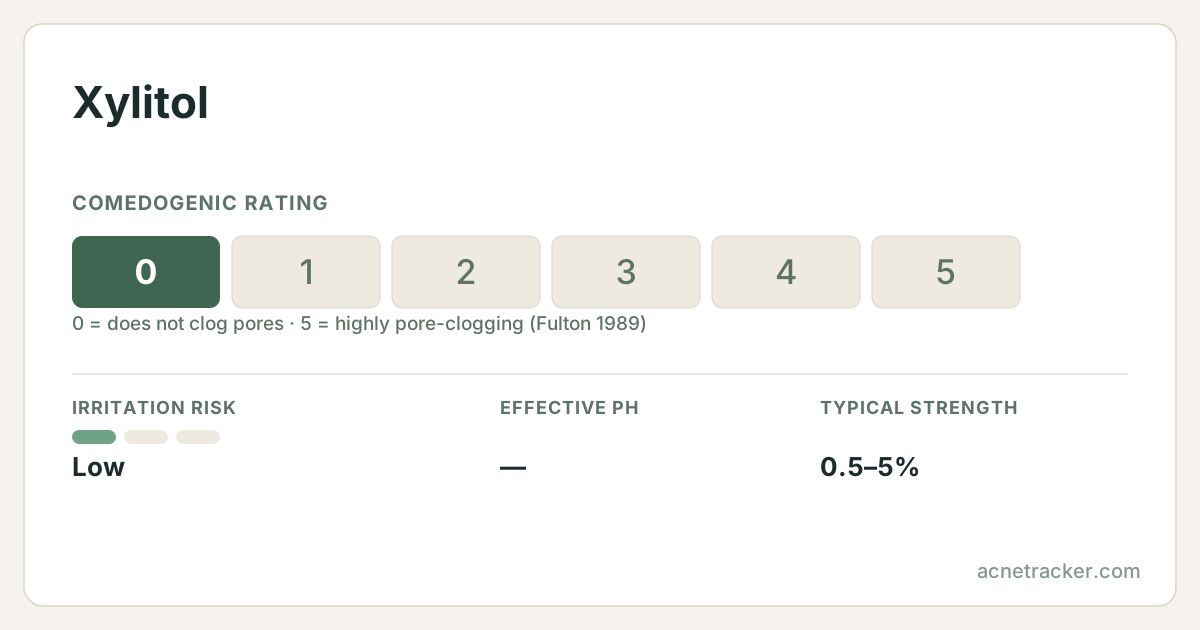
Xylitol is another sugar-derived humectant, best known from sugar-free gum but increasingly valued in skincare for a slightly more sophisticated role than simple moisture. Beyond binding water in the skin, xylitol has been studied for its ability to support the moisture barrier and to help maintain a healthy balance in the skin's surface ecosystem — its microbiome. That combination makes it appealing in products for dry, sensitive or barrier-compromised skin. It is gentle, non-comedogenic and pleasant in texture, and while it is not a dramatic active, it is a thoughtful hydrating ingredient that does a little more than the average humectant.
Quick facts
- Comedogenic rating
- our estimate — not measured
- Irritation risk
- Low
- Effective pH
- —
- Typical strength
- 0.5–5%
- Pregnancy
- Considered safe
- Suits skin types
- drysensitivenormalcombinationoilyacne-prone
Where this number comes from
No one has published a comedogenic rating for this ingredient. Fulton's 1989 table tested about 250 raw materials and this was not among them, and we found no later study measuring it. The figure shown is our own reasoning from the ingredient's chemistry and how it is used — treat it as an estimate, not a measurement.
Fulton read his own scale as 0-1 not significant, 2-3 borderline, 4-5 positive. The assay is the rabbit ear at 10% dilution, which the paper itself calls extremely sensitive and not fully predictive of human skin. Ratings describe the raw ingredient; concentration and formulation change real-world behaviour.
Caution profile
The four published fields on this page, on one 0–5 scale. Further from the centre means more care is needed — never that the ingredient is worse.
Derived, not measured: pore-clogging is the published comedogenic rating; irritation maps low/moderate/high to 1/3/5; pregnancy maps safe/caution/avoid to 0/3/5; skin-type limits is how many of the seven skin types this entry does NOT list. Every input is printed in words in the quick-facts card above.
Show the numbers
| Metric | 0–5 | Published field |
|---|---|---|
| Pore-clogging | 0 | 0/5 |
| Irritation | 1 | Low |
| Skin-type limits | 0.7 | 6/7 |
| Pregnancy | 0 | Considered safe |
Working pH and typical strength
Where this ingredient is formulated to sit, and at what concentration.
Both bars come from the fields above: the pH window and the typical strength range published for this ingredient. The tinted column is healthy skin's surface pH (about 4.7–5.75).
Show the numbers
| Metric | 0–5 |
|---|---|
| Typical strength | 0.5–5% |
What is it?
Xylitol is a five-carbon sugar alcohol, usually derived from birch or corn, with multiple water-attracting hydroxyl groups that make it a capable humectant. In the skin it draws and holds moisture in the stratum corneum, easing dryness and tightness. Research also points to a barrier-supporting role: xylitol appears to help the skin build components of its natural moisturising system and to modulate the surface microbiome, discouraging some less desirable microbes while supporting balance. This is why it often appears in soothing, barrier-focused formulas alongside ceramides and glycerin. It is non-acidic, has a comedogenic rating of 0 and is very well tolerated, including on reactive skin.
Benefits
Deep surface hydration
As a humectant it binds water in the outer skin, relieving dryness and giving a soft, comfortable feel that lasts.
Supports the moisture barrier
Xylitol helps the skin reinforce its own moisturising system, which is valuable for dry and barrier-compromised skin.
Helps balance the microbiome
It has been studied for encouraging a healthier balance of surface microbes, supporting calm, resilient skin.
Gentle and soothing
Non-comedogenic and low-irritation, it suits sensitive skin and complements barrier lipids like ceramides.
How to use
Use products with xylitol as directed, morning or night. As with all humectants, apply to slightly damp skin and follow with a moisturiser or barrier cream so the drawn-in water is sealed in rather than lost to dry air. Xylitol works especially well in barrier-repair routines, layered with ceramides, glycerin and hyaluronic acid. There are no special restrictions on when to use it, and it fits comfortably alongside actives like niacinamide without conflict.
Side effects
Topical xylitol is very well tolerated, with irritation and allergy being rare. As a humectant, it should be paired with an occlusive in very dry climates so it does not pull moisture toward the surface to evaporate. Its comedogenic rating is 0, and nothing about its microbiome or barrier activity makes the skin more sun-reactive, so it needs no special daytime handling. Note that xylitol is toxic to dogs if eaten, so keep products out of pets' reach, though this is an ingestion concern, not a skin one.
Who should avoid it
No human skin type needs to avoid topical xylitol. Those with extremely dry skin should combine it with richer occlusive products rather than relying on it alone. Keep xylitol-containing products away from dogs, as ingestion can be dangerous for them.
Pairs well with
Frequently asked questions
What does xylitol do for skin?
It hydrates by binding water in the surface layers and has been studied for supporting the moisture barrier and a balanced skin microbiome, making it useful for dry and sensitive skin.
Is xylitol safe in skincare?
Yes. Topical xylitol is gentle, non-comedogenic and well tolerated across skin types. It only poses a risk if eaten by dogs, which is unrelated to skin use.
Does xylitol help sensitive skin?
It can. Its hydrating and barrier-supporting properties, along with a low irritation profile, make it a suitable humectant for sensitive and barrier-compromised skin.
Is xylitol the same as sorbitol?
Both are sugar-alcohol humectants but different molecules. Xylitol has five carbons and additional microbiome and barrier-support research behind it, while sorbitol is a straightforward hydrating polyol.
Sources & further reading
Medical disclaimer
Find your personal acne triggers
Our free Acne Tracker lets you log breakouts, sleep, stress and diet, and shows you which factors correlate with your flare-ups.