Sclerotium Gum: Comedogenic Rating & Ingredient Analysis
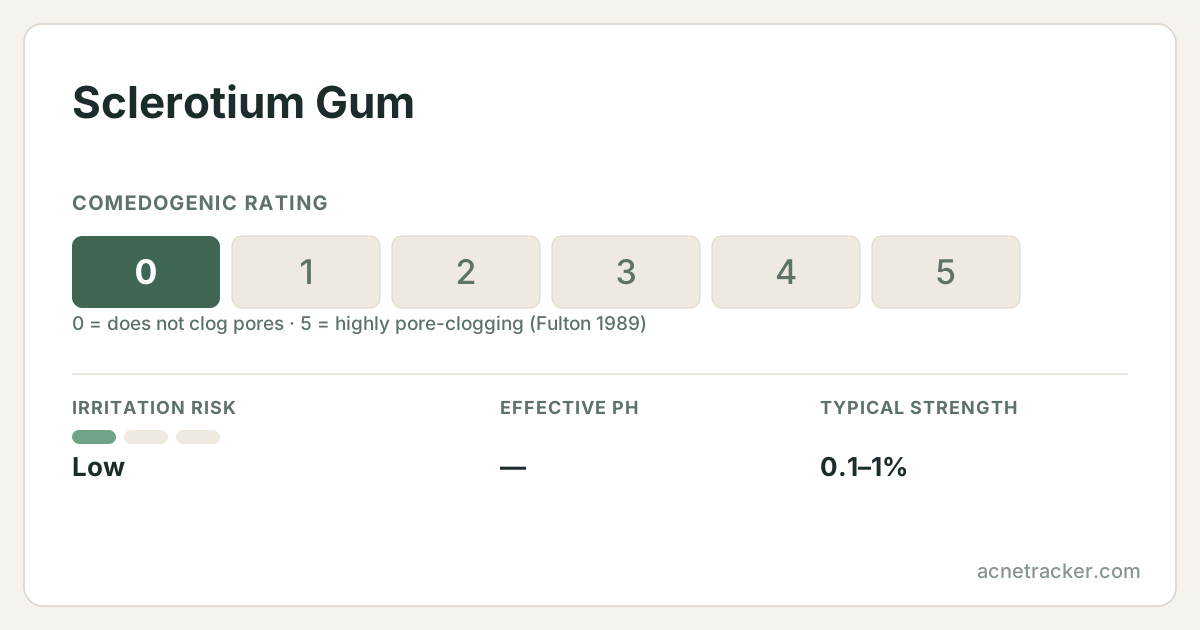
Sclerotium gum is a natural thickener that formulators reach for when they want a gel with a soft, elegant, almost silky texture rather than the slightly stringy feel some gums give. It is a polysaccharide produced by a harmless soil fungus, Sclerotium rolfsii, through fermentation. Increasingly popular in natural and clean-beauty formulas, it delivers smooth viscosity at very low use levels and is often blended with other gums such as xanthan to fine-tune how a serum or gel-cream feels on the skin.
Quick facts
- Comedogenic rating
- our estimate — not measured
- Irritation risk
- Low
- Effective pH
- —
- Typical strength
- 0.1–1%
- Pregnancy
- Considered safe
- Suits skin types
- oilydrycombinationsensitivenormalacne-pronemature
Where this number comes from
No one has published a comedogenic rating for this ingredient. Fulton's 1989 table tested about 250 raw materials and this was not among them, and we found no later study measuring it. The figure shown is our own reasoning from the ingredient's chemistry and how it is used — treat it as an estimate, not a measurement.
Fulton read his own scale as 0-1 not significant, 2-3 borderline, 4-5 positive. The assay is the rabbit ear at 10% dilution, which the paper itself calls extremely sensitive and not fully predictive of human skin. Ratings describe the raw ingredient; concentration and formulation change real-world behaviour.
Caution profile
The four published fields on this page, on one 0–5 scale. Further from the centre means more care is needed — never that the ingredient is worse.
Derived, not measured: pore-clogging is the published comedogenic rating; irritation maps low/moderate/high to 1/3/5; pregnancy maps safe/caution/avoid to 0/3/5; skin-type limits is how many of the seven skin types this entry does NOT list. Every input is printed in words in the quick-facts card above.
Show the numbers
| Metric | 0–5 | Published field |
|---|---|---|
| Pore-clogging | 0 | 0/5 |
| Irritation | 1 | Low |
| Skin-type limits | 0 | 7/7 |
| Pregnancy | 0 | Considered safe |
Working pH and typical strength
Where this ingredient is formulated to sit, and at what concentration.
Both bars come from the fields above: the pH window and the typical strength range published for this ingredient. The tinted column is healthy skin's surface pH (about 4.7–5.75).
Show the numbers
| Metric | 0–5 |
|---|---|
| Typical strength | 0.1–1% |
What is it?
Chemically, sclerotium gum (also called scleroglucan) is a branched glucose polymer that forms a delicate gel network when dispersed in water. That network thickens the liquid, suspends particles and stabilizes emulsions much like other polysaccharide gums, but its sensory signature is prized: it feels light, non-tacky and cushiony, and it holds up well across a wide pH range and in the presence of salts. Like all the gums in this family, it is too large to be absorbed and has no direct effect on skin biology; it exists to improve texture, stability and the overall feel of a product.
Benefits
Soft, silky gel feel
Sclerotium gum thickens without stringiness, giving serums and gel-creams a refined, cushiony slip that many formulators prefer over harsher-feeling gums.
Effective at low levels
A few tenths of a percent build meaningful viscosity, so it adds structure without weight, residue or a heavy afterfeel.
Stabilizes emulsions
It helps hold oil droplets in even suspension, keeping lightweight lotions and gel-creams from separating over time.
Robust across formulas
Its tolerance of wide pH ranges and salt makes it dependable in products that also contain electrolytes, actives or acids.
How to use
Nothing changes in your routine: sclerotium gum is already blended into the finished serum, gel or cream. It is a background texture ingredient, not an active you dose. If a gel occasionally pills when layered, that reflects too many film-forming textures stacked together rather than a fault of the gum. Applying to slightly damp skin and letting layers absorb keeps everything smooth.
Side effects
Sclerotium gum is considered non-irritating and non-comedogenic, with a rating of 0. Because it is a large surface-level polysaccharide, it neither penetrates nor reacts with the skin, and allergic reactions are very rare. The only possible downside is textural pilling when over-layered with other gel products.
Who should avoid it
No skin type needs to avoid sclerotium gum. A fungal polysaccharide used at a few tenths of a percent has nothing to react with on the skin: it builds its gel network in the water phase and stays there, which is why sensitive, oily and acne-prone skin all get along with it, and why natural and fragrance-free lines lean on it so heavily. A gum of this size raises no question during pregnancy or breastfeeding.
Pairs well with
Frequently asked questions
Is sclerotium gum safe for skin?
Yes. It is an inert natural polysaccharide with a comedogenic rating of 0 and a very low irritation profile. It stays on the surface and is not absorbed into the skin.
What does sclerotium gum do?
It thickens water-based products into a soft, silky gel, suspends particles and stabilizes emulsions, all at very low concentrations.
Does sclerotium gum clog pores?
No. Its comedogenic rating is 0, and a branched glucose polymer this large cannot get into a follicle in the first place — it thickens the water around it and then rinses or wears away. Oily and acne-prone skin can use it freely.
Is sclerotium gum natural?
Yes. It is made by fermenting sugar with a soil fungus, then purified. It is a nature-derived, biodegradable gum popular in clean-beauty formulas.
Why is it often combined with xanthan gum?
Blending the two lets formulators balance textures: sclerotium gum adds silky softness while xanthan gum adds body and suspension, giving a more refined overall feel.
Sources & further reading
Medical disclaimer
Find your personal acne triggers
Our free Acne Tracker lets you log breakouts, sleep, stress and diet, and shows you which factors correlate with your flare-ups.