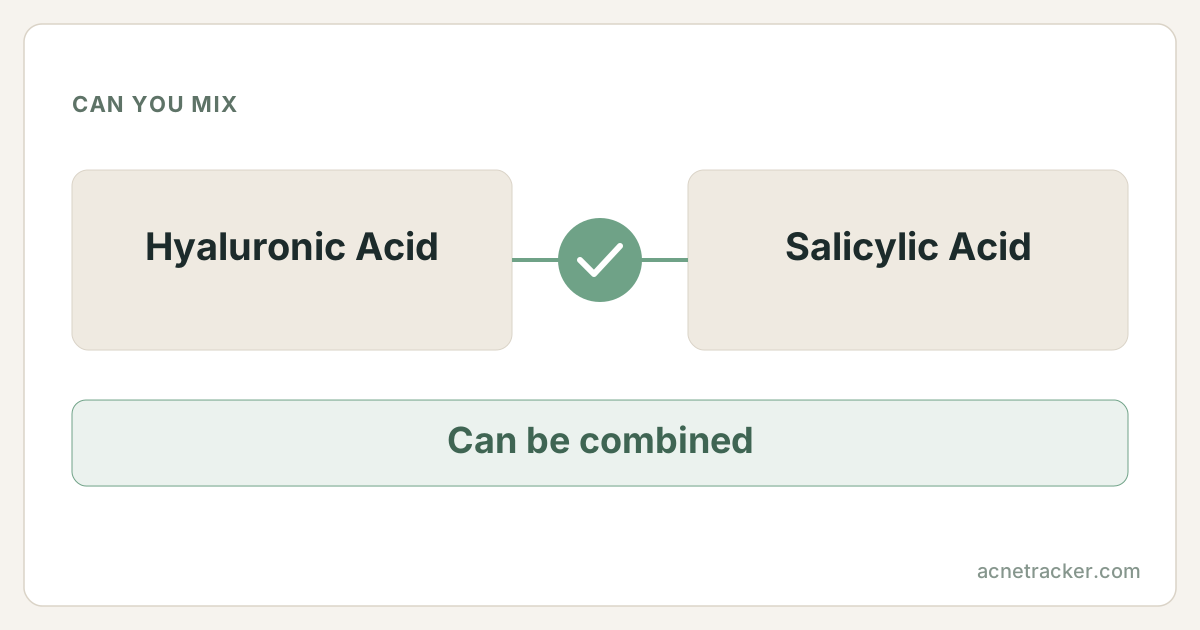
Can You Mix Hyaluronic Acid and Salicylic Acid?
Yes, and they are an ideal pair. Salicylic acid exfoliates inside the pore and can leave skin dry, while hyaluronic acid is a pure humectant that binds water and replaces the moisture salicylic acid strips away. There is no chemical conflict; hyaluronic acid simply buffers the dryness. Apply salicylic acid first, then layer hyaluronic acid to keep skin hydrated and comfortable.
How this pairing resolves
The two ingredients, their published numbers, and where they land together.
The numbers beside each ingredient are its published comedogenic rating and effective pH window, taken from its own profile page.
Show the numbers
| Ingredients | Metric | 0–5 |
|---|---|---|
| Hyaluronic Acid | Comedogenic rating | 0/5 |
| Hyaluronic Acid | Effective pH | no published pH |
| Salicylic Acid | Comedogenic rating | 0/5 |
| Salicylic Acid | Effective pH | 3.0–4.0 |
Why
Despite sharing the word acid, these two do completely different jobs and never compete. Salicylic acid is a beta-hydroxy acid that is oil-soluble and active at low pH; it exfoliates the pore lining and reduces oil, which is effective for congestion but tends to dry the surface. Hyaluronic acid is not an exfoliant and has no meaningful pH effect on the skin — it is a large humectant molecule that can hold many times its weight in water, drawing moisture into the upper layers of skin. Because hyaluronic acid does not alter salicylic acid's acidity or activity, and salicylic acid does not degrade hyaluronic acid, they coexist perfectly. The pairing is essentially corrective: salicylic acid handles clogged pores and oil, hyaluronic acid replaces the water that exfoliation and reduced sebum leave behind, so the barrier stays comfortable and you can tolerate the exfoliant more consistently. For hyaluronic acid to work best it needs a moisturizer on top to seal in the water it attracts.
How to combine them
Apply from thinnest and most active to richest. On clean skin, apply salicylic acid first and let it absorb so it can work at its intended pH. Then apply hyaluronic acid — ideally onto slightly damp skin, since it pulls in whatever water is available — and immediately follow with a moisturizer to lock that hydration in; hyaluronic acid left bare in dry air can pull water from deeper skin. This combination is gentle enough for daily use once your skin tolerates the salicylic acid, and it works morning or night. In the morning, finish with SPF 30+. If salicylic acid still feels drying, you can also use hyaluronic acid on the alternate nights when you skip the acid.
Example routine
| When | Steps |
|---|---|
| Morning | Cleanser → Salicylic acid → Hyaluronic acid → Moisturizer → SPF 30+ |
| Evening | Cleanser → Salicylic acid → Hyaluronic acid → Moisturizer |
| Off nights | Cleanser → Hyaluronic acid → Moisturizer |
| Tip | Apply hyaluronic acid to damp skin, then seal |
Warning signs
Frequently asked questions
Does hyaluronic acid cancel out salicylic acid?
No. Hyaluronic acid is a humectant, not an exfoliant, and it does not change salicylic acid's pH or activity. It simply adds hydration, making it one of the best partners for a drying acid.
Which goes on first, salicylic acid or hyaluronic acid?
Salicylic acid first, on clean skin, so it can act at its low working pH. Then apply hyaluronic acid, ideally on damp skin, and seal with moisturizer to hold the water in.
Can I use this combination every day?
Hyaluronic acid is fine daily. Salicylic acid depends on your tolerance — start a few times a week and build up. The hyaluronic acid helps you use the exfoliant more comfortably and consistently.
Will hyaluronic acid stop salicylic acid from clearing my pores?
No. Applied after the salicylic acid has absorbed, hyaluronic acid sits mainly in the surface layers as a hydrator and does not block the exfoliant from doing its work inside the pore.
Sources & further reading
There is no single study of this exact question. The guidance here is reasoned from the ingredient profiles below, each of which carries its own references:
- Hyaluronic Acid3 refs
- Salicylic Acid2 refs
Show every reference behind this page (5)
- PubChem — Hyaluronic acid compound summarycited by Hyaluronic Acid
- European Commission CosIng database — Hyaluronic Acidcited by Hyaluronic Acid
- DermNet — Moisturisers and humectantscited by Hyaluronic Acid
- Salicylic acid as a peeling agent: a comprehensive review (PubMed)cited by Salicylic Acid
- FDA OTC monograph — acne drug products (salicylic acid 0.5–2%)cited by Salicylic Acid
Medical disclaimer
Ingredients mentioned on this page
Find your personal acne triggers
Our free Acne Tracker lets you log breakouts, sleep, stress and diet, and shows you which factors correlate with your flare-ups.