Can You Mix Hyaluronic Acid and Retinal?
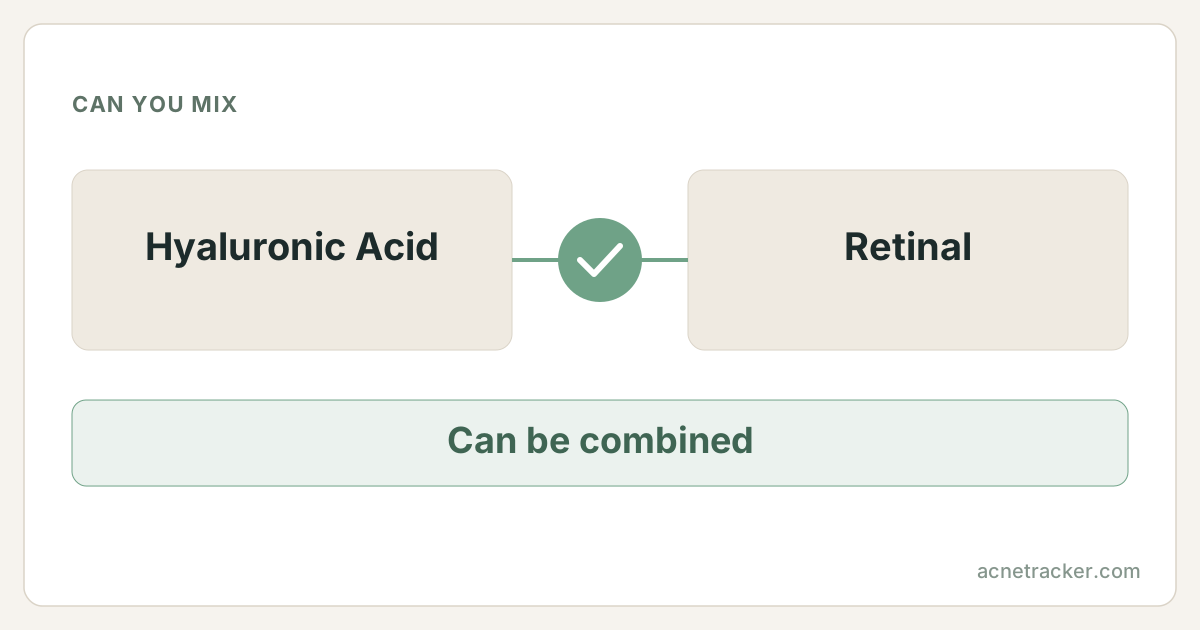
Yes, without reservation. Retinaldehyde is the most potent retinoid you can buy without a prescription, and it is also the one most likely to make you quit in week two. Hyaluronic acid does not blunt it, does not react with it, and makes the adjustment period survivable. The one thing worth understanding is why an aldehyde — a genuinely reactive group — has nothing to attack in a hyaluronate chain.
How this pairing resolves
The two ingredients, their published numbers, and where they land together.
The numbers beside each ingredient are its published comedogenic rating and effective pH window, taken from its own profile page.
Show the numbers
| Ingredients | Metric | 0–5 |
|---|---|---|
| Hyaluronic Acid | Comedogenic rating | 0/5 |
| Hyaluronic Acid | Effective pH | no published pH |
| Retinal | Comedogenic rating | 1/5 |
| Retinal | Effective pH | 5.0–6.0 |
Why
Retinal is retinaldehyde, and it sits one enzymatic step from retinoic acid, the form your receptors actually read. Retinol needs two conversions; retinal needs one. That shorter route is why it acts faster and why the sting arrives sooner. The chemistry question this pairing raises is a fair one: aldehydes are reactive. A free aldehyde group readily condenses with primary amines to form Schiff bases, which is precisely why formulators are cautious about putting retinaldehyde in the same phase as free amino acids or certain peptides — the retinoid can be consumed by a side reaction before it ever reaches your skin. So does a hyaluronate chain pose that risk? No, and the reason is specific: hyaluronan's repeating unit contains N-acetylglucosamine, in which the nitrogen is already acetylated. It is an amide, not a free primary amine, and amides are unreactive toward aldehydes under the mild conditions inside a cosmetic. The other repeating unit, glucuronic acid, offers a carboxyl and hydroxyls, neither of which touches retinal either. The polymer is inert here in the strict chemical sense, not merely the hand-waving one. What remains is tolerance, and retinaldehyde asks a lot of it.
How to combine them
The sandwich method earns its reputation with this retinoid specifically. Apply a hyaluronic acid layer to damp skin, let it settle, apply retinal, then a moisturiser over the top. The under-layer slows delivery slightly and the over-layer keeps the whole thing from drying tight; the trade is a little speed for staying power, which is the correct trade with an ingredient people abandon. Retinal is a night-time step — it degrades in light, and light is also why the bottle is opaque and the formula often looks faintly yellow or pink. Start twice weekly, hold there for a fortnight, and increase only when a night causes no next-morning flaking. Do not pair the ramp-up with an acid exfoliant in the same week. If a hyaluronic acid serum contains alcohol high on the list, it is the wrong buffer for this job; you want a plain humectant gel, not a quick-drying one.
Example routine
| When | Steps |
|---|---|
| Evening (Tue/Sat, weeks 1–2) | Cleanser → Hyaluronic acid on damp skin → Retinal → Moisturiser |
| Evening (other days) | Cleanser → Hyaluronic acid → Moisturiser |
| Morning | Cleanser → Hyaluronic acid → Moisturiser → SPF 30+ (non-negotiable) |
| Ramping up | Add one retinal night per fortnight, only if no flaking followed the last |
Warning signs
Frequently asked questions
Does hyaluronic acid make retinal less effective?
Not meaningfully. A humectant layer underneath can slow the retinoid's arrival slightly, but it does not degrade it or block the receptor pathway. Consistent use at a tolerable frequency beats a faster routine you abandon after a fortnight.
Retinal reacts with amines — is hyaluronic acid a risk?
No. The amine in hyaluronan's N-acetylglucosamine unit is already acetylated, so it is an amide rather than a free primary amine, and amides do not condense with aldehydes under cosmetic conditions. The concern applies to free amino acids and some peptides, not to hyaluronate.
Should hyaluronic acid go before or after retinal?
Before is the default, and both is better if you are struggling. A damp humectant layer first, retinal second, moisturiser third — the sandwich exists because retinaldehyde's dropout rate is driven by the first fortnight, not by the twelfth week.
Why is retinal the strongest retinoid sold without a prescription?
Because it converts to retinoic acid in one step rather than two, so gram for gram it outpaces retinol — typical strengths are quoted in hundredths of a percent rather than tenths. Expect faster visible change and a correspondingly less forgiving adjustment.
Can I use my hyaluronic acid serum on retinal-free nights?
Yes, and you should. The recovery nights are when barrier repair happens, and a humectant plus moisturiser is exactly the right load for them. There is no need to alternate the hyaluronic acid at all — it has no adjustment period of its own.
Sources & further reading
There is no single study of this exact question. The guidance here is reasoned from the ingredient profiles below, each of which carries its own references:
- Hyaluronic Acid3 refs
- Retinal3 refs
Show every reference behind this page (5)
- PubChem — Hyaluronic acid compound summarycited by Hyaluronic Acid
- European Commission CosIng database — Hyaluronic Acidcited by Hyaluronic Acid, Retinal
- DermNet — Moisturisers and humectantscited by Hyaluronic Acid
- PubChem — Retinaldehydecited by Retinal
- Kwon HS et al. Efficacy and safety of retinaldehyde 0.1% and 0.05% creams used to treat photoaged skin: A randomized double-blind controlled trial. J Cosmet Dermatol 2018 Jun (PubMed)cited by Retinal
Medical disclaimer
Ingredients mentioned on this page
Find your personal acne triggers
Our free Acne Tracker lets you log breakouts, sleep, stress and diet, and shows you which factors correlate with your flare-ups.