Can You Mix Azelaic Acid and Retinal?
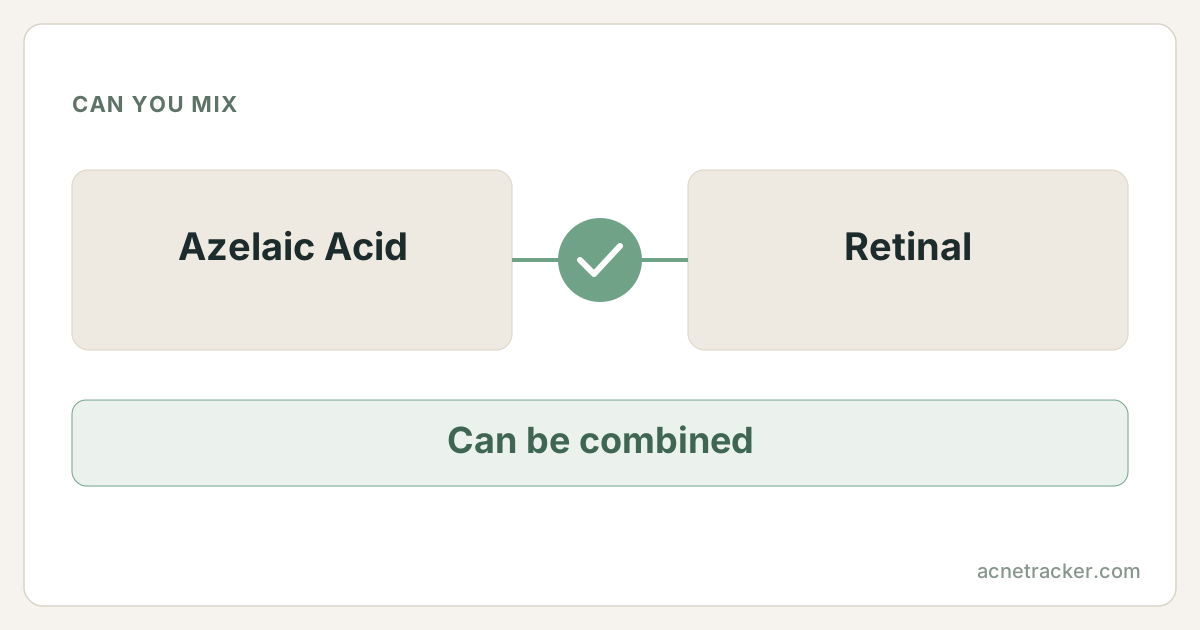
Yes. Retinaldehyde is a sensitive molecule, but azelaic acid is not what threatens it — azelaic acid is a saturated diacid with nothing to donate or steal. The pair is complementary: retinal drives cell turnover and collagen signalling, azelaic acid handles inflammation and pigment. Start retinal at two nights a week and keep azelaic acid in the morning.
How this pairing resolves
The two ingredients, their published numbers, and where they land together.
The numbers beside each ingredient are its published comedogenic rating and effective pH window, taken from its own profile page.
Show the numbers
| Ingredients | Metric | 0–5 |
|---|---|---|
| Azelaic Acid | Comedogenic rating | 0/5 |
| Azelaic Acid | Effective pH | 4.0–5.0 |
| Retinal | Comedogenic rating | 1/5 |
| Retinal | Effective pH | 5.0–6.0 |
Why
Retinal — retinaldehyde — sits one enzymatic step from retinoic acid, the form that actually binds retinoid receptors. Skin converts retinol to retinal to retinoic acid, so starting one rung higher means fewer conversion losses, which is the argument for it being more potent than retinol at a comparable percentage while remaining a cosmetic rather than prescription ingredient. That closeness comes with fragility: the aldehyde group and the conjugated polyene chain make retinal vulnerable to light, air and oxidising conditions, which is why it ships in opaque, air-restrictive packaging and why the benzoyl peroxide question gets asked so often. Azelaic acid raises none of those threats. It is fully saturated with a carboxyl group at each end and nothing reactive in between — no radical chemistry, no oxidising capacity, no strong acidity at the concentrations used. It simply is not the kind of molecule that degrades a polyene. The functional overlap is small too, which is the point: retinal remodels how the follicle sheds and signals for collagen, while azelaic acid competitively inhibits tyrosinase and blunts the oxidative side of inflammation. Both are used in acne, from different angles. The real constraint on running them together is not stability — it is how much active a face can take in one week.
How to combine them
Split by time of day and let frequency do the work. Azelaic acid every morning: cleanse, azelaic acid, moisturiser, SPF 30+. Retinal two nights a week to begin, on completely dry skin, moisturiser after — building to three or four nights only once those two are uneventful. Retinal is more potent than retinol, so the temptation to go nightly early is exactly the mistake. Do not increase retinal frequency and add or strengthen azelaic acid in the same week; change one variable at a time. If you want them in one evening routine, retinal first on dry skin, azelaic acid after it absorbs — but the morning/evening split is easier on the skin and costs nothing, since azelaic acid is not photosensitising and works perfectly well under sunscreen. Sunscreen is genuinely non-optional here: retinal itself increases sun sensitivity. Skip the sunscreen and you undo the pigment work azelaic acid is doing.
Example routine
| When | Steps |
|---|---|
| Morning | Cleanser → Azelaic acid 10% → Moisturiser → SPF 30+ (retinal needs this) |
| Evening (Tue/Sat) | Cleanser → Retinal on dry skin → Moisturiser |
| Evening (other days) | Cleanser → Moisturiser (recovery) |
| Building up | Only add a retinal night after 4 uneventful weeks — one change at a time |
Warning signs
Frequently asked questions
Does azelaic acid oxidise or destabilise retinal?
No. Azelaic acid is a saturated dicarboxylic acid with no oxidising capacity. The stability worries around retinal concern light, air and oxidisers such as benzoyl peroxide — azelaic acid is none of those things.
Is retinal too strong to pair with azelaic acid?
It is more potent than retinol, but potency is managed with frequency, not by dropping the partner. Two retinal nights a week plus daily azelaic acid is a routine most tolerant skin handles once retinisation passes.
Can I use them in the same evening?
Yes, if your skin already tolerates each alone: retinal first on dry skin, azelaic acid once it absorbs, moisturiser last. Most people find the morning/evening split more comfortable for identical results.
Will azelaic acid reduce retinal irritation?
No, and expecting that of it is a common misread. Azelaic acid has anti-inflammatory evidence in rosacea, but it is an active that can sting in its own right — not a soothing product. The answer to retinal irritation is less retinal and a bland moisturiser.
Is this pair suitable during pregnancy?
No. Retinal is a vitamin A derivative and topical retinoids are avoided in pregnancy. Azelaic acid is often named among the compatible options when retinoids are off the table, but that decision belongs with your doctor.
Sources & further reading
There is no single study of this exact question. The guidance here is reasoned from the ingredient profiles below, each of which carries its own references:
- Azelaic Acid3 refs
- Retinal3 refs
Show every reference behind this page (5)
- PubChem — Azelaic acid compound summarycited by Azelaic Acid
- DermNet — Azelaic acidcited by Azelaic Acid
- European Commission CosIng database — Azelaic Acidcited by Azelaic Acid, Retinal
- PubChem — Retinaldehydecited by Retinal
- Kwon HS et al. Efficacy and safety of retinaldehyde 0.1% and 0.05% creams used to treat photoaged skin: A randomized double-blind controlled trial. J Cosmet Dermatol 2018 Jun (PubMed)cited by Retinal
Medical disclaimer
Ingredients mentioned on this page
Find your personal acne triggers
Our free Acne Tracker lets you log breakouts, sleep, stress and diet, and shows you which factors correlate with your flare-ups.