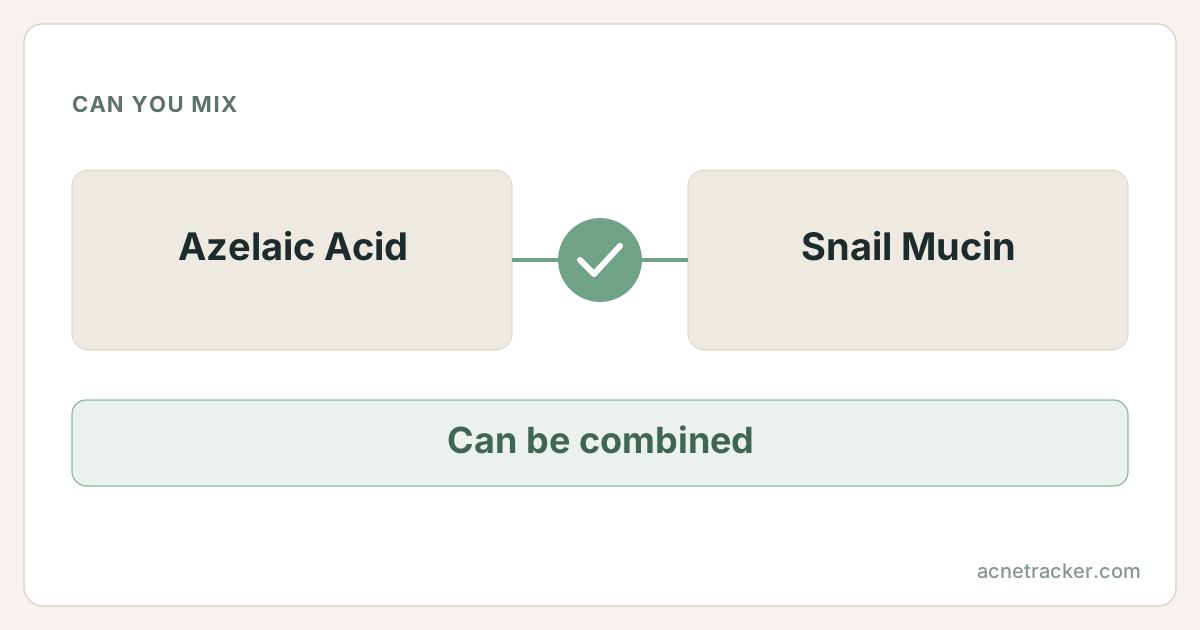
Can You Mix Azelaic Acid and Snail Mucin?
Yes. Snail secretion filtrate is essentially a hydrating, film-forming layer: a mix of glycoproteins, glycosaminoglycans and water with no known reactivity toward azelaic acid. There is no conflict to manage. The only practical questions are order and pilling — snail mucin goes on first, and azelaic acid, being thick, goes over it before your moisturiser.
How this pairing resolves
The two ingredients, their published numbers, and where they land together.
The numbers beside each ingredient are its published comedogenic rating and effective pH window, taken from its own profile page.
Show the numbers
| Ingredients | Metric | 0–5 |
|---|---|---|
| Azelaic Acid | Comedogenic rating | 0/5 |
| Azelaic Acid | Effective pH | 4.0–5.0 |
| Snail Mucin | Comedogenic rating | 0/5 |
| Snail Mucin | Effective pH | no published pH |
Why
Snail secretion filtrate is a filtered fraction of the mucus produced by Cryptomphalus aspersa, and unlike a defined molecule it is a mixture — largely water, plus glycoproteins, glycosaminoglycans including hyaluronic acid, proteoglycans and trace allantoin. That composition explains what people reliably report: it hydrates and leaves a slightly tacky, cushioning film that makes skin feel plumper immediately. The more ambitious claims about regeneration and scar improvement rest on a much thinner base — small studies and in-vitro work rather than the kind of trials azelaic acid has behind it. It is fair to call snail mucin a good hydrator with interesting but unsettled repair claims, and it is not fair to put it in the same evidential bracket as the active you are pairing it with. For the combination itself, the relevant point is what the mixture does not contain: no oxidisers, no acids at working strength, no chelators, nothing that would touch a saturated dicarboxylic acid. Azelaic acid is chemically unbothered. If anything the film may slightly slow how quickly azelaic acid reaches the skin — a reasonable inference from how occlusive layers behave, not a measured effect — which is a fair trade if it makes a stinging active comfortable enough to keep using.
How to combine them
Snail mucin first, on damp skin, since it works partly as a humectant. Let it become tacky rather than wet — this usually takes a minute or two — then apply azelaic acid over it and finish with moisturiser. Rushing this step is the single most common cause of the pilling people complain about: mucin gels and thick azelaic acid creams roll into little grey balls if you rub them together while wet. Pat, do not rub, and use less of both than feels generous. The routine works in either the morning or the evening; azelaic acid is not photosensitising, so a morning slot under sunscreen is fine and often the better use of it. If azelaic acid stings, snail mucin underneath genuinely helps, in the same way any hydrating layer does. And if you break out, look at the mucin's base formula — the essences it comes in often contain other ingredients — rather than assuming the filtrate itself is at fault.
Example routine
| When | Steps |
|---|---|
| Morning | Cleanser → Snail mucin on damp skin → Azelaic acid 10% → Moisturiser → SPF 30+ |
| Evening | Cleanser → Snail mucin → Moisturiser |
| If it pills | Let mucin go tacky (1–2 min), use less product, pat instead of rubbing |
| If azelaic acid stings | Mucin layer first is a reasonable buffer — the sting settles in ~2 weeks anyway |
Warning signs
Frequently asked questions
Does snail mucin stop azelaic acid from working?
There is no known chemical interference. A film-forming layer underneath might slow absorption somewhat, which is an inference from how occlusion behaves rather than a measured figure. In practice people use this pairing without losing results.
Does snail mucin go under or over azelaic acid?
Snail mucin, on damp skin, then azelaic acid once it turns tacky, then moisturiser. Azelaic acid is thick and tends to pill when layered under other products, so it belongs near the end.
Why does this combination pill so badly?
Because a mucin gel and a thick azelaic acid cream are being rubbed together before the first has set. Wait a minute or two, use less of each, and pat rather than rub. It is a texture issue, not a chemical one.
Can snail mucin fade my acne scars?
The regeneration claims rest on small studies and lab work, not solid clinical trials. For post-acne marks, azelaic acid is the ingredient with real evidence. True indented scars respond to procedures, not to any serum.
Is snail mucin safe in pregnancy?
There is no particular concern with the filtrate itself, and azelaic acid is commonly listed among the pregnancy-compatible actives. Check the full ingredient list of the essence rather than the headline ingredient, and confirm with your doctor.
Sources & further reading
There is no single study of this exact question. The guidance here is reasoned from the ingredient profiles below, each of which carries its own references:
- Azelaic Acid3 refs
- Snail Mucin2 refs
Show every reference behind this page (4)
- PubChem — Azelaic acid compound summarycited by Azelaic Acid
- DermNet — Azelaic acidcited by Azelaic Acid
- European Commission CosIng database — Azelaic Acidcited by Azelaic Acid, Snail Mucin
- DermNet — Moisturisers and skin barriercited by Snail Mucin
Medical disclaimer
Ingredients mentioned on this page
Find your personal acne triggers
Our free Acne Tracker lets you log breakouts, sleep, stress and diet, and shows you which factors correlate with your flare-ups.