Teenage Forehead Acne
For many teenagers, the forehead is where acne first shows up. Puberty floods the body with androgen hormones that switch oil glands into high gear, and the forehead — part of the oily T-zone — is one of the first areas to respond. Early teen acne here is usually comedonal: lots of small bumps, blackheads and whiteheads rather than deep cysts, often mixed with visible shine. Hair products, sweaty sports gear, caps and the very human habit of touching your face all add to it. The reassuring part is that a simple, consistent routine handles most teenage forehead acne, and starting early helps prevent marks and scars.
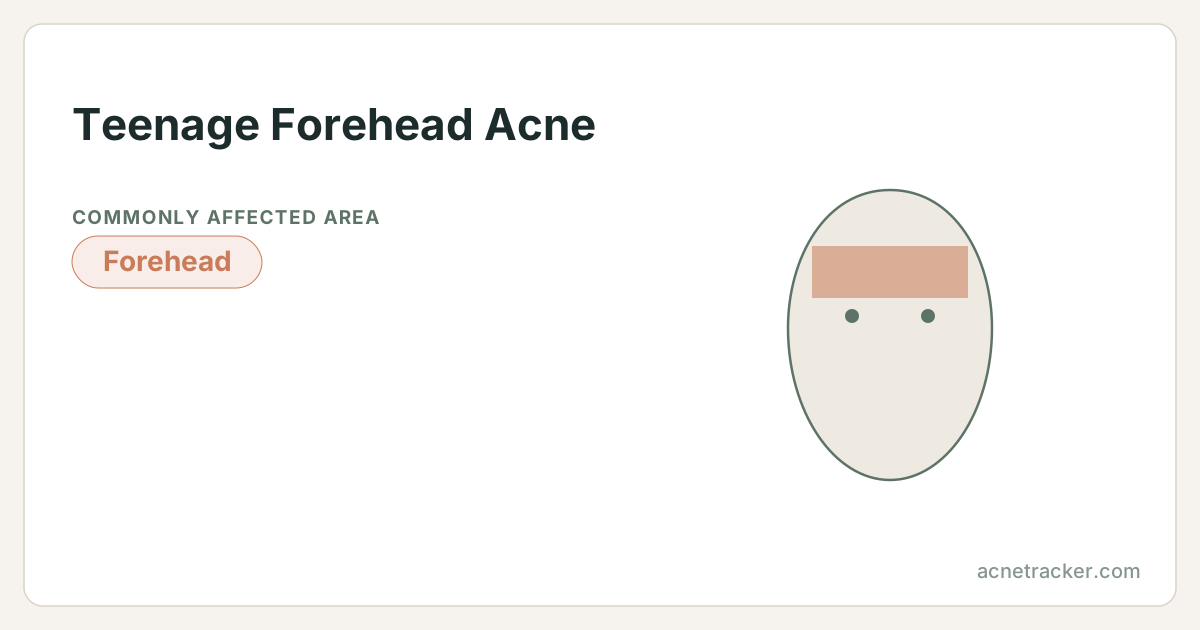
How to recognize it
Teenage forehead acne typically appears as a spread of small bumps across the brow area and hairline: skin-toned closed comedones, dark blackheads and the odd white-topped whitehead, on skin that often looks oily by afternoon. Some inflamed red papules and pustules may join in, but deep painful lumps are less common at this early stage. It tends to sit in the T-zone rather than the lower face. If bumps are itchy and uniform near the hairline, consider fungal folliculitis; if breakouts are deep, painful and scarring, that is more severe acne that deserves a doctor's input sooner.
What causes it
Puberty hormones
Rising androgens during puberty enlarge oil glands and ramp up sebum, and the forehead's glands are among the first to respond, seeding the comedones behind teen breakouts.
Oily skin and clogged pores
More oil combined with normal dead-cell shedding plugs follicles across the forehead, producing the blackheads and whiteheads typical of early acne.
Sports gear and sweat
Helmets, caps, headbands and sweat during PE and sports trap oil against the forehead, a friction-driven trigger that concentrates breakouts under the gear.
Hair products and touching
Gels, waxes and oily fringe deposit residue on the forehead, and frequent face-touching adds oil and bacteria, both feeding the clogging.
Ingredients with evidence
| Ingredient | Role |
|---|---|
| Salicylic acid (BHA) | A teen-friendly starting active: unclogs pores and reduces oil. A gentle cleanser or 2% leave-on a few nights weekly is an easy first step. |
| Benzoyl peroxide | Low-strength (2.5–5%) targets acne bacteria on inflamed spots; apply thinly to red papules and pustules. |
| Adapalene | An over-the-counter retinoid that prevents comedones over the long term; start slowly, two to three nights weekly, to limit dryness. |
| Niacinamide | Controls shine and calms redness while keeping the routine gentle enough for young skin. |
| Oil-free non-comedogenic moisturizer | Keeps the barrier healthy so actives are tolerated; teens often skip moisturizer, but it makes treatment work better. |
Building the routine
Keep it simple and doable on a school schedule. Morning: gentle cleanser, oil-free moisturizer, and a non-greasy SPF. Evening: cleanse to remove the day's oil and sweat, then a treatment active a few nights a week — salicylic acid or an adapalene retinoid — building up slowly, with a dab of benzoyl peroxide on inflamed spots. Shower after sports and keep helmets, caps and headbands clean. Try not to pick, since squeezing turns a small spot into a lasting mark. Give any routine six to eight weeks before deciding if it works, and remember consistency matters more than adding lots of products at once.
When to see a doctor
Frequently asked questions
Why do teenagers get acne on the forehead first?
Puberty's surge in androgen hormones supercharges oil glands, and the forehead sits in the oily T-zone that responds earliest. Combined with sweat, sports gear and hair products, that makes the forehead a common starting point for teenage breakouts.
What is the best simple routine for a teenager's forehead acne?
A gentle cleanser, an oil-free moisturizer, daily SPF, and one treatment active — salicylic acid or adapalene — used a few nights a week, with benzoyl peroxide on inflamed spots. Simple and consistent beats a big shelf of products.
Will teenage forehead acne go away on its own?
Acne often improves as hormones settle in the late teens or early twenties, but that can take years, and untreated inflammatory acne can scar. Treating it now controls breakouts, protects the skin and is worthwhile rather than just waiting it out.
Should teenagers use moisturizer if their forehead is oily?
Yes. Skipping moisturizer does not reduce oil and can leave the skin irritated, especially alongside acne treatments. An oil-free, non-comedogenic moisturizer keeps the barrier healthy so treatments work better and cause less dryness.
Sources & further reading
What this page cites about the condition itself:
There is no single study of this exact question. The guidance here is reasoned from the ingredient profiles below, each of which carries its own references:
- Salicylic Acid2 refs
- Benzoyl Peroxide3 refs
- Adapalene3 refs
- Niacinamide2 refs
Show every reference behind this page (8)
- Salicylic acid as a peeling agent: a comprehensive review (PubMed)cited by Salicylic Acid
- FDA OTC monograph — acne drug products (salicylic acid 0.5–2%)cited by Salicylic Acid, Benzoyl Peroxide, Adapalene
- PubChem — Benzoyl peroxide compound summarycited by Benzoyl Peroxide
- DermNet — Benzoyl peroxidecited by Benzoyl Peroxide
- PubChem — Adapalene compound summarycited by Adapalene
- DermNet — Adapalenecited by Adapalene
- Niacinamide: mechanisms of action and its topical use in dermatology (PubMed)cited by Niacinamide
- European Commission CosIng database — Niacinamidecited by Niacinamide
Medical disclaimer
Ingredients mentioned on this page
Find your personal acne triggers
Our free Acne Tracker lets you log breakouts, sleep, stress and diet, and shows you which factors correlate with your flare-ups.