Pustules on the Forehead
Pustules are the classic pimple: a red, inflamed bump topped by a visible white or yellow centre of pus. On the forehead they form when a clogged, inflamed follicle fills with the debris of the immune system's fight against acne bacteria — dead cells, oil and white blood cells rise to the surface as that familiar head. They are more inflamed than a papule but usually shallower than a cyst. Because a pustule sits near the surface, it is tempting to squeeze, yet doing so typically spreads bacteria and prolongs healing. Antibacterial, pore-clearing treatment resolves them more cleanly and keeps new ones from crowding in.
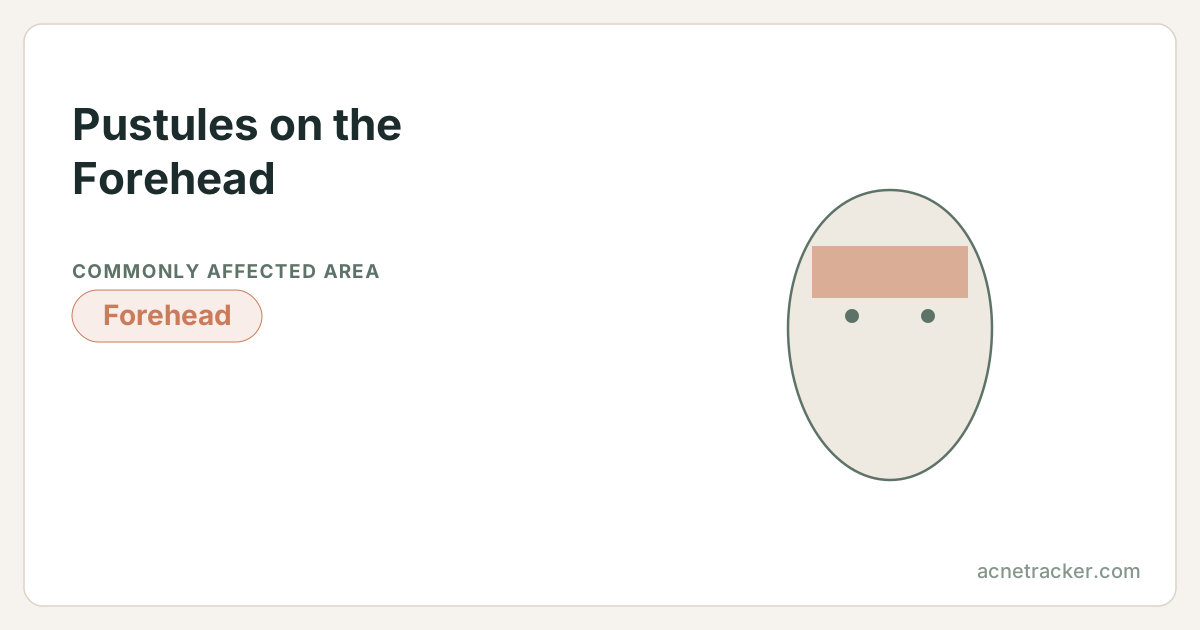
How to recognize it
A forehead pustule is a raised bump with a red or pink base and a clearly defined white or yellow tip, tender to the touch and a few millimetres across. It is essentially an inflamed pimple that has come to a head. Several often appear together across the forehead, mixed with red papules and clogged pores. Distinguish them from papules, which lack the pus-filled centre, and from the deep, headless swellings of cystic acne. Small, itchy, uniform pustules tightly clustered at the hairline may instead be fungal folliculitis, which does not respond to acne treatment.
What causes it
Bacterial inflammation
Acne bacteria thriving in a clogged follicle trigger an immune response; the resulting pus is dead cells, oil and white blood cells collecting at the surface as a head.
Clogged, oily follicles
The forehead's high oil output feeds the clogs that become inflamed. More sebum and slow cell turnover mean more follicles progressing all the way to pustules.
Friction and occlusion
Hats, sweatbands, helmets and hair products press oil and bacteria into forehead follicles, encouraging inflamed, pus-topped lesions in the covered band.
Picking and irritation
Squeezing and harsh products spread bacteria and inflame nearby follicles, so interfering with one pustule often seeds several more around it.
Ingredients with evidence
| Ingredient | Role |
|---|---|
| Benzoyl peroxide | A first-line treatment that kills acne bacteria and reduces the inflammation behind pustules; apply thinly to affected areas at low strength. |
| Salicylic acid (BHA) | Clears the clogged pore feeding the pustule and calms inflammation; useful across the forehead a few nights weekly. |
| Niacinamide | Reduces oil and redness and supports the barrier so stronger actives are better tolerated. |
| Adapalene / retinoids | Prevents the clogged pores that become pustules; the preventive foundation for recurring breakouts. |
| Azelaic acid | Antibacterial and anti-inflammatory, it helps clear pustules and fade the marks they can leave, and is gentle on sensitive skin. |
Building the routine
Treat gently and consistently rather than picking. Cleanse morning and night, then in the evening spot-apply a thin layer of benzoyl peroxide to pustules and use salicylic acid a few nights a week to keep pores clear. Add a retinoid on other nights, once tolerated, to prevent new lesions. Keep the barrier steady with niacinamide and a light moisturizer, and use SPF each morning. Resist popping — if a pustule drains on its own, keep the area clean, but forcing it spreads bacteria and risks scarring. Keep hats clean and hair products off the forehead. Expect a mix of quick wins on individual spots and slower improvement in overall frequency over six to eight weeks.
When to see a doctor
Frequently asked questions
Is it okay to pop a forehead pustule?
It is best avoided. Squeezing spreads bacteria to nearby follicles, can push debris deeper, and increases the risk of scarring and dark marks. If a pustule drains naturally, simply keep it clean; otherwise let topical treatment resolve it.
Is the white spot on my forehead a pustule or a whitehead?
Check for redness around it. A whitehead is a clogged, closed pore with a small pale cap and little inflammation, while a pustule is a distinctly red, inflamed pimple with a pus-filled centre. Pustules involve more bacterial inflammation and benefit from antibacterial treatment.
Why do I keep getting pustules across my forehead?
The forehead's oil, along with clogging from hats, hair products and sweat, keeps feeding inflamed follicles that progress to pustules. Without a preventive routine of pore-clearing and antibacterial care, new ones keep forming.
How long does a forehead pustule take to heal?
An individual pustule often resolves within several days to about a week with gentle treatment. Reducing how frequently new ones appear takes a consistent routine over six to eight weeks, with retinoids and oil control preventing fresh clogs.
Sources & further reading
What this page cites about the condition itself:
There is no single study of this exact question. The guidance here is reasoned from the ingredient profiles below, each of which carries its own references:
- Benzoyl Peroxide3 refs
- Salicylic Acid2 refs
- Niacinamide2 refs
- Adapalene3 refs
- Azelaic Acid3 refs
Show every reference behind this page (10)
- PubChem — Benzoyl peroxide compound summarycited by Benzoyl Peroxide
- DermNet — Benzoyl peroxidecited by Benzoyl Peroxide
- FDA — Drugs (OTC acne products)cited by Benzoyl Peroxide, Salicylic Acid, Adapalene
- Salicylic acid as a peeling agent: a comprehensive review (PubMed)cited by Salicylic Acid
- Niacinamide: mechanisms of action and its topical use in dermatology (PubMed)cited by Niacinamide
- European Commission CosIng database — Niacinamidecited by Niacinamide, Azelaic Acid
- PubChem — Adapalene compound summarycited by Adapalene
- DermNet — Adapalenecited by Adapalene
- PubChem — Azelaic acid compound summarycited by Azelaic Acid
- DermNet — Azelaic acidcited by Azelaic Acid
Medical disclaimer
Ingredients mentioned on this page
Find your personal acne triggers
Our free Acne Tracker lets you log breakouts, sleep, stress and diet, and shows you which factors correlate with your flare-ups.