Pomade Acne on the Hairline
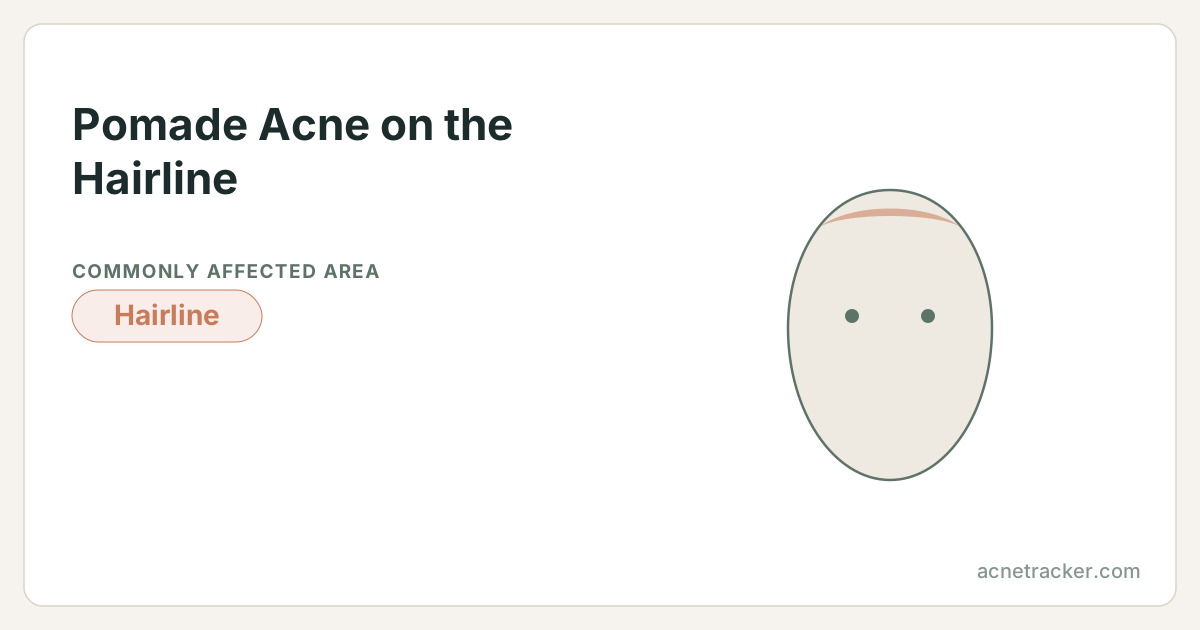
If small bumps trace the exact line where your scalp meets your face, hair products are the prime suspect long before hormones or diet. Dermatologists have a name for this pattern: pomade acne. Oils, waxes, silicones and heavy conditioning agents migrate from the hair onto the skin at the margin, where they sit inside follicles and trap dead cells and oil. The result is a tidy band of clogged pores and small pimples that follows your part line and edges. It concentrates at the hairline precisely because that is where product transfers off the hair and lingers, rather than being washed away with the rest of your face.
How to recognize it
Pomade acne shows as a distinct band of closed comedones (skin-coloured bumps) and small papules hugging the hairline, often densest where you apply the most product or where hair rests against skin overnight. Unlike hormonal acne, it rarely forms deep painful cysts, and unlike fungal folliculitis the bumps are varied in size rather than uniform and itchy. A telltale sign is the sharp border: clear skin below, congestion right at the margin. Breakouts that spread onto the temples where you smooth product back point the same way.
What causes it
Occlusive hair products
Pomades, waxes, gels, mousses, leave-in conditioners and styling creams are built to cling. When they migrate onto the hairline they form a film that blocks follicles, which is the direct mechanism behind pomade acne.
Comedogenic ingredients
Heavy oils, some silicones and isopropyl myristate rate highly on Fulton's (1989) comedogenicity scale and are common in styling products. Applied daily to the same strip of skin, they reliably plug pores.
Application and transfer
Working product from roots outward, sleeping without washing hair, and hats or headbands pressing residue into skin all push product onto the margin and hold it there against the follicles.
Infrequent cleansing at the margin
Most people cleanse the face and rinse the scalp but skip the hairline itself, so product builds up exactly where the two zones meet and is never fully removed.
Ingredients with evidence
| Ingredient | Role |
|---|---|
| Salicylic acid (BHA) | Oil-soluble, so it dissolves the product plug inside the follicle. Use a leave-on or cleanser along the hairline two to three times weekly. |
| Adapalene / retinoids | Normalises how follicles shed cells so new comedones stop forming in the band; apply thinly along the margin a few nights weekly once tolerated. |
| Niacinamide | Calms the irritated strip and moderates oil while you switch products; a gentle daily supportive step. |
| Benzoyl peroxide | Targets bacteria on any inflamed papules; dab on spots rather than the whole band to limit dryness. |
Building the routine
The fix starts with your hair products, not just your face. Read labels and switch heavy pomades, waxes and oil-based leave-ins for lighter, water-based or non-comedogenic styling products, and keep them off the roots and margin. Rinse hair with the head tilted back so runoff avoids the hairline, then cleanse the face last and deliberately wash the hairline itself. A few evenings a week, sweep a salicylic acid leave-on across the band; on alternate nights, once your skin tolerates it, apply a pea-sized amount of adapalene along the margin. Moisturise and use daily SPF. Give any product swap eight to twelve weeks — comedones already formed take that long to clear.
When to see a doctor
Frequently asked questions
How do I know if my hairline bumps are from hair products?
The strongest clue is the pattern: a band of small clogged bumps that follows your hairline and part exactly, with clear skin below it. If it started after a new gel, pomade or leave-in conditioner, that timing is close to a diagnosis on its own.
Which hair products cause pomade acne?
Anything heavy and clingy: oil-based pomades, waxes, thick styling creams, leave-in conditioners and some silicone serums. Lighter, water-based or labelled non-comedogenic products are far less likely to block the follicles at your hairline.
How long does pomade acne along the hairline take to clear?
Once you remove the trigger, expect eight to twelve weeks for existing comedones to work their way out. The bumps will not vanish overnight even after you switch products, so consistency with both the product change and a gentle exfoliating routine matters.
Can I still use styling products if I get hairline acne?
Yes, but choose lighter formulas, keep them a centimetre back from the margin, and wash your hairline thoroughly the same day you apply them. Many people keep styling products and simply change what they use and where.
Sources & further reading
What this page cites about the condition itself:
There is no single study of this exact question. The guidance here is reasoned from the ingredient profiles below, each of which carries its own references:
- Salicylic Acid2 refs
- Adapalene3 refs
- Niacinamide2 refs
- Benzoyl Peroxide3 refs
Show every reference behind this page (8)
- Salicylic acid as a peeling agent: a comprehensive review (PubMed)cited by Salicylic Acid
- FDA OTC monograph — acne drug products (salicylic acid 0.5–2%)cited by Salicylic Acid, Adapalene, Benzoyl Peroxide
- PubChem — Adapalene compound summarycited by Adapalene
- DermNet — Adapalenecited by Adapalene
- Niacinamide: mechanisms of action and its topical use in dermatology (PubMed)cited by Niacinamide
- European Commission CosIng database — Niacinamidecited by Niacinamide
- PubChem — Benzoyl peroxide compound summarycited by Benzoyl Peroxide
- DermNet — Benzoyl peroxidecited by Benzoyl Peroxide
Medical disclaimer
Ingredients mentioned on this page
Find your personal acne triggers
Our free Acne Tracker lets you log breakouts, sleep, stress and diet, and shows you which factors correlate with your flare-ups.