Dry Shampoo Acne on the Hairline
Dry shampoo is a hairline's most underrated troublemaker. The starches, alcohols and silicones that soak up oil at the roots do not stay in the hair — they drift down onto the strip of skin at the margin, where they mix with your own sebum and dead cells and settle into the pore openings. Stretch wash day too far and that film builds layer on layer, occluding the follicles until closed comedones and small clogged bumps line up right where the powder collects. This is a mechanical, product-driven congestion rather than a hormonal one, which is good news: adjusting how and how often you reach for the can usually turns it around within a couple of months.
How to recognize it
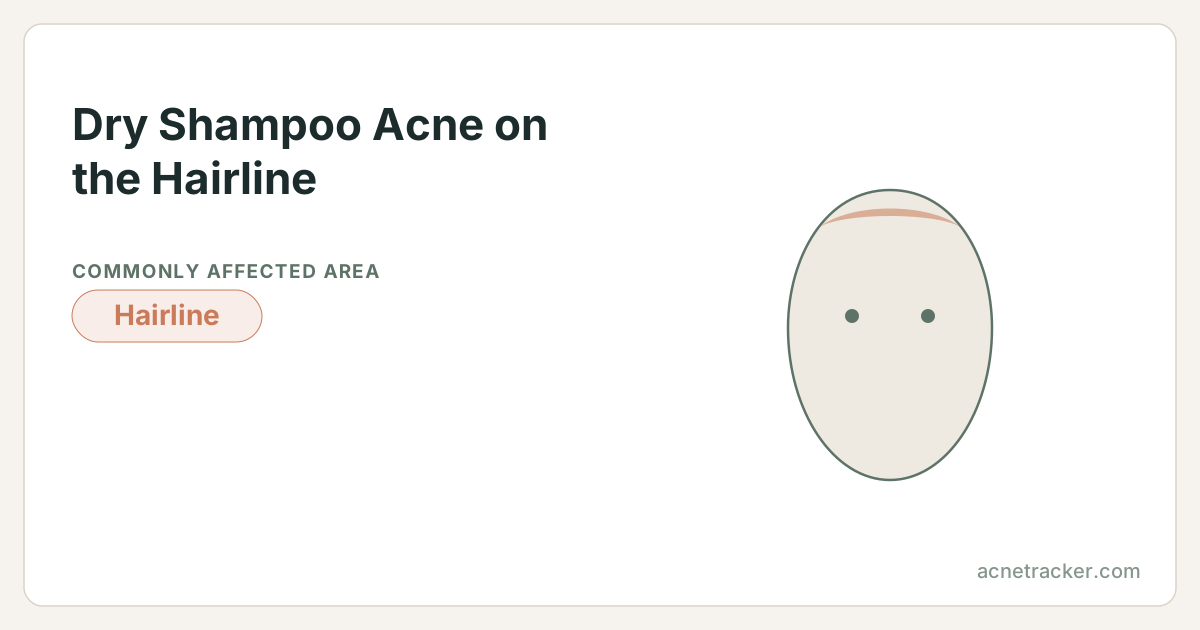
This pattern reads as a band of small, skin-coloured or whitish closed comedones with the odd inflamed bump, concentrated exactly where dry shampoo powder settles — the front margin, the part line and around the temples. The bumps feel slightly rough under a fingertip rather than sore. If they are instead uniform, itchy pustules spread evenly through the fringe, suspect fungal folliculitis, which the yeast-friendly buildup can also encourage. Genuine comedonal buildup eases within a few weeks once the residue is cleared and wash-day cadence tightens up.
What causes it
Powder and starch buildup
Dry shampoo works by absorbing oil, but the starch-and-alcohol residue settles on the skin at the margin and layers up between washes, forming an occlusive film over the pore openings.
Silicones and film-formers
Many formulas leave silicones and film-forming polymers behind to add grip and volume; on the hairline these seal the follicle opening and trap sebum underneath.
A stretched wash-day cadence
The longer you go between real shampoos, the more product accumulates. Skin that never gets properly cleansed at the margin simply stays congested.
Rubbing it into the roots
Massaging dry shampoo in with your fingers pushes the powder onto the scalp skin and the hairline, working it into follicles that are already coated in the day's oil.
Ingredients with evidence
| Ingredient | Role |
|---|---|
| Salicylic acid (BHA) | Oil-soluble, so it dissolves the powder-and-sebum plug inside the follicle; use a thin layer a few evenings a week along the margin. |
| Mandelic acid | A larger, gentler acid for lifting surface residue and smoothing the strip when salicylic acid feels too much. |
| Niacinamide | Regulates oil and calms the barrier so the margin copes better with both the buildup and the exfoliant above. |
| Adapalene / retinoids | Normalises cell turnover so closed comedones stop forming; apply thinly on non-acid evenings and expect 8–12 weeks. |
| Zinc pyrithione | In an anti-dandruff wash, worth a try if the bumps are uniform and itchy, pointing to fungal folliculitis rather than plain buildup. |
Building the routine
Treat the cause first: shampoo properly more often, and when you do use dry shampoo, spray it a hand's width from the scalp, aim it at the roots rather than the skin, and skip massaging it into the margin. On non-active evenings, cleanse the hairline thoroughly to lift the day's residue, then apply a thin salicylic acid or mandelic acid product a few nights a week to keep the pores clear. A light niacinamide moisturiser supports the barrier without adding grease. Build in a retinoid such as adapalene a couple of nights weekly if closed comedones keep forming. Give any change eight to twelve weeks, and do not scrub — friction only irritates the strip.
When to see a doctor
Frequently asked questions
Can dry shampoo really cause acne on my hairline?
Yes. Dry shampoo leaves starch, alcohol and silicone residue that drifts onto the skin at the margin, mixes with oil and dead cells and clogs the pores. Used too often and rubbed in, it builds an occlusive film that produces closed comedones right along the hairline.
How often can I use dry shampoo without breaking out along my hairline?
There is no universal number, but most people do best keeping it to occasional use between proper washes rather than back-to-back days. The more consecutive days you rely on it, the more residue layers up on the hairline and the likelier the congestion.
Do I have to stop using dry shampoo completely?
Usually not. Spraying it away from the scalp, aiming at the roots rather than the skin, not massaging it into the margin and washing thoroughly the next day lets most people keep using it while the hairline bumps clear.
How do I get dry-shampoo buildup off my hairline?
Cleanse the margin properly — a gentle wash on wash day plus a salicylic acid product a few evenings a week dissolves the oil-and-powder plug. Avoid scrubbing; the residue lifts chemically, and rubbing only irritates the strip along the hairline.
Sources & further reading
What this page cites about the condition itself:
There is no single study of this exact question. The guidance here is reasoned from the ingredient profiles below, each of which carries its own references:
- Salicylic Acid2 refs
- Mandelic Acid2 refs
- Niacinamide2 refs
- Adapalene3 refs
Show every reference behind this page (8)
- Salicylic acid as a peeling agent: a comprehensive review (PubMed)cited by Salicylic Acid
- FDA OTC monograph — acne drug products (salicylic acid 0.5–2%)cited by Salicylic Acid, Adapalene
- Mandelic acid — PubChem compound summarycited by Mandelic Acid
- DermNet — Alpha hydroxy acidscited by Mandelic Acid
- Niacinamide: mechanisms of action and its topical use in dermatology (PubMed)cited by Niacinamide
- European Commission CosIng database — Niacinamidecited by Niacinamide
- PubChem — Adapalene compound summarycited by Adapalene
- DermNet — Adapalenecited by Adapalene
Medical disclaimer
Ingredients mentioned on this page
Find your personal acne triggers
Our free Acne Tracker lets you log breakouts, sleep, stress and diet, and shows you which factors correlate with your flare-ups.