Hormonal Acne on the Cheeks
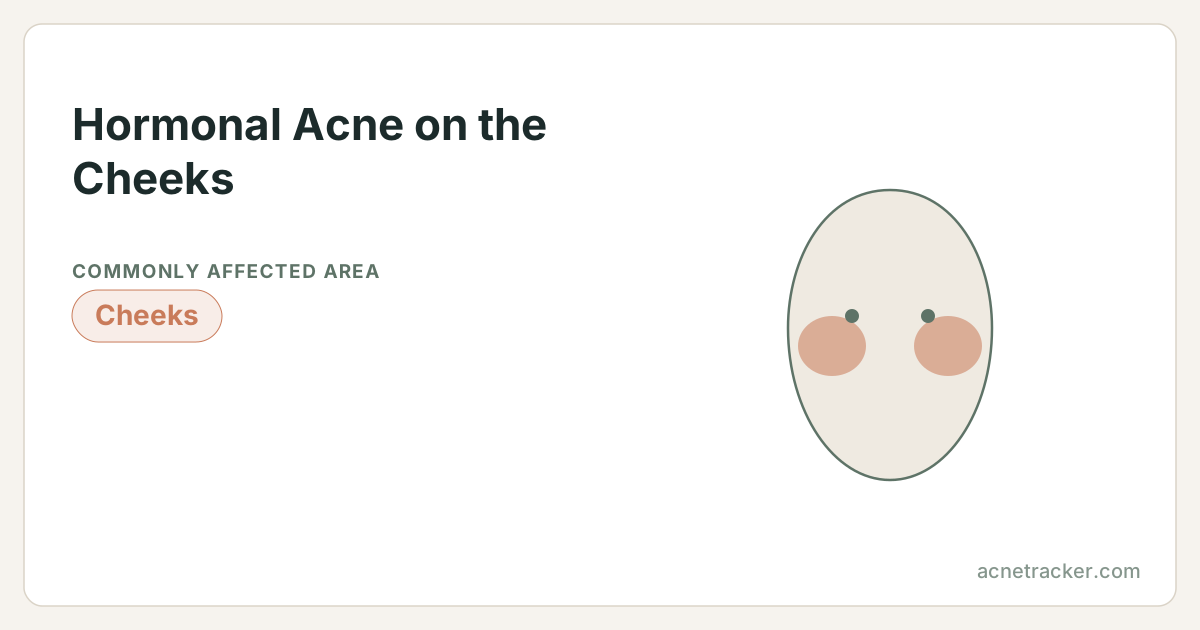
When hormonal acne spreads onto the cheeks, it usually creeps up from the jawline into the lower and outer part of the face rather than sitting in the oily centre. These breakouts feel deep and sore, come back in the same spots, and often track the menstrual cycle, arriving in the week before a period or during stressful stretches. The cheeks carry fewer oil glands than the T-zone but plenty of hormone-responsive follicles toward the jaw, so a genuine hormonal pattern here tends to be tender and cyclical instead of a scatter of surface clogs. Understanding that timing and depth is what points you toward treatments that regulate oil and turnover rather than more scrubbing.
How to recognize it
Hormonal cheek acne shows as a handful of deep, tender papules or cysts low on the cheek near the jaw, frequently mirrored on both sides and recurring month after month in the same place. The bumps sit under the skin and rarely form a clean white head. Timing is the giveaway: they flare in the luteal phase or under stress and calm afterwards. If instead you see small, itchy, uniform bumps spread evenly across the mid-cheek, fungal folliculitis is more likely, and if flushing and visible vessels dominate the central cheek, consider rosacea.
What causes it
Androgen-sensitive follicles
The follicles along the lower cheek and jaw respond strongly to androgens. Ordinary hormonal shifts, not necessarily abnormal levels, push these glands to overproduce oil, forming the deep plugs that become cysts here.
The menstrual cycle
In the days before a period the balance of estrogen to progesterone changes and relative androgen activity climbs, which is why many people watch the same lower-cheek spot swell up on schedule each month.
Stress and cortisol
Cortisol raises both oil production and inflammation, so poor sleep, deadlines and prolonged stress often coincide with a fresh crop of deep cheek bumps even outside the premenstrual window.
Friction over a hormonal base
Phones held to the cheek, hands propping the face and pillow pressure add mechanical irritation on top of hormonally primed follicles, concentrating flares where skin and surfaces meet.
Ingredients with evidence
| Ingredient | Role |
|---|---|
| Retinol / retinoids | The long-term core: normalizes turnover inside the follicle so deep cheek clogs stop forming. Introduce slowly and give it 8 to 12 weeks before judging. |
| Niacinamide | Daily use calms the redness of deep papules and modestly lowers oil while supporting the barrier against stronger actives. |
| Azelaic acid | A gentle anti-inflammatory that also fades the dark marks cheek cysts leave behind; a common choice when retinoids are not an option. |
| Salicylic acid (BHA) | Used a couple of evenings weekly it keeps the cheek follicles clear as prevention, best applied to the whole zone rather than single spots. |
| Benzoyl peroxide | Short-contact wash-off use reduces the bacteria that turn deep clogs into painful inflamed cysts on the cheek. |
Building the routine
Keep the routine steady rather than reactive. Cleanse gently morning and night, apply a niacinamide serum daily, and build a retinoid up to two or three nights a week, slotting salicylic acid on one of the other evenings once your skin tolerates it. Moisturize every time so the cheeks stay comfortable, and finish each morning with SPF 30 or higher because both acids and retinoids raise sun sensitivity and dark marks linger longest here. Skip aggressive spot-drying: the cyst sits too deep to reach and the surface only gets damaged. Because these flares are predictable, starting your actives a week before your usual breakout window works better than chasing cysts after they surface.
When to see a doctor
Frequently asked questions
Why is my hormonal acne on my cheeks and not my chin?
Hormonal acne follows the most androgen-sensitive follicles, which run along the jaw and lower cheeks. In some people that band reaches higher onto the cheek, so breakouts cluster there instead of the classic chin location while staying deep and cyclical.
How do I know cheek acne is hormonal rather than friction?
Look at depth and timing. Hormonal spots are tender, sit under the skin, recur in the same place and flare before a period. Friction breakouts appear wherever a phone, hand or pillow presses and settle when you remove the contact.
Does dairy or sugar make hormonal cheek acne worse?
For some people high-glycemic diets and large amounts of skim dairy nudge the hormone signalling that drives oil, so they act as modifiers. They are rarely the root cause, so treat diet as one lever alongside a proper routine, not a cure.
How long until hormonal cheek acne improves?
With a consistent topical routine expect visible change over 8 to 12 weeks. Hormonal acne is managed rather than cured, so maintenance matters; if a doctor adds hormonal therapy, full benefit usually appears after three to six months.
Sources & further reading
What this page cites about the condition itself:
There is no single study of this exact question. The guidance here is reasoned from the ingredient profiles below, each of which carries its own references:
- Retinol2 refs
- Niacinamide2 refs
- Azelaic Acid3 refs
- Salicylic Acid2 refs
- Benzoyl Peroxide3 refs
Show every reference behind this page (10)
- Improvement of naturally aged skin with vitamin A (retinol) (PubMed)cited by Retinol
- European Commission SCCS opinion on vitamin A in cosmeticscited by Retinol
- Niacinamide: mechanisms of action and its topical use in dermatology (PubMed)cited by Niacinamide
- European Commission CosIng database — Niacinamidecited by Niacinamide, Azelaic Acid
- PubChem — Azelaic acid compound summarycited by Azelaic Acid
- DermNet — Azelaic acidcited by Azelaic Acid
- Salicylic acid as a peeling agent: a comprehensive review (PubMed)cited by Salicylic Acid
- FDA OTC monograph — acne drug products (salicylic acid 0.5–2%)cited by Salicylic Acid, Benzoyl Peroxide
- PubChem — Benzoyl peroxide compound summarycited by Benzoyl Peroxide
- DermNet — Benzoyl peroxidecited by Benzoyl Peroxide
Medical disclaimer
Ingredients mentioned on this page
Find your personal acne triggers
Our free Acne Tracker lets you log breakouts, sleep, stress and diet, and shows you which factors correlate with your flare-ups.