Wheat Germ Oil: Comedogenic Rating & Ingredient Analysis
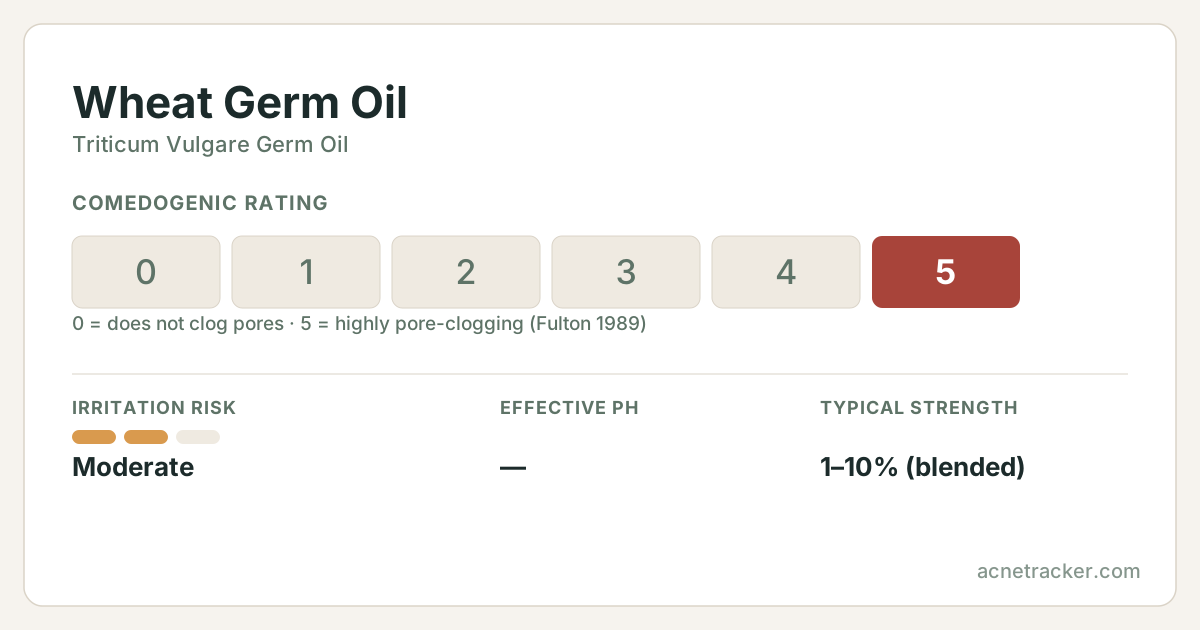
Wheat germ oil is a thick, deep golden-orange oil pressed from the germ, the nutrient-dense heart of the wheat grain. It is one of the richest natural sources of vitamin E, which is both its main selling point and the reason it is often added in small amounts to other oils as a natural antioxidant to slow their oxidation. The important thing to know is that it is widely rated as highly comedogenic: the reproduced comedogenic lists place it at 5, the top of the scale, so it is one of the few oils that acne-prone skin should genuinely avoid on the face.
Quick facts
- Comedogenic rating
- our estimate — not measured
- Irritation risk
- Moderate
- Effective pH
- —
- Typical strength
- 1–10% (blended)
- Pregnancy
- Considered safe
- Suits skin types
- drymature
Where this number comes from
No one has published a comedogenic rating for this ingredient. Fulton's 1989 table tested about 250 raw materials and this was not among them, and we found no later study measuring it. The figure shown is our own reasoning from the ingredient's chemistry and how it is used — treat it as an estimate, not a measurement.
Fulton read his own scale as 0-1 not significant, 2-3 borderline, 4-5 positive. The assay is the rabbit ear at 10% dilution, which the paper itself calls extremely sensitive and not fully predictive of human skin. Ratings describe the raw ingredient; concentration and formulation change real-world behaviour.
Caution profile
The four published fields on this page, on one 0–5 scale. Further from the centre means more care is needed — never that the ingredient is worse.
Derived, not measured: pore-clogging is the published comedogenic rating; irritation maps low/moderate/high to 1/3/5; pregnancy maps safe/caution/avoid to 0/3/5; skin-type limits is how many of the seven skin types this entry does NOT list. Every input is printed in words in the quick-facts card above.
Show the numbers
| Metric | 0–5 | Published field |
|---|---|---|
| Pore-clogging | 5 | 5/5 |
| Irritation | 3 | Moderate |
| Skin-type limits | 3.6 | 2/7 |
| Pregnancy | 0 | Considered safe |
Working pH and typical strength
Where this ingredient is formulated to sit, and at what concentration.
Both bars come from the fields above: the pH window and the typical strength range published for this ingredient. The tinted column is healthy skin's surface pH (about 4.7–5.75).
Show the numbers
| Metric | 0–5 |
|---|---|
| Typical strength | 1–10% (blended) |
What is it?
Wheat germ oil is high in linoleic acid but also carries palmitic acid and a very heavy, viscous texture, and it is exceptionally rich in vitamin E (tocopherols). Its provenance is worth being precise about: Fulton's 1989 table never tested wheat germ oil itself (it rates wheat germ GLYCERIDE at 3). The familiar 5 comes from the later reproduced comedogenic lists, and that is the figure we carry here. Either way it is treated as a high pore-clogging risk despite its linoleic content — a reminder that comedogenicity depends on more than the linoleic-to-oleic ratio alone. Because of its antioxidant richness, it is frequently used at low percentages to stabilise other oils rather than as a stand-alone facial oil. It also contains wheat proteins, relevant for those with wheat allergies.
Benefits
Exceptionally high in vitamin E
Wheat germ oil is one of the richest natural sources of vitamin E, giving it a strong antioxidant character used to protect and condition dry skin and to stabilise other oils.
A natural antioxidant additive
Because of its vitamin E load, a small amount is often blended into more fragile oils to slow their oxidation and extend their shelf life.
Rich comfort for very dry skin
Its thick, heavy texture provides intense, cushioning comfort on dry, mature or weather-stressed skin when used in small amounts in a blend.
Conditions rough patches
Applied sparingly to dry areas, it softens rough, flaky skin, though its richness means it should be kept off oily, congestion-prone zones.
How to use
Because of its very high comedogenic rating, use wheat germ oil only on dry skin and only in small amounts, ideally blended into another oil or a butter like shea-butter rather than applied neat over the face. A common use is adding a small percentage to a facial-oil blend as a natural antioxidant to protect the other oils. Keep it well away from oily and acne-prone areas. Patch test first, store it cool and dark, and if you have a wheat allergy, avoid it or check with a doctor.
Side effects
The main concern is its high pore-clogging potential, which makes it unsuitable for acne-prone or oily skin on the face. Its thick texture can feel heavy. It contains wheat proteins, so people with wheat allergies should be cautious. As with any oil, individual sensitivity is possible, so a patch test is wise.
Who should avoid it
Acne-prone and oily skin should avoid wheat germ oil on the face because of its comedogenic rating of 5. People with wheat allergies should avoid it or check with a doctor, since it contains wheat proteins. It is generally regarded as fine for topical use in pregnancy for those without these concerns, but confirm with your doctor if unsure about a specific product.
Pairs well with
Avoid combining with
Frequently asked questions
Is wheat germ oil bad for acne-prone skin?
Yes, on the face. The reproduced comedogenic lists rate it 5, the top of the scale — Fulton's original 1989 table never tested the oil itself, though it rated wheat germ glyceride at 3. On the rating we carry it is one of the few oils genuinely likely to clog pores, so acne-prone and oily skin should avoid using it on the face.
Why is wheat germ oil added to other oils?
Its exceptionally high vitamin E content makes it a natural antioxidant, so a small percentage is often blended into more fragile oils to slow their oxidation and help them last longer.
Can people with wheat or gluten issues use it?
It contains wheat proteins, so people with wheat allergies should be cautious and may need to avoid it. If you have a wheat allergy or coeliac disease, check with a doctor before using it on your skin.
How should I use wheat germ oil if my skin is dry?
Use it sparingly and blended into another oil or a butter like shea-butter, applied only to dry areas rather than neat across the face. Keep it away from any oily or congestion-prone zones.
Sources & further reading
- Evaluation of the Wheat Germ Oil Topical Formulations for Wound Healing Activity in Rats (Pakistan Journal of Biological Sciences, 2021)
- Fulton JE. Comedogenicity and irritancy of commonly used ingredients in skin care products. J Soc Cosmet Chem 40:321–333 (1989) — Table I, pp. 324–326 (not indexed in PubMed; rates Wheat Germ Glyceride at 3, wheat germ oil itself is absent)
Medical disclaimer
Find your personal acne triggers
Our free Acne Tracker lets you log breakouts, sleep, stress and diet, and shows you which factors correlate with your flare-ups.