Turmeric Extract: Comedogenic Rating & Ingredient Analysis
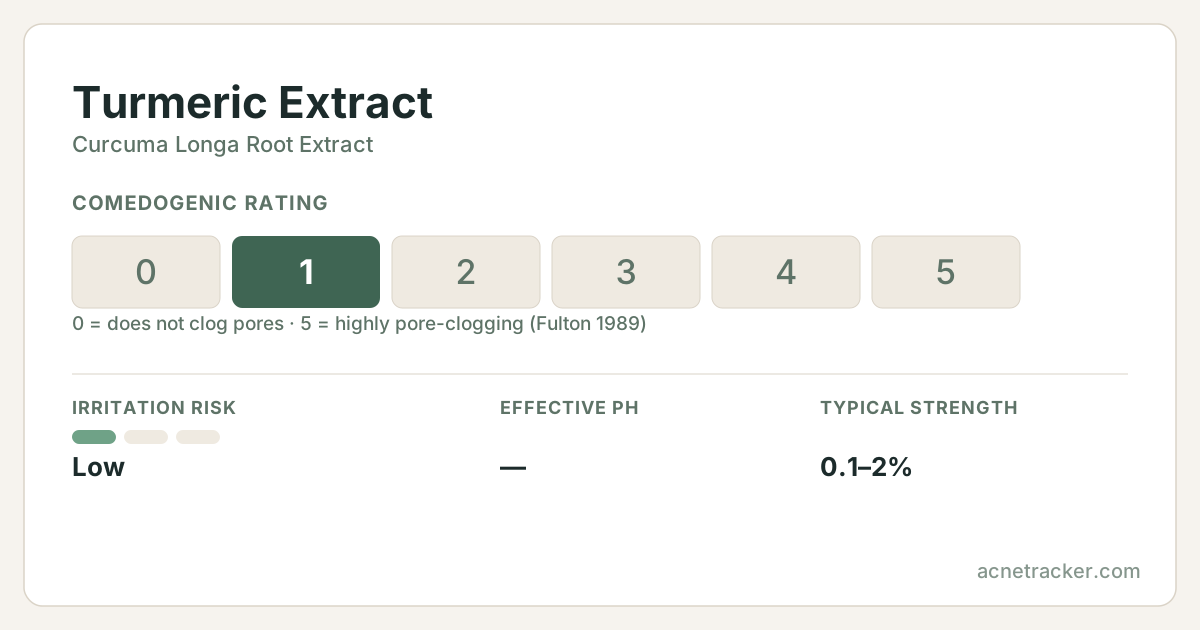
Turmeric extract is the skincare form of the golden spice that has been used in traditional beauty rituals across South Asia for centuries. Its reputation rests on curcumin, a strongly colored antioxidant compound with well-documented anti-inflammatory activity. In modern formulations turmeric is used to calm redness, defend against oxidative stress and lend a subtle brightening effect to dull or uneven skin. It is a helpful supporting ingredient for blemish-prone and irritated skin. It has a low comedogenic rating and low irritation risk, though the vivid pigment means formulators must balance benefit against any temporary yellow tint.
Quick facts
- Comedogenic rating
- our estimate — not measured
- Irritation risk
- Low
- Effective pH
- —
- Typical strength
- 0.1–2%
- Pregnancy
- Ask your doctor
- Suits skin types
- oilydrycombinationnormalacne-prone
Where this number comes from
No one has published a comedogenic rating for this ingredient. Fulton's 1989 table tested about 250 raw materials and this was not among them, and we found no later study measuring it. The figure shown is our own reasoning from the ingredient's chemistry and how it is used — treat it as an estimate, not a measurement.
Fulton read his own scale as 0-1 not significant, 2-3 borderline, 4-5 positive. The assay is the rabbit ear at 10% dilution, which the paper itself calls extremely sensitive and not fully predictive of human skin. Ratings describe the raw ingredient; concentration and formulation change real-world behaviour.
Caution profile
The four published fields on this page, on one 0–5 scale. Further from the centre means more care is needed — never that the ingredient is worse.
Derived, not measured: pore-clogging is the published comedogenic rating; irritation maps low/moderate/high to 1/3/5; pregnancy maps safe/caution/avoid to 0/3/5; skin-type limits is how many of the seven skin types this entry does NOT list. Every input is printed in words in the quick-facts card above.
Show the numbers
| Metric | 0–5 | Published field |
|---|---|---|
| Pore-clogging | 1 | 1/5 |
| Irritation | 1 | Low |
| Skin-type limits | 1.4 | 5/7 |
| Pregnancy | 3 | Ask your doctor |
Working pH and typical strength
Where this ingredient is formulated to sit, and at what concentration.
Both bars come from the fields above: the pH window and the typical strength range published for this ingredient. The tinted column is healthy skin's surface pH (about 4.7–5.75).
Show the numbers
| Metric | 0–5 |
|---|---|
| Typical strength | 0.1–2% |
What is it?
Turmeric comes from the root of Curcuma longa, a plant in the ginger family, and its key active is curcumin, a polyphenol responsible for both its bright yellow color and much of its biological activity. Curcumin is one of the more studied plant antioxidants, with research pointing to anti-inflammatory and free-radical-scavenging effects. In skincare, cosmetic turmeric extracts are formulated to deliver these soothing and antioxidant benefits while minimizing staining, sometimes using purified or decolorized fractions. Because it is a botanical, the exact curcumin content varies between products, and its practical strength depends heavily on how well the formula delivers the active into the skin.
Benefits
Antioxidant defense
Curcumin is a potent antioxidant that helps neutralize free radicals, protecting the skin surface from the oxidative stress behind dullness and premature aging.
Calms inflammation
Turmeric's well-documented anti-inflammatory activity helps soothe the redness and irritation associated with blemish-prone and reactive skin.
Supports an even, bright tone
By calming inflammation and defending against oxidative stress, turmeric contributes to a clearer, more radiant-looking complexion over time.
Comforts blemished skin
Its soothing character makes it a useful supporting ingredient in routines aimed at calming active breakouts and post-blemish redness.
How to use
Turmeric extract appears in serums, masks and moisturizers, often blended with other antioxidants and brighteners. Apply after cleansing, and use antioxidant-focused turmeric products in the morning under sunscreen to complement your daytime protection, or at night as part of a soothing routine. Wash-off turmeric masks are a low-commitment way to enjoy its benefits without any lingering tint. Pair it with vitamin C or niacinamide for broader antioxidant and tone-evening support. As with any botanical, patch test first if your skin is reactive.
Side effects
Turmeric extract is generally gentle, but two practical points stand out. First, its strong pigment can temporarily tint the skin yellow, especially in higher concentrations or DIY use — cosmetic formulas are designed to avoid this. Second, as a plant extract it can rarely trigger sensitivity in those prone to botanical allergies. Homemade turmeric masks are the usual source of staining and irritation complaints; well-formulated products are far more predictable.
Who should avoid it
People with known allergies to turmeric or related plants in the ginger family should avoid it or patch test carefully. Those worried about temporary staining should choose cosmetic formulations over homemade preparations. During pregnancy, topical use is generally regarded as low risk, but confirm with your doctor, particularly with concentrated products.
Frequently asked questions
What does turmeric do for skin?
It provides antioxidant and anti-inflammatory benefits, helping calm redness, defend against oxidative stress and support a brighter, more even-looking complexion, especially on blemish-prone skin.
Will turmeric stain my skin yellow?
Concentrated or homemade turmeric can leave a temporary yellow tint. Well-formulated cosmetic products use purified or balanced levels designed to avoid staining.
Is turmeric good for acne?
It is a helpful supporting ingredient thanks to its anti-inflammatory and antioxidant properties, but it works best alongside dedicated acne actives rather than as a standalone treatment.
Does turmeric extract clog pores?
A rating of 1 makes turmeric an unlikely cause of breakouts on its own. What matters more is the company it keeps: turmeric is often carried in balms, oils and masks, and those bases are far likelier to congest skin than the extract suspended in them.
Is turmeric extract safe during pregnancy?
Topical turmeric is generally considered low risk, but because concentrated forms have traditional internal uses, some prefer caution. If what you are using is a homemade preparation rather than a cosmetic formulation, that is the version worth asking your doctor about specifically.
Sources & further reading
Medical disclaimer
Find your personal acne triggers
Our free Acne Tracker lets you log breakouts, sleep, stress and diet, and shows you which factors correlate with your flare-ups.