Triethanolamine: Comedogenic Rating & Ingredient Analysis
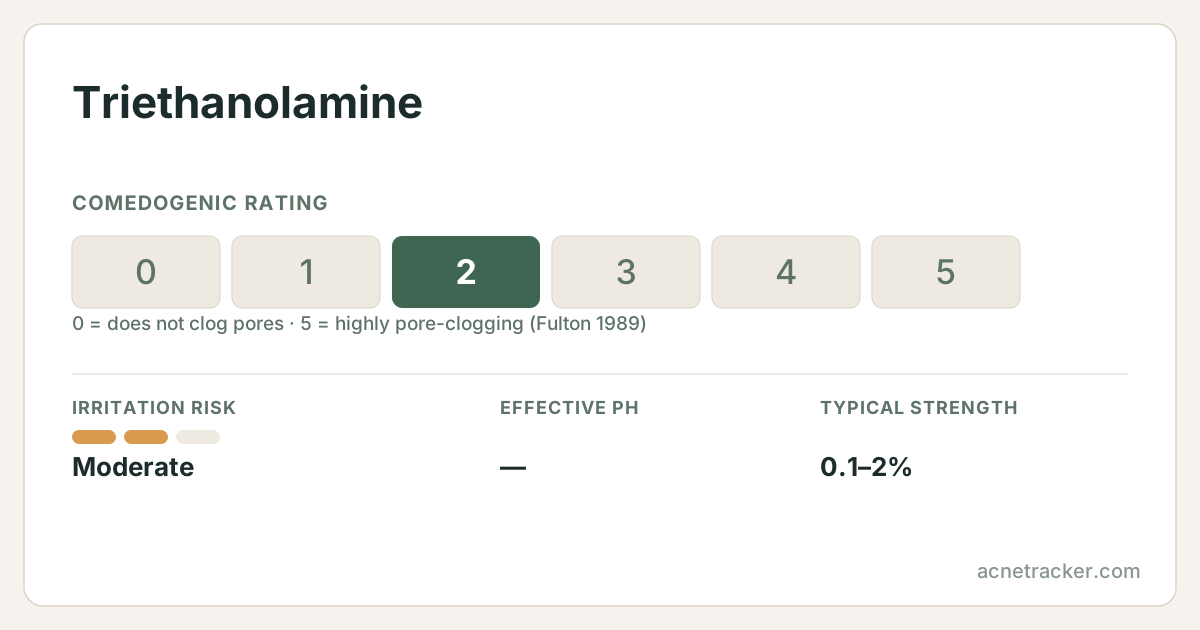
Triethanolamine, usually abbreviated TEA, is a pH adjuster and neutralizer used in very small amounts to fine-tune how acidic or alkaline a product is. Its most classic job is to neutralize carbomer, the acidic gelling polymer that only thickens once a base raises its pH toward neutral. TEA is also used to help form certain emulsions and to keep a formula at a skin-comfortable pH. Because it is used at low, carefully balanced levels, it usually makes up a tiny fraction of the finished product even though it plays an important structural role.
Quick facts
- Comedogenic rating
- measured (Fulton 1989)
- Irritation risk
- Moderate
- Effective pH
- —
- Typical strength
- 0.1–2%
- Pregnancy
- Considered safe
- Suits skin types
- oilydrycombinationnormalacne-pronemature
Where this number comes from
Read directly from Table I of Fulton's 1989 paper — the primary source, not one of the copied tables that circulate online.
Fulton read his own scale as 0-1 not significant, 2-3 borderline, 4-5 positive. The assay is the rabbit ear at 10% dilution, which the paper itself calls extremely sensitive and not fully predictive of human skin. Ratings describe the raw ingredient; concentration and formulation change real-world behaviour.
Caution profile
The four published fields on this page, on one 0–5 scale. Further from the centre means more care is needed — never that the ingredient is worse.
Derived, not measured: pore-clogging is the published comedogenic rating; irritation maps low/moderate/high to 1/3/5; pregnancy maps safe/caution/avoid to 0/3/5; skin-type limits is how many of the seven skin types this entry does NOT list. Every input is printed in words in the quick-facts card above.
Show the numbers
| Metric | 0–5 | Published field |
|---|---|---|
| Pore-clogging | 2 | 2/5 |
| Irritation | 3 | Moderate |
| Skin-type limits | 0.7 | 6/7 |
| Pregnancy | 0 | Considered safe |
Working pH and typical strength
Where this ingredient is formulated to sit, and at what concentration.
Both bars come from the fields above: the pH window and the typical strength range published for this ingredient. The tinted column is healthy skin's surface pH (about 4.7–5.75).
Show the numbers
| Metric | 0–5 |
|---|---|
| Typical strength | 0.1–2% |
What is it?
Triethanolamine is a small organic molecule that behaves as a mild base, meaning it can raise pH and react with acids to form salts. In a carbomer gel, TEA neutralizes the acidic polymer so it unwinds and swells into a clear gel; in some creams it reacts with a fatty acid such as stearic acid to create an emulsifying soap in place. It is added at low levels and then buffered within the formula, so the finished product sits at a mild, skin-friendly pH rather than being alkaline. TEA is a functional processing aid, not an active, and its concentration is deliberately kept low.
Benefits
Neutralizes carbomer gels
It raises the pH of acidic carbomer so the polymer swells into a clear, stable gel, which is TEA's most common role in skincare.
Balances product pH
As a pH adjuster it helps bring a formula to a mild, skin-comfortable pH, supporting both stability and how the product feels.
Helps form emulsions
By reacting with fatty acids it can create an in-situ emulsifier, helping certain creams and lotions hold oil and water together.
Used in tiny, buffered amounts
Because only a small, balanced quantity is needed, the finished product stays gentle and is not left alkaline.
How to use
Triethanolamine is a manufacturing ingredient already balanced within the finished gel or cream, so you simply use the product as normal. You cannot and should not adjust it yourself. Seeing it low on an ingredient list, often near carbomer, simply indicates a pH-balanced gel or emulsion. There are no layering rules; the finished product is formulated to sit at a comfortable pH.
Side effects
Fulton rated triethanolamine 2, borderline on his scale, though in finished, correctly buffered products it is generally well tolerated. Its irritation potential is rated moderate mainly because, as a base, high or poorly buffered amounts could be irritating; at the low, balanced levels used in cosmetics this is uncommon. Some past concern focused on nitrosamine formation if TEA is combined with certain nitrosating agents, which modern formulating avoids, and review bodies consider it safe as used.
Who should avoid it
Most people can use TEA-containing products without issue. If a particular gel stings, the trace of neutralizer that turned its carbomer into a gel is an unlikely culprit: fragrance and actives are far more common triggers, and reactive or compromised skin is better served assessing the whole formula. As used — at those low, buffered levels, reacted into the product during manufacturing — TEA is regarded as safe to keep using, including during pregnancy and breastfeeding.
Pairs well with
Frequently asked questions
Is triethanolamine safe in skincare?
Yes, as used. In finished, correctly buffered products it is present at low levels and considered safe by cosmetic review bodies. Fulton rated it 2 on his comedogenic scale.
What does triethanolamine do?
It is a pH adjuster and neutralizer, most often used to neutralize acidic carbomer so it forms a clear gel, and to bring formulas to a mild, skin-friendly pH.
Is triethanolamine bad for you?
At the low, buffered levels used in cosmetics it is considered safe. Older concerns about nitrosamines apply only when it is combined with specific nitrosating agents, which is avoided in modern formulas.
Does triethanolamine clog pores?
Fulton rated it 2, but what is in the jar is a fraction of a percent of neutralizer that has already done its work on the gelling agent. Pore-clogging is not the relevant question for a pH adjuster.
Why is it listed near carbomer?
Carbomer only thickens once a base neutralizes it, and triethanolamine is a common neutralizer, so the two are frequently used and listed together.
Sources & further reading
Medical disclaimer
Find your personal acne triggers
Our free Acne Tracker lets you log breakouts, sleep, stress and diet, and shows you which factors correlate with your flare-ups.