Aminomethyl Propanol: Comedogenic Rating & Ingredient Analysis
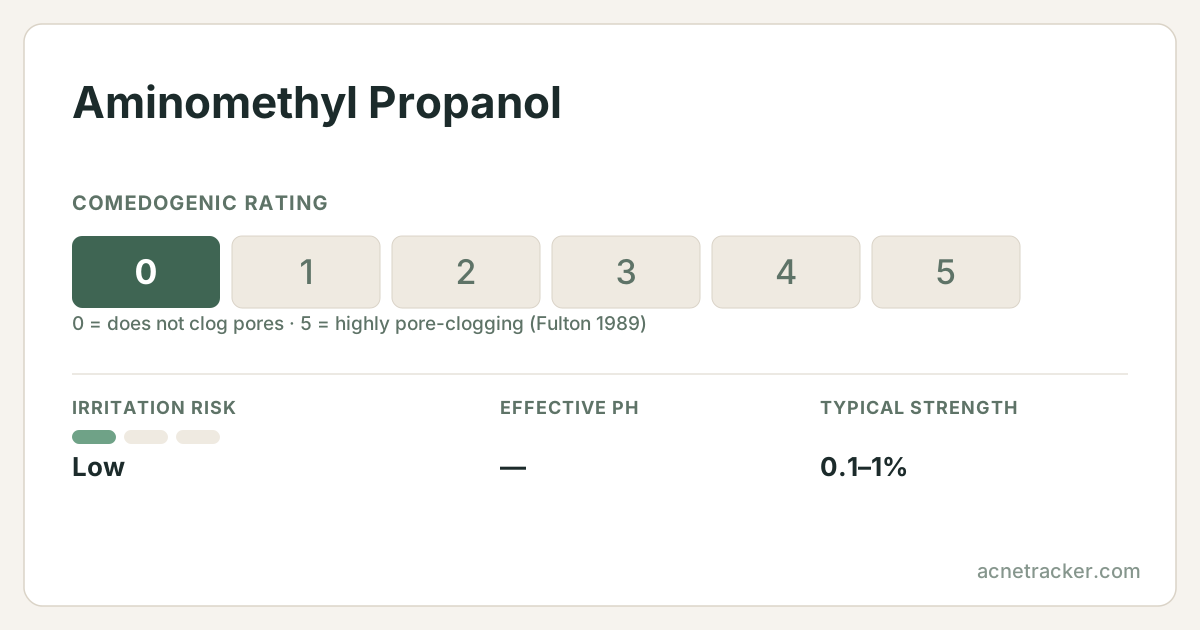
Aminomethyl propanol, commonly abbreviated AMP, is a pH adjuster used in very small amounts to bring a product to the right acidity or alkalinity. Like triethanolamine, one of its main jobs is to neutralize acidic gelling agents such as carbomer so they thicken into clear, stable gels. Formulators often favor AMP as a modern, efficient neutralizer that works at low use levels and helps create smooth, clear textures. Because only a tiny, balanced amount is needed, it sits far down the ingredient list even though it is essential to how the finished gel behaves.
Quick facts
- Comedogenic rating
- measured (Fulton 1989)
- Irritation risk
- Low
- Effective pH
- —
- Typical strength
- 0.1–1%
- Pregnancy
- Considered safe
- Suits skin types
- oilydrycombinationnormalacne-pronemature
Where this number comes from
Read directly from Table I of Fulton's 1989 paper — the primary source, not one of the copied tables that circulate online.
Fulton read his own scale as 0-1 not significant, 2-3 borderline, 4-5 positive. The assay is the rabbit ear at 10% dilution, which the paper itself calls extremely sensitive and not fully predictive of human skin. Ratings describe the raw ingredient; concentration and formulation change real-world behaviour.
Caution profile
The four published fields on this page, on one 0–5 scale. Further from the centre means more care is needed — never that the ingredient is worse.
Derived, not measured: pore-clogging is the published comedogenic rating; irritation maps low/moderate/high to 1/3/5; pregnancy maps safe/caution/avoid to 0/3/5; skin-type limits is how many of the seven skin types this entry does NOT list. Every input is printed in words in the quick-facts card above.
Show the numbers
| Metric | 0–5 | Published field |
|---|---|---|
| Pore-clogging | 0 | 0/5 |
| Irritation | 1 | Low |
| Skin-type limits | 0.7 | 6/7 |
| Pregnancy | 0 | Considered safe |
Working pH and typical strength
Where this ingredient is formulated to sit, and at what concentration.
Both bars come from the fields above: the pH window and the typical strength range published for this ingredient. The tinted column is healthy skin's surface pH (about 4.7–5.75).
Show the numbers
| Metric | 0–5 |
|---|---|
| Typical strength | 0.1–1% |
What is it?
Aminomethyl propanol is a small organic molecule that acts as a mild base, able to raise pH and react with acids. When added to an acidic carbomer or acrylate gel, AMP neutralizes it so the polymer unwinds and swells into a gel, and it can also fine-tune the overall pH of a serum or lotion so it sits in a skin-comfortable range. It is added at low levels and then buffered within the formula, so the finished product is not alkaline. AMP is a processing aid rather than an active ingredient; its role is purely to adjust pH and support the texture and stability of a formula.
Benefits
Neutralizes gelling agents
It raises the pH of acidic polymers like carbomer so they swell into clear, stable gels, a key step in making many gel textures.
Fine-tunes formula pH
As a pH adjuster it helps bring serums and lotions to a mild, skin-comfortable pH that supports both stability and comfort.
Efficient at low levels
It works effectively in tiny amounts, so only a small, balanced quantity is needed and the finished product remains gentle.
Supports clear textures
By neutralizing gels cleanly it helps produce the smooth, transparent textures common in modern serums and gel-creams.
How to use
Aminomethyl propanol is a manufacturing ingredient already balanced within the finished product, so simply use the gel, serum or lotion as normal. It is not something you can or should adjust yourself. Its presence low on an ingredient list, often near a gelling agent, indicates a pH-balanced gel or emulsion. There are no layering rules; the product is formulated to sit at a comfortable pH.
Side effects
In finished, correctly buffered products aminomethyl propanol has a comedogenic rating of 0 and low irritation potential. As with any base, high or unbuffered amounts could be irritating, but at the low, balanced levels used in cosmetics this is uncommon, and review bodies consider it safe as used. It does not typically sting or sensitize intact skin in a well-formulated product.
Who should avoid it
Most people can use AMP-containing products without concern. Scale is worth keeping in mind: AMP is dosed at the fraction of a percent that brings a gel to the right pH and is then buffered there, so when a serum disagrees with reactive skin, the actives, fragrance and preservatives are the places to look first. As used, in those buffered amounts, AMP is regarded as safe — pregnancy and breastfeeding included.
Pairs well with
Frequently asked questions
Is aminomethyl propanol safe?
Yes, as used. In finished, buffered products it is present at low levels with a comedogenic rating of 0 and is considered safe by cosmetic review bodies.
What does aminomethyl propanol do?
It is a pH adjuster and neutralizer, most often used to neutralize acidic gelling agents like carbomer and to bring a formula to a mild, skin-friendly pH.
Does aminomethyl propanol clog pores?
No. AMP rates 0, and it is dosed only at the tiny level needed to bring a formula to the right pH. There is nothing fatty or occlusive about a small base molecule for a follicle to hold onto.
Is AMP the same as triethanolamine?
They are different molecules but serve a similar role as pH adjusters and neutralizers. AMP is a common modern alternative used to neutralize gels and balance formulas.
Why is aminomethyl propanol in my serum?
It adjusts the serum's pH to a comfortable, stable range, and if the serum is a gel, it helps neutralize the gelling agent so the texture sets properly.
Sources & further reading
Medical disclaimer
Find your personal acne triggers
Our free Acne Tracker lets you log breakouts, sleep, stress and diet, and shows you which factors correlate with your flare-ups.