Polysorbate 20: Comedogenic Rating & Ingredient Analysis
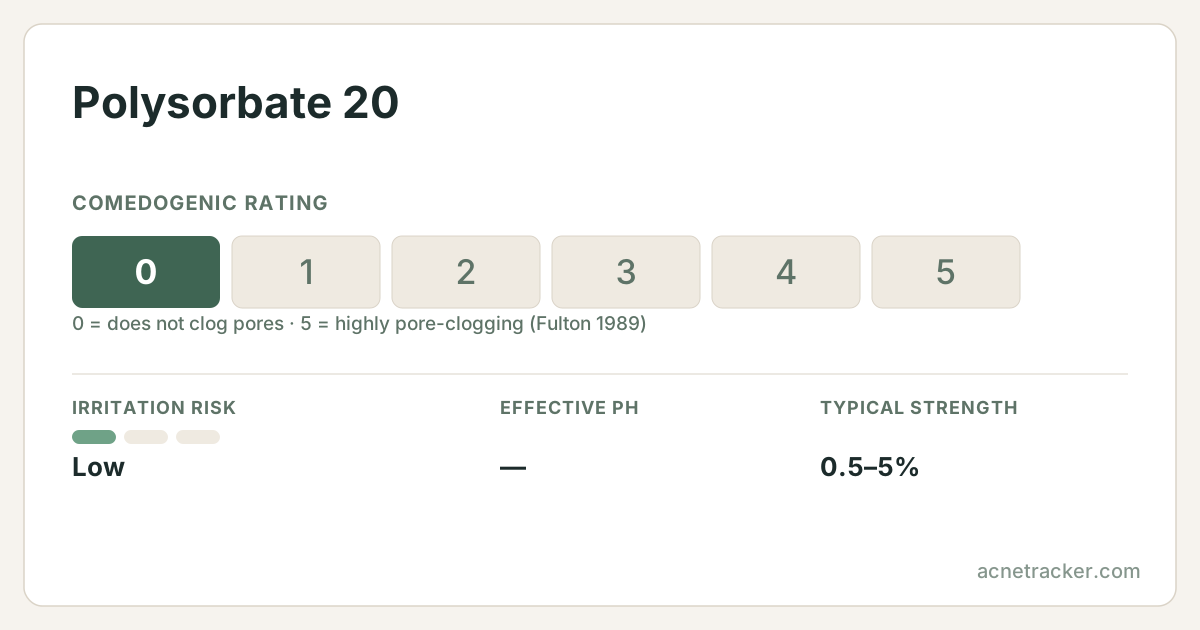
Polysorbate 20 is a gentle, water-loving solubilizer that solves a very specific formulating problem: how to blend a small amount of oil, essential oil or fragrance evenly into a watery product like a toner, micellar water or mist. Left alone, oil and water refuse to mix, and drops of fragrance would float on top. Polysorbate 20 wraps those oily droplets in a water-friendly shell so they disappear into the liquid, keeping the product clear and stable. It is one of the mildest surfactants used in cosmetics and appears across toners, sprays, cleansers and light lotions.
Quick facts
- Comedogenic rating
- measured (Fulton 1989)
- Irritation risk
- Low
- Effective pH
- —
- Typical strength
- 0.5–5%
- Pregnancy
- Considered safe
- Suits skin types
- oilydrycombinationsensitivenormalacne-pronemature
Where this number comes from
Read directly from Table I of Fulton's 1989 paper — the primary source, not one of the copied tables that circulate online.
Fulton read his own scale as 0-1 not significant, 2-3 borderline, 4-5 positive. The assay is the rabbit ear at 10% dilution, which the paper itself calls extremely sensitive and not fully predictive of human skin. Ratings describe the raw ingredient; concentration and formulation change real-world behaviour.
Caution profile
The four published fields on this page, on one 0–5 scale. Further from the centre means more care is needed — never that the ingredient is worse.
Derived, not measured: pore-clogging is the published comedogenic rating; irritation maps low/moderate/high to 1/3/5; pregnancy maps safe/caution/avoid to 0/3/5; skin-type limits is how many of the seven skin types this entry does NOT list. Every input is printed in words in the quick-facts card above.
Show the numbers
| Metric | 0–5 | Published field |
|---|---|---|
| Pore-clogging | 0 | 0/5 |
| Irritation | 1 | Low |
| Skin-type limits | 0 | 7/7 |
| Pregnancy | 0 | Considered safe |
Working pH and typical strength
Where this ingredient is formulated to sit, and at what concentration.
Both bars come from the fields above: the pH window and the typical strength range published for this ingredient. The tinted column is healthy skin's surface pH (about 4.7–5.75).
Show the numbers
| Metric | 0–5 |
|---|---|
| Typical strength | 0.5–5% |
What is it?
Polysorbate 20 is a non-ionic surfactant made by attaching chains of ethylene oxide to sorbitan laurate, a fatty ester derived from lauric acid and sorbitol. This gives it a molecule with an oil-loving tail and a strongly water-loving head. When the oil-loving end grabs a droplet of oil or fragrance and the water-loving end faces outward, the droplet becomes small enough to stay suspended in water, a process called solubilization. The number 20 refers to the type of fatty acid used. Because it is non-ionic and mild, it does not strip or sting the way harsh cleansing surfactants can, and it is often chosen precisely to keep sensitive formulas gentle.
Benefits
Dissolves oils into water
It lets a formulator blend fragrance, essential oils or oily actives into a clear water-based product without cloudiness or floating droplets.
Keeps products stable
By holding oil evenly suspended, it stops separation and keeps toners, mists and micellar waters looking and performing consistently.
Gentle on skin
As a mild non-ionic surfactant it cleans and disperses without the tightness or sting associated with harsher detergents.
Helps remove residue
In cleansers and micellar waters its surfactant action helps lift away oil, makeup and impurities from the skin surface.
How to use
Polysorbate 20 is already blended into the product, so you use the toner, mist, cleanser or lotion as normal. There is no special handling. In leave-on products it is present at very low levels purely to keep oils dissolved, and in cleansers it contributes gentle cleansing. Nothing about it requires an adjustment period or layering rules.
Side effects
Polysorbate 20 is considered low-irritation and non-comedogenic, with a rating of 0. It is one of the milder surfactants and rarely causes problems. Very sensitive individuals could theoretically react to high levels, but at the small amounts used for solubilizing this is uncommon. It does not sensitize the skin under normal use.
Who should avoid it
Almost no one needs to avoid polysorbate 20. It is suitable for sensitive, oily and acne-prone skin and is considered safe during pregnancy and breastfeeding. Those with extremely reactive skin who react to many surfactants can patch test, but reactions are unusual.
Pairs well with
Frequently asked questions
Is polysorbate 20 safe for skin?
Yes. It is a mild, non-ionic surfactant with a comedogenic rating of 0 and low irritation potential, widely used and considered safe in cosmetics.
What does polysorbate 20 do?
It solubilizes oils and fragrance into water-based products, keeping toners, mists and micellar waters clear, stable and free of floating droplets.
Does polysorbate 20 clog pores?
No. It has a comedogenic rating of 0 and, as a water-soluble surfactant, is rinsed or worn away easily, making it fine for acne-prone skin.
Is polysorbate 20 the same as polysorbate 80?
They are close relatives from the same family. Polysorbate 20 is based on a lighter fatty acid and is a slightly stronger solubilizer for fragrance, while polysorbate 80 suits heavier oils.
Why is it in my micellar water?
Its gentle surfactant action helps lift oil and makeup off the skin, and it keeps any oily ingredients evenly dispersed so the product stays clear.
Sources & further reading
Medical disclaimer
Find your personal acne triggers
Our free Acne Tracker lets you log breakouts, sleep, stress and diet, and shows you which factors correlate with your flare-ups.