Sodium Hydroxide: Comedogenic Rating & Ingredient Analysis
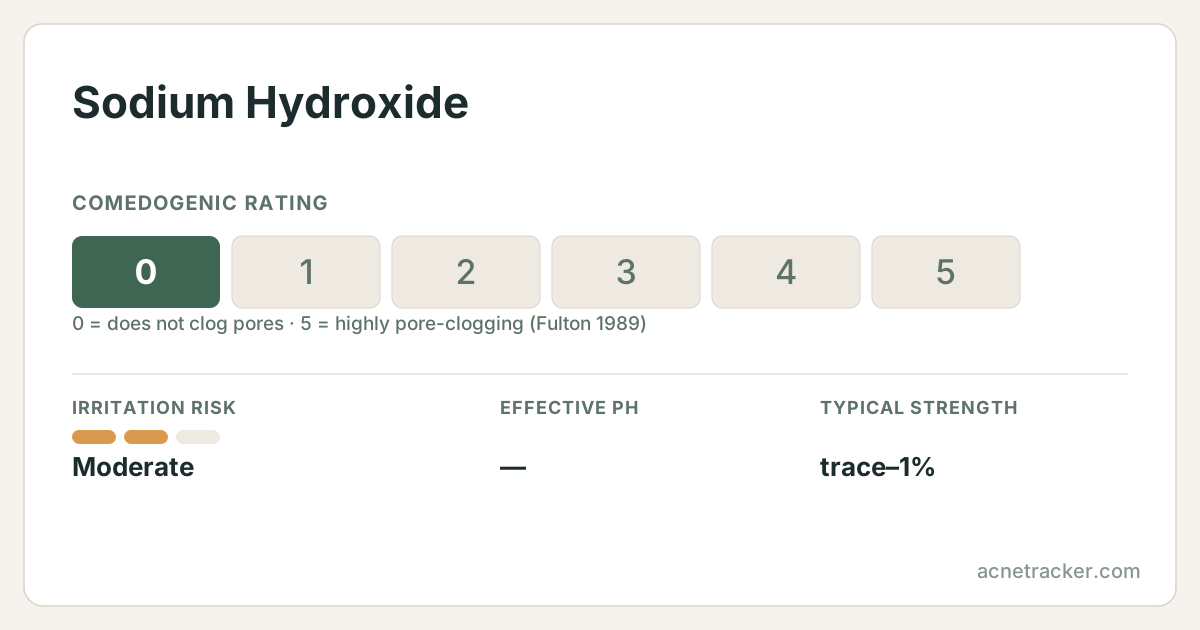
Sodium hydroxide, also known as lye or caustic soda, has an alarming reputation because in its raw, concentrated form it is a strong, corrosive base. In skincare, though, it appears in a completely different role: a trace pH adjuster used in tiny, carefully buffered amounts to bring a product to the right pH. It reacts and is neutralized within the formula, so by the time you use the finished product, essentially none remains as free lye. Seeing sodium hydroxide near the very end of an ingredient list is normal and is a sign of a properly pH-balanced product, not a harsh one.
Quick facts
- Comedogenic rating
- our estimate — not measured
- Irritation risk
- Moderate
- Effective pH
- —
- Typical strength
- trace–1%
- Pregnancy
- Considered safe
- Suits skin types
- oilydrycombinationnormalacne-pronemature
Where this number comes from
No one has published a comedogenic rating for this ingredient. Fulton's 1989 table tested about 250 raw materials and this was not among them, and we found no later study measuring it. The figure shown is our own reasoning from the ingredient's chemistry and how it is used — treat it as an estimate, not a measurement.
Fulton read his own scale as 0-1 not significant, 2-3 borderline, 4-5 positive. The assay is the rabbit ear at 10% dilution, which the paper itself calls extremely sensitive and not fully predictive of human skin. Ratings describe the raw ingredient; concentration and formulation change real-world behaviour.
Caution profile
The four published fields on this page, on one 0–5 scale. Further from the centre means more care is needed — never that the ingredient is worse.
Derived, not measured: pore-clogging is the published comedogenic rating; irritation maps low/moderate/high to 1/3/5; pregnancy maps safe/caution/avoid to 0/3/5; skin-type limits is how many of the seven skin types this entry does NOT list. Every input is printed in words in the quick-facts card above.
Show the numbers
| Metric | 0–5 | Published field |
|---|---|---|
| Pore-clogging | 0 | 0/5 |
| Irritation | 3 | Moderate |
| Skin-type limits | 0.7 | 6/7 |
| Pregnancy | 0 | Considered safe |
Working pH and typical strength
Where this ingredient is formulated to sit, and at what concentration.
Both bars come from the fields above: the pH window and the typical strength range published for this ingredient. The tinted column is healthy skin's surface pH (about 4.7–5.75).
Show the numbers
| Metric | 0–5 |
|---|---|
| Typical strength | trace–1% |
What is it?
Sodium hydroxide is a strong inorganic base. In cosmetics it is used to raise pH and to neutralize acidic ingredients, such as turning an acidic carbomer into a clear gel or balancing the pH of an exfoliating acid formula so it is effective yet skin-comfortable. The key point is that it is added in trace amounts and consumed by the neutralizing reaction, leaving the product at a mild final pH rather than an alkaline one. It is a processing aid, not an active ingredient, and the finished product is what matters, not the raw material's fearsome reputation.
Benefits
Precisely adjusts pH
It lets formulators fine-tune a product's pH accurately, which matters for both stability and how effective and comfortable a formula is.
Neutralizes acidic gels
It can neutralize acidic gelling agents like carbomer so they swell into clear, stable gels, a common structural role.
Balances acid formulas
In exfoliating acid products it helps set the pH so the acid works effectively while staying within a skin-comfortable range.
Used only in trace amounts
Because it is consumed by neutralization, only a tiny quantity is needed and the finished product is left at a mild, balanced pH.
How to use
Sodium hydroxide is a manufacturing ingredient already reacted and balanced within the finished product, so you simply use the cleanser, gel or serum as normal. You cannot and should not handle it yourself. Its presence at the bottom of an ingredient list indicates a pH-adjusted formula. There are no layering rules; the product is designed to sit at a comfortable pH by the time it reaches you.
Side effects
In finished, correctly buffered products sodium hydroxide has a comedogenic rating of 0 and poses no meaningful risk, since it has been neutralized. Its irritation rating reflects the raw material, which is corrosive in concentrated form, but the trace, reacted amount in a cosmetic is not. Only an improperly formulated, overly alkaline product would be irritating, which quality manufacturing avoids.
Who should avoid it
No one needs to avoid a finished product simply because sodium hydroxide appears on its label. What an ingredient list records is the raw material a manufacturer added; what reaches your skin is a trace that has already been consumed neutralizing something else, leaving a mild final pH. Reactive skin is better off judging a product by that final pH and by its active ingredients. As used, sodium hydroxide is regarded as safe, including during pregnancy and breastfeeding.
Pairs well with
Frequently asked questions
Is sodium hydroxide safe in skincare?
Yes, as used. It is added in trace amounts as a pH adjuster and neutralized within the formula, leaving the finished product at a mild pH with a comedogenic rating of 0.
Isn't sodium hydroxide the same as lye?
Yes, but the raw material is corrosive only in concentrated form. In cosmetics it is used in tiny, buffered amounts and reacted away, so the finished product is not caustic.
What does sodium hydroxide do in a product?
It is a pH adjuster and neutralizer used to raise pH, neutralize acidic gels like carbomer, and balance the pH of acid formulas so they are effective and comfortable.
Does sodium hydroxide clog pores?
No. It has a comedogenic rating of 0 and is present only in trace amounts as a pH adjuster, so it is not a pore-clogging concern.
Why is sodium hydroxide at the end of the ingredient list?
Ingredients are listed by amount, and only a trace of sodium hydroxide is used to adjust pH, so it appears near the very end. This is normal and expected.
Sources & further reading
Medical disclaimer
Find your personal acne triggers
Our free Acne Tracker lets you log breakouts, sleep, stress and diet, and shows you which factors correlate with your flare-ups.