Tartaric Acid: Comedogenic Rating & Ingredient Analysis
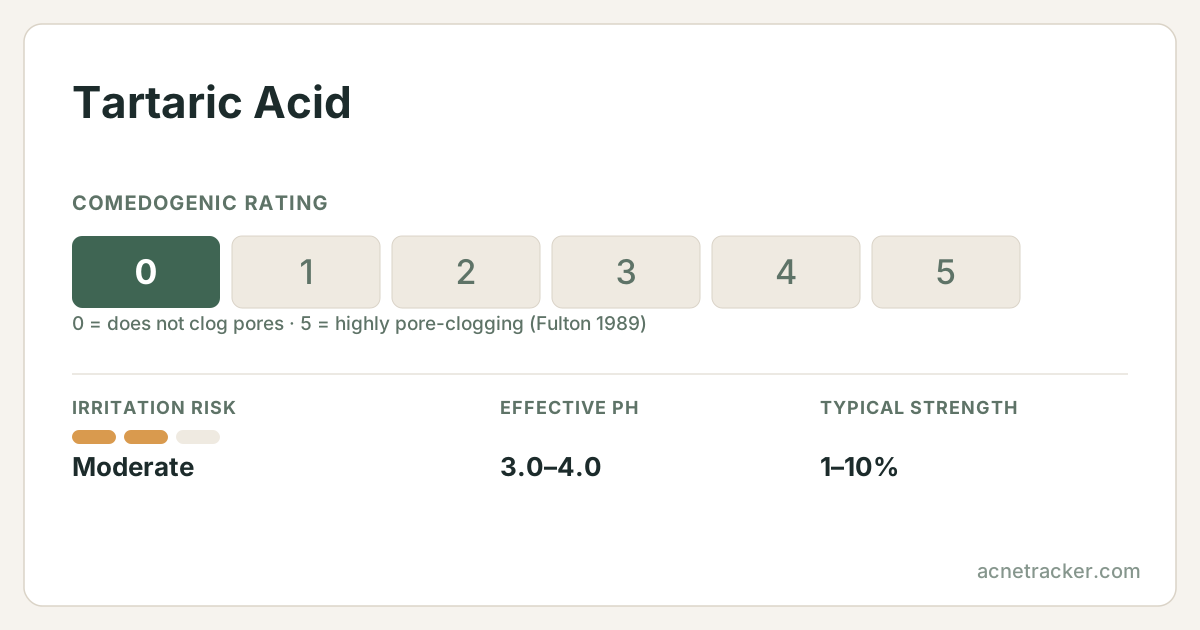
Tartaric acid is an alpha hydroxy acid found naturally in grapes and other fruits, best known from winemaking. In skincare it plays two roles: as a mild exfoliant that helps smooth and brighten the skin surface, and as a pH buffer that keeps other acid formulas stable and effective. It is less famous than glycolic or lactic acid, but its larger molecule and buffering action make it a useful, well-rounded AHA — often working quietly in the background of a formula while also contributing antioxidant activity of its own.
Quick facts
- Comedogenic rating
- our estimate — not measured
- Irritation risk
- Moderate
- Effective pH
- 3.0–4.0
- Typical strength
- 1–10%
- Pregnancy
- Ask your doctor
- Suits skin types
- normalcombinationoilymature
Where this number comes from
No one has published a comedogenic rating for this ingredient. Fulton's 1989 table tested about 250 raw materials and this was not among them, and we found no later study measuring it. The figure shown is our own reasoning from the ingredient's chemistry and how it is used — treat it as an estimate, not a measurement.
Fulton read his own scale as 0-1 not significant, 2-3 borderline, 4-5 positive. The assay is the rabbit ear at 10% dilution, which the paper itself calls extremely sensitive and not fully predictive of human skin. Ratings describe the raw ingredient; concentration and formulation change real-world behaviour.
Caution profile
The four published fields on this page, on one 0–5 scale. Further from the centre means more care is needed — never that the ingredient is worse.
Derived, not measured: pore-clogging is the published comedogenic rating; irritation maps low/moderate/high to 1/3/5; pregnancy maps safe/caution/avoid to 0/3/5; skin-type limits is how many of the seven skin types this entry does NOT list. Every input is printed in words in the quick-facts card above.
Show the numbers
| Metric | 0–5 | Published field |
|---|---|---|
| Pore-clogging | 0 | 0/5 |
| Irritation | 3 | Moderate |
| Skin-type limits | 2.1 | 4/7 |
| Pregnancy | 3 | Ask your doctor |
Working pH and typical strength
Where this ingredient is formulated to sit, and at what concentration.
Both bars come from the fields above: the pH window and the typical strength range published for this ingredient. The tinted column is healthy skin's surface pH (about 4.7–5.75).
Show the numbers
| Metric | 0–5 |
|---|---|
| Working pH | 3.0–4.0 |
| Typical strength | 1–10% |
What is it?
Chemically, tartaric acid is a diacid with two hydroxyl and two carboxyl groups, which gives it both exfoliating and pH-stabilising properties. Like other AHAs, it loosens the glue between dead surface cells so they shed more evenly, revealing smoother skin underneath. Its two acid groups also make it an effective buffer, so formulators often add it to hold a product at the right pH — the acidic window many actives need to work. Beyond exfoliation, tartaric acid has recognised antioxidant capacity, and it is frequently combined with other AHAs such as citric and malic acid in gentle multi-acid blends.
Benefits
Smooths and brightens
By exfoliating the outer layer of dead cells, tartaric acid helps dull, uneven skin look fresher and more radiant, improving how light reflects off the surface.
Stabilises acid formulas
Its buffering action keeps a product at the correct, effective pH, which is why tartaric acid is often included to make other exfoliating actives perform reliably.
Adds antioxidant support
Tartaric acid contributes antioxidant activity, helping formulas counter some of the oxidative stress that dulls and ages the skin surface.
Works in gentle blends
Combined with citric and malic acid, it forms multi-acid mixtures that exfoliate at a lower individual strength, spreading the workload for a milder effect.
How to use
You will most often meet tartaric acid inside a blended AHA product used a few evenings a week. Put it on clean, dry skin and finish with moisturiser — and judge the strength by the whole acid blend it sits in, not by the tartaric acid line alone. As with any AHA, do not layer it with retinol or other exfoliating acids in one routine — alternate nights instead. Because AHAs increase sun sensitivity, daily broad-spectrum sunscreen is essential. Start slowly if your skin is reactive, and build up only as your tolerance allows.
Side effects
Expect mild tingling on application. Overuse brings the usual AHA over-exfoliation signs: tightness, redness, peeling and a barrier that stings easily. Higher concentrations can irritate sensitive skin, so patch testing is sensible. Persistent burning or a rash means you should stop and let your skin recover.
Who should avoid it
Sensitive or reactive skin should approach any AHA cautiously and may prefer a PHA instead. During pregnancy, leave-on AHA exfoliation is generally treated with caution, so ask your doctor. If your barrier is damaged, pause all acids until it recovers.
Pairs well with
Avoid combining with
Frequently asked questions
What kind of acid is tartaric acid?
It is an alpha hydroxy acid (AHA) found naturally in grapes. It exfoliates the skin surface like other AHAs and also acts as a pH buffer to keep formulas stable.
Is tartaric acid a good exfoliant?
Yes, though it is often used as part of a blend rather than on its own. It smooths and brightens the surface while helping other acids in the formula work at the right pH.
Why is tartaric acid added to products?
For two reasons: it exfoliates, and it buffers pH. Formulators frequently include it to keep an acid product within the effective, stable pH range.
Does tartaric acid increase sun sensitivity?
Yes, like other AHAs it can make skin more prone to sun damage, so daily broad-spectrum sunscreen is important while you use it.
Is tartaric acid safe in pregnancy?
Pregnancy advice is cautious about any AHA left sitting on the skin, tartaric acid included. Because it usually appears inside a multi-acid blend, take the whole product to your doctor rather than asking about the single ingredient.
Sources & further reading
Medical disclaimer
Find your personal acne triggers
Our free Acne Tracker lets you log breakouts, sleep, stress and diet, and shows you which factors correlate with your flare-ups.