Malic Acid: Comedogenic Rating & Ingredient Analysis
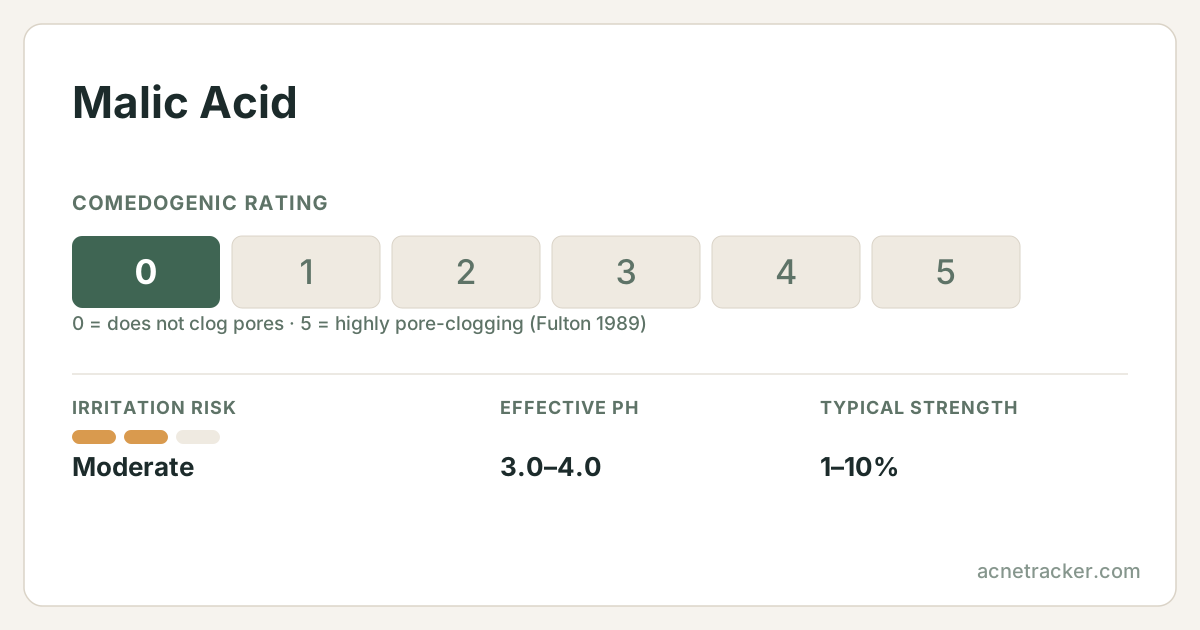
Malic acid is an alpha hydroxy acid found naturally in apples and many other fruits. Its molecule is larger than glycolic acid's, so it penetrates a little more slowly and is often described as somewhat gentler, which makes it a common partner ingredient in multi-acid exfoliating blends. As a diacid it also helps buffer pH, and it has some humectant character, drawing a little water into the skin. The overall effect is a well-rounded exfoliant that smooths texture and brightens tone while being a touch more forgiving than the smallest, most aggressive AHAs.
Quick facts
- Comedogenic rating
- our estimate — not measured
- Irritation risk
- Moderate
- Effective pH
- 3.0–4.0
- Typical strength
- 1–10%
- Pregnancy
- Ask your doctor
- Suits skin types
- normalcombinationoilymaturedry
Where this number comes from
No one has published a comedogenic rating for this ingredient. Fulton's 1989 table tested about 250 raw materials and this was not among them, and we found no later study measuring it. The figure shown is our own reasoning from the ingredient's chemistry and how it is used — treat it as an estimate, not a measurement.
Fulton read his own scale as 0-1 not significant, 2-3 borderline, 4-5 positive. The assay is the rabbit ear at 10% dilution, which the paper itself calls extremely sensitive and not fully predictive of human skin. Ratings describe the raw ingredient; concentration and formulation change real-world behaviour.
Caution profile
The four published fields on this page, on one 0–5 scale. Further from the centre means more care is needed — never that the ingredient is worse.
Derived, not measured: pore-clogging is the published comedogenic rating; irritation maps low/moderate/high to 1/3/5; pregnancy maps safe/caution/avoid to 0/3/5; skin-type limits is how many of the seven skin types this entry does NOT list. Every input is printed in words in the quick-facts card above.
Show the numbers
| Metric | 0–5 | Published field |
|---|---|---|
| Pore-clogging | 0 | 0/5 |
| Irritation | 3 | Moderate |
| Skin-type limits | 1.4 | 5/7 |
| Pregnancy | 3 | Ask your doctor |
Working pH and typical strength
Where this ingredient is formulated to sit, and at what concentration.
Both bars come from the fields above: the pH window and the typical strength range published for this ingredient. The tinted column is healthy skin's surface pH (about 4.7–5.75).
Show the numbers
| Metric | 0–5 |
|---|---|
| Working pH | 3.0–4.0 |
| Typical strength | 1–10% |
What is it?
Malic acid is a hydroxy diacid — it has one hydroxyl and two carboxyl groups. The hydroxyl group is what allows it to act as an AHA, loosening the cohesion between dead surface cells so they shed more evenly and reveal fresher skin. The two acid groups give it buffering ability, so like citric and tartaric acid it can help hold a formula at the correct pH. Its larger size, relative to glycolic acid, means slower penetration and typically milder stinging at the same concentration. Malic acid also has mild water-attracting properties, so it does not strip the surface quite as aggressively as some other AHAs.
Benefits
Smooths and refines texture
By exfoliating built-up dead cells, malic acid softens rough patches and helps the skin surface look and feel more even and polished over a few weeks.
Gentler AHA option
Its larger molecule penetrates more slowly than glycolic acid, so it tends to sting less at comparable strength, making it a friendlier choice within blends.
Brightens dull skin
Removing the layer of dead surface cells improves how light reflects off the skin, giving a fresher, more radiant appearance.
Helps balance formulas
As a diacid, malic acid buffers pH and pairs well with other AHAs, spreading the exfoliating workload across several gentler acids.
How to use
Malic acid usually appears within blended AHA products used a few nights a week. Smooth it onto clean skin and follow with a moisturiser — its mild humectant side softens the after-feel, but it does not replace that step. Do not combine it with retinol or other exfoliating acids in the same routine — alternate on different nights. Because AHAs raise sun sensitivity, apply broad-spectrum sunscreen every morning. If your skin is reactive, start slowly and increase frequency only as tolerance builds.
Side effects
Mild tingling on application is normal. As with any AHA, overuse leads to over-exfoliation: dryness, tightness, redness and a barrier that stings easily. Higher concentrations can irritate sensitive skin, so patch testing is wise. Stop and let the skin recover if burning or a rash persists.
Who should avoid it
Very sensitive or reactive skin should approach AHAs cautiously and may prefer a PHA. Leave-on AHA exfoliation is generally treated with caution during pregnancy, so check with your doctor. Avoid all acids on a damaged barrier until it has healed.
Pairs well with
Avoid combining with
Frequently asked questions
What is malic acid?
It is an alpha hydroxy acid found naturally in apples. It exfoliates the skin surface like other AHAs but has a larger molecule, so it is often considered a slightly gentler option.
Is malic acid gentler than glycolic acid?
Generally, yes, because its larger molecule penetrates more slowly, so it tends to cause less stinging at a comparable concentration. That is why it often appears in blends.
Can malic acid help with dull skin?
Yes. By removing built-up dead surface cells, it smooths texture and improves radiance, and its mild humectant character means it is less stripping than some AHAs.
Does malic acid make skin sun-sensitive?
Yes, like other AHAs it can increase sun sensitivity, so daily broad-spectrum sunscreen is important while you use products containing it.
Is malic acid safe during pregnancy?
Doctors normally advise caution with leave-on AHAs during pregnancy, and malic acid is not an exception just because it is one of the gentler ones. Run the specific apple-acid product past your own doctor before you use it.
Sources & further reading
Medical disclaimer
Find your personal acne triggers
Our free Acne Tracker lets you log breakouts, sleep, stress and diet, and shows you which factors correlate with your flare-ups.